
AI Agent Observability & Monitoring - Latitude
Latitude is an open-source AI agent observability platform providing full visibility into production failures. It offers semantic search, automatic issue discovery, and OTEL compatibility to help teams monitor and improve AI agent performance.
Overview
AI Agent Observability & Monitoring - Latitude
What is Latitude?
Latitude is an open-source AI agent monitoring and observability platform designed to provide full visibility into what is failing in production environments. Developed by the team behind the Hermes Agent collector, Latitude allows engineering teams to capture agent trajectories, discover underlying behavior patterns, and receive alerts when issues arise. The platform focuses on helping developers verify fixes and understand complex agent interactions without relying on proprietary data formats.
Latitude positions itself as a solution for "conversation intelligence," analyzing completed sessions to extract key insights such as escalations, resolutions, abandonments, trust breaks, retries, and tool failures. By combining semantic search with exact text filtering, it enables teams to move from broad questions to focused sets of real-world examples quickly. The platform is compatible with OpenTelemetry (OTEL), allowing users to drop in their SDK or point existing pipelines directly to Latitude, ensuring no vendor lock-in.
For more details on how Latitude fits into the broader ecosystem of AI development tools, you can explore our ToolSeekAI tools directory. Additionally, if you are looking for comparative benchmarks, check out our rankings of observability platforms.
Key Features
Latitude offers a robust suite of features tailored for AI engineering workflows:
- Conversation Intelligence: Automatically analyzes sessions to identify critical moments like failures, retries, and user frustration points. This helps teams understand not just that something failed, but why and how it manifested in the conversation.
- Session Search: Provides semantic search capabilities across 100% of traces. Unlike platforms that rely on sampling, Latitude allows for comprehensive querying. Users can combine semantic search with exact text matches and metadata filters to isolate specific cohorts, such as "frustrated users on GPT-5.5 in prod after the May release."
- Automatic Issue Discovery: The platform detects new issues or escalations in real-time. Teams can connect these alerts to Slack, email, or webhooks, enabling proactive action before end-users complain. Issues are clustered by failure mode, grouping similar failing traces together for efficient triage.
- MCP Server Integration: Latitude includes a Model Context Protocol (MCP) server, allowing developers to manage projects, traces, annotations, scores, and issues directly within their coding agents. This closes the loop between observation and action without leaving the development environment.
- Automated Evals: Any discovered issue can be turned into an automated evaluation. Latitude generates these evals from real production examples, ensuring they remain grounded in actual failure modes. These evals run on every new trace to prevent regression.
- Dataset Management: The platform automatically builds golden datasets from validated production traces. Each issue can have its own versioned dataset, ready for running evals or regression tests.
- Human Annotations: Developers and stakeholders can leave inline feedback on any trace, span, or output. This structured signal can then be searched, clustered, and converted into evals, leveraging human judgment to improve model performance.
- Advanced Filtering: Combines semantic search, exact text, and metadata filters to allow precise cohort analysis without writing complex queries.
- OTEL Compatibility: Supports standard OpenTelemetry protocols, making integration straightforward for teams already using OTEL pipelines.
Use Cases
Latitude is particularly useful for teams building and deploying AI agents at scale. Common use cases include:
- Production Debugging: When an AI agent behaves unexpectedly in production, Latitude helps engineers quickly identify the root cause by clustering similar failures and providing detailed trajectory data.
- Quality Assurance & Regression Testing: By converting production issues into automated evals, teams can ensure that fixes do not introduce new bugs. The golden datasets built from validated traces serve as robust test suites.
- User Experience Optimization: Analyzing conversation intelligence metrics like trust breaks and abandonments helps product teams refine agent interactions to improve user satisfaction and retention.
- Compliance and Auditing: For enterprise users, features like SOC2 and ISO27001 reporting (available in Pro and Enterprise plans) assist in maintaining compliance standards while monitoring AI behavior.
Pricing Overview
Latitude operates on a freemium model with clear tier distinctions based on usage and support needs. All plans include unlimited seats.
- Starter (Free): Designed for teams setting up the foundations of their AI infrastructure. It includes 20,000 credits per month, 30 days of data retention, and general Slack support. This plan is ideal for individual developers or small teams testing the platform.
- Pro ($99/month): Geared towards teams building AI products collaboratively at scale. It offers 100,000 credits per month, 90 days of data retention, priority support, and access to SOC2 & ISO27001 reports. Extra credits can be purchased at $20 per 10,000 credits.
- Enterprise (Custom): Tailored for high-volume products or those requiring custom deployments. Options include custom credit volumes, custom data retention periods, and both custom cloud and on-premises deployments. Additional features include fine-grained roles (RBAC), team trainings, SAML SSO, dedicated support, and uptime/support SLAs.
For a deeper dive into pricing structures of similar tools, visit ToolSeekAI tools.
Who Should Use It?
Latitude is best suited for:
- AI Engineers and Developers: Those who need to instrument their agents quickly (setup in under 5 minutes) and require deep visibility into trace data.
- Product Managers: Who want to understand user sentiment and interaction patterns through conversation intelligence and failure clustering.
- DevOps/SRE Teams: Responsible for maintaining the reliability of AI services, especially those using OpenTelemetry and needing automated alerting.
- Enterprise Organizations: Requiring strict compliance, security reports (SOC2/ISO27001), and potentially on-premises deployment options.
Evaluation Context
Onboarding Flow: The source indicates that setup is designed to be rapid, with claims of getting started in less than 5 minutes. The platform provides prompts for coding agents to set up telemetry, suggesting a developer-centric onboarding experience. However, specific steps for non-coding integrations are not confirmed in the source.
Integration Considerations: Latitude’s OTEL compatibility is a significant advantage for teams already invested in the OpenTelemetry ecosystem. The MCP server integration is a unique feature for teams using coding agents, allowing for bidirectional communication between the agent and the observability platform. Data privacy questions regarding the handling of PII in traces are not explicitly addressed in the source, though enterprise plans offer on-premises deployment which may mitigate some concerns.
Pricing Verification Checklist:
- Credit System: Credits are used as the primary metric for usage. The exact definition of a "credit" (e.g., per token, per trace) is not defined in the source material.
- Data Retention: Clearly defined per tier (30 days for Starter, 90 days for Pro, Custom for Enterprise).
- Support Levels: Vary from general Slack support (Starter) to priority support (Pro) and dedicated support (Enterprise).
For more information on Latitude's open-source nature, you can view the project on GitHub.
Why it stands out
- Open-source under MIT license with no vendor lock-in.
- Compatible with OpenTelemetry (OTEL) for easy integration.
- Semantic search across 100% of traces without sampling.
- Automated issue discovery and failure mode clustering.
- Includes MCP server for managing observability from within coding agents.
Watch before using
- Definition of a 'credit' is not specified in the source.
- Data retention is limited to 30 days on the free plan.
- PII handling and data privacy specifics are not detailed in the source.
- Advanced features like RBAC and SSO are restricted to Enterprise plans.
- Setup time claims (<5 mins) may vary depending on existing infrastructure complexity.
FAQ
Is Latitude open source?
What is included in the free Starter plan?
Does Latitude support OpenTelemetry?
How does Latitude handle issue discovery?
Can I deploy Latitude on-premises?
What is the cost of the Pro plan?
Related tools and alternatives
View all alternativesCoding
Replit
Replit is a browser-based IDE with built-in AI coding assistants, real-time collaboration, and one-click deployment. Ideal for rapid prototyping, education, and AI agent development without local setup.
Coding
Bluerails: AI Agent Payment Infrastructure & Commerce
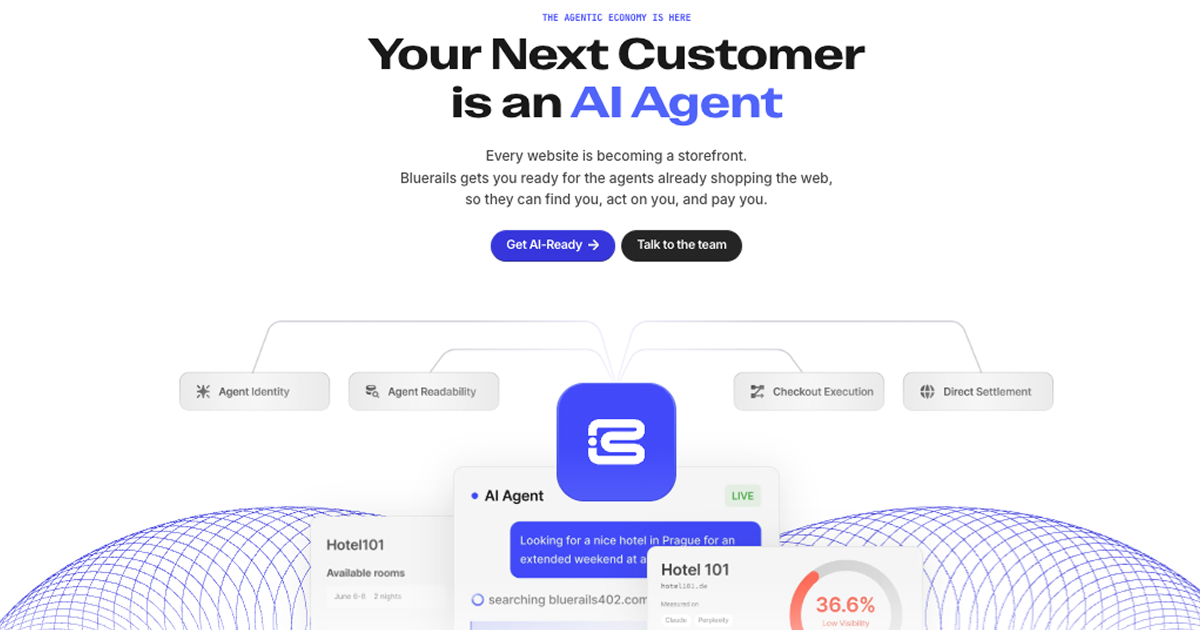
Bluerails provides payment infrastructure for the agentic economy, enabling AI agents to discover, act on, and pay businesses directly via agent-ready checkout and global settlement.

AI Agents
Meta quietly launches vibe-coded gaming app Pocket | TechCrunch
Pocket is Meta's experimental AI app for generating and sharing interactive mini-games via text prompts, built on the acquired Gizmo platform.

Design
Stitch - Design with AI
Stitch is a Google-developed AI tool that generates UI designs for mobile and web apps, streamlining the design ideation process for developers and designers.
Coding
OpenCode | The open source AI coding agent
OpenCode is an open-source AI coding agent for terminals, IDEs, and desktop apps. It supports 75+ LLM providers, prioritizes privacy by not storing code, and offers enterprise features like SSO and self-hosting.
Open Source
GitHub - usestrix/strix: Open-source AI penetration testing tool to find and fix your app’s vulnerabilities.
Strix is an open-source AI penetration testing tool designed to identify and remediate application vulnerabilities. It leverages artificial intelligence for automated security assessments, targeting developers and security professionals seeking efficient vulnerability detection.
Site Discovery
Explore more on ToolSeekAI
Keep moving through tools, use cases, models, news, and rankings to turn one visit into a complete AI discovery path.