
Muse Image
Explore Meta's Muse Image, an advanced AI model for high-fidelity image generation and editing. Discover its key features, use cases, and how it fits into the future of generative AI.
Overview
Muse Image by Meta
Meta has long been a pioneer in artificial intelligence research, consistently pushing the boundaries of what is possible with machine learning. One of their recent significant contributions to the field of generative AI is Muse Image. This tool represents a major leap forward in image synthesis, offering researchers and developers a powerful new way to create, edit, and manipulate visual content with unprecedented fidelity and control.
While Meta has released various models for text-to-image generation in the past, Muse Image stands out due to its underlying architecture and its focus on high-quality output. It is designed to address some of the common challenges in generative AI, such as maintaining consistency across multiple images, understanding complex spatial relationships, and generating photorealistic details. For those interested in exploring the latest advancements in this space, you can browse our comprehensive list of AI tools or check out our rankings of top generative models.
What is Muse Image?
Muse Image is an AI model developed by Meta AI specifically for image generation and editing tasks. It utilizes advanced deep learning techniques to interpret textual prompts and convert them into high-resolution images. Unlike earlier models that might struggle with coherence or detail, Muse Image is engineered to produce outputs that are both visually stunning and semantically accurate.
The core technology behind Muse Image involves sophisticated neural networks trained on vast datasets of images and corresponding text descriptions. This allows the model to learn intricate patterns, textures, and structures, enabling it to generate images that closely match the user's intent. Whether you are looking to create artistic illustrations, realistic photographs, or conceptual designs, Muse Image provides a robust framework for achieving these goals.
It is important to note that Muse Image is part of Meta's broader ecosystem of AI research. The company has a history of open-sourcing many of its models to benefit the global AI community, although specific availability and licensing for Muse Image may vary. Users interested in similar open-source alternatives can explore other entries in our tools directory.
Key Features
Muse Image comes equipped with several key features that distinguish it from other image generation tools:
- High-Fidelity Generation: The model is capable of producing images with exceptional detail and clarity. This includes accurate rendering of lighting, shadows, and textures, which are often challenging for other AI models to replicate convincingly.
- Advanced Text-to-Image Capabilities: Muse Image excels at interpreting complex textual prompts. It can understand nuanced descriptions, including specific styles, moods, and compositional elements, allowing for precise control over the generated output.
- Image Editing and Manipulation: Beyond simple generation, Muse Image supports editing capabilities. Users can modify existing images based on textual instructions, such as changing backgrounds, altering objects, or adjusting styles. This makes it a versatile tool for creative workflows.
- Consistency Across Variations: One of the common issues in AI image generation is maintaining consistency when creating multiple variations of the same concept. Muse Image addresses this by ensuring that related images share coherent stylistic and structural elements.
- Scalability and Performance: Designed with efficiency in mind, Muse Image can handle large-scale generation tasks without compromising on quality. This is particularly beneficial for enterprises and professional designers who need to produce content at scale.
Use Cases
The versatility of Muse Image opens up a wide range of applications across various industries:
- Creative Design and Art: Artists and designers can use Muse Image to brainstorm concepts, create mockups, or generate unique artwork. Its ability to interpret detailed prompts allows for rapid prototyping of visual ideas.
- Marketing and Advertising: Marketing teams can leverage Muse Image to create custom visuals for campaigns, social media posts, and advertisements. The high quality of the generated images ensures they meet professional standards.
- Content Creation: Bloggers, YouTubers, and other content creators can use Muse Image to generate relevant and engaging visuals for their content. This can save time and resources compared to traditional stock photography.
- Product Visualization: E-commerce businesses can use Muse Image to create realistic product images, especially for items that are not yet physically produced. This can help in pre-launch marketing and customer engagement.
- Research and Development: Researchers in fields such as computer vision and graphics can use Muse Image as a benchmark or a tool for exploring new algorithms and techniques in image synthesis.
Pricing Overview
As of the current information available, specific pricing details for Muse Image are not confirmed in the source. Meta often releases its research models through academic channels or as part of larger platforms, and access may be governed by different terms depending on the intended use case (e.g., commercial vs. non-commercial).
Users are advised to visit the official Meta AI website for the most up-to-date information on access, licensing, and potential costs. It is also recommended to check for any API availability or integration options that might involve subscription fees or pay-per-use models. For comparisons with other paid and free AI tools, refer to our pricing guides.
Who Should Use It?
Muse Image is suitable for a diverse audience, including:
- Professional Designers and Artists: Those who require high-quality, customizable visuals for their projects will find Muse Image invaluable.
- Marketing Professionals: Teams looking to enhance their visual content strategy with AI-generated assets.
- Developers and Researchers: Individuals working on AI projects who need a robust model for image generation and editing tasks.
- Content Creators: Anyone looking to add unique and engaging visuals to their digital content.
However, users should be aware of the ethical implications of using AI-generated images, including issues related to copyright, bias, and misinformation. It is essential to use Muse Image responsibly and in compliance with applicable laws and guidelines.
For those interested in exploring more about Meta's AI initiatives or comparing Muse Image with other leading tools, you can visit our AI tools section for detailed reviews and comparisons.
Why it stands out
- Produces high-fidelity, detailed images
- Strong text-to-image interpretation capabilities
- Supports advanced image editing and manipulation
- Maintains consistency across generated variations
- Developed by a leading AI research organization
Watch before using
- Pricing details are not confirmed in the source
- Potential ethical concerns regarding AI-generated content
- May require technical expertise for optimal use
- Access terms may vary for commercial vs. non-commercial use
- Limited specific information on integration options in the source
FAQ
What is Muse Image?
Who developed Muse Image?
What are the main features of Muse Image?
Is Muse Image free to use?
Can Muse Image edit existing images?
Who should use Muse Image?
Related tools and alternatives
View all alternativesCoding
Cursor
Cursor is an AI-native code editor that embeds deep repository awareness into the development workflow, enabling multi-file refactoring, code generation, and debugging without context switching.
Coding
Replit
Replit is a browser-based IDE with built-in AI coding assistants, real-time collaboration, and one-click deployment. Ideal for rapid prototyping, education, and AI agent development without local setup.
Coding
GitHub Copilot
GitHub Copilot is an AI-powered pair programmer that suggests code, debugs, and automates tasks across multiple languages and IDEs, integrating deeply with GitHub workflows for individuals, teams, and enterprises.
Coding
Google Antigravity 2.0
Google Antigravity 2.0 is a playful April Fools' joke from Google Developers. It is not a real software tool, API, or developer resource, but rather a humorous web experience.
Coding
Gemma 4
Gemma 4 is Google's latest open-weight large language model series, designed for advanced reasoning, coding, and multimodal tasks with optimized efficiency for enterprise and developer deployment.
Coding
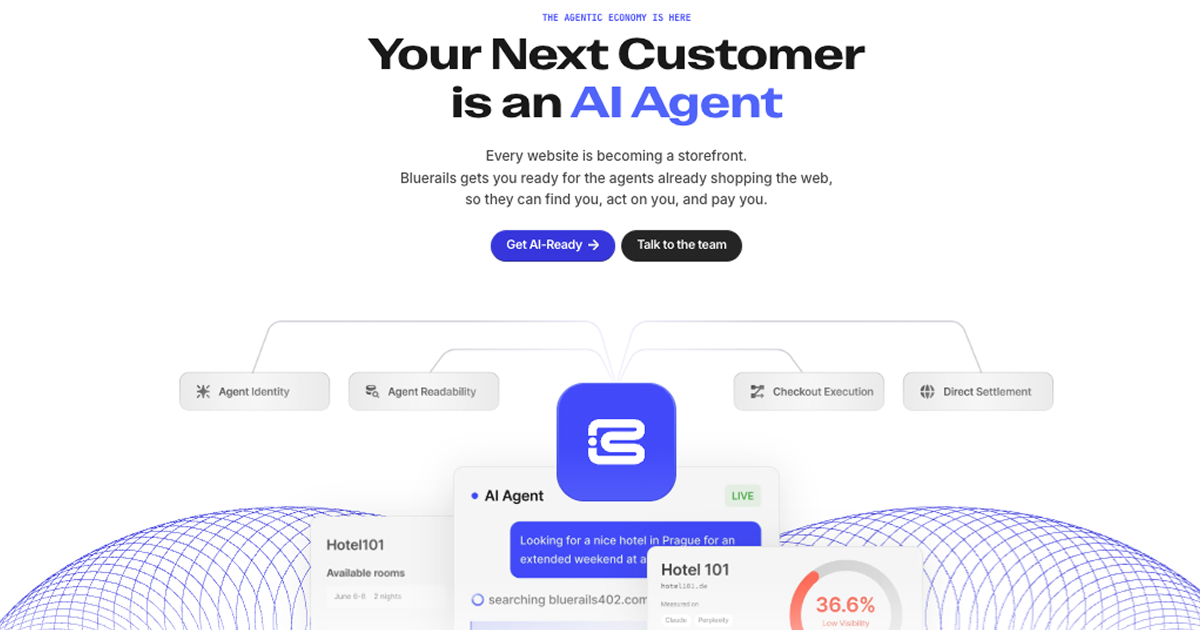
Bluerails: AI Agent Payment Infrastructure & Commerce
Bluerails provides payment infrastructure for the agentic economy, enabling AI agents to discover, act on, and pay businesses directly via agent-ready checkout and global settlement.
Site Discovery
Explore more on ToolSeekAI
Keep moving through tools, use cases, models, news, and rankings to turn one visit into a complete AI discovery path.