
Google Antigravity 2.0
Google Antigravity 2.0 is a playful April Fools' joke from Google Developers. It is not a real software tool, API, or developer resource, but rather a humorous web experience.
Overview
Google Antigravity 2.0: A Developer's April Fools' Prank
What is Google Antigravity 2.0?
Google Antigravity 2.0 is not a functional artificial intelligence tool, developer SDK, or enterprise software product. Instead, it is a well-known April Fools' Day prank created by Google. The project was originally launched in 2014 and later revisited as "Antigravity 2.0" to celebrate the holiday. The official URL, https://developers.google.com/antigravity, serves as a landing page for this humorous web experience rather than a documentation hub for a technical product.
The concept behind the tool is simple and whimsical: it allows users to simulate the effects of zero gravity within their web browser. By clicking a button on the page, the user's browser window appears to detach from the screen and float away, mimicking the sensation of floating in space. This visual gag relies on CSS animations and JavaScript to create the illusion that the entire interface is drifting off into the void.
It is crucial to clarify that this entity does not offer any AI capabilities, machine learning models, data processing services, or developer utilities. It is purely an interactive art piece designed for entertainment. For professionals seeking actual AI tools, developer platforms, or workflow automation services, this page will not provide relevant resources. You may wish to explore our curated list of ToolSeekAI tools for legitimate software solutions.
Key Features
Since Google Antigravity 2.0 is a joke site, its "features" are limited to the visual effects it provides:
- Browser Floating Animation: The primary feature is the CSS-based animation that makes the browser window appear to float away from the user's screen.
- Zero Gravity Simulation: It visually simulates the disorientation and movement associated with zero-gravity environments, albeit in a humorous and exaggerated manner.
- Interactive Trigger: Users can initiate the effect by clicking a specific button labeled to suggest activation of the "antigravity" mode.
- Reset Functionality: After the window "floats away," there is typically a mechanism to return the browser to its normal state, often by clicking again or refreshing the page.
- Humorous Messaging: The site includes text explaining that this is an April Fools' joke, ensuring users understand the non-functional nature of the "tool."
These features are static and do not involve any dynamic AI processing, data analysis, or integration with other software systems. There are no APIs, no backend services, and no configurable parameters. It is a self-contained frontend experience.
Use Cases
Given its nature as a prank, Google Antigravity 2.0 has no professional or technical use cases. However, it can be utilized in the following informal contexts:
- April Fools' Day Entertainment: The primary use case is for individuals to enjoy a lighthearted digital joke on April 1st. It serves as a moment of levity in the tech community.
- Social Media Sharing: Users may share screenshots or videos of the floating browser effect on social media platforms to engage friends and colleagues in the holiday spirit.
- Tech History Reference: For those interested in the history of Google's marketing stunts, this site serves as a reference point for how major tech companies engage with pop culture and humor.
- Web Development Inspiration: Front-end developers might study the CSS and JavaScript techniques used to achieve the floating effect for educational purposes, though this is a niche interest.
It is important to note that this tool cannot be integrated into any business workflow, AI pipeline, or development environment. It offers no value in terms of productivity, automation, or data insights. For serious development needs, refer to our rankings of effective developer tools.
Pricing Overview
Google Antigravity 2.0 is completely free to access. As it is a promotional joke page hosted on Google's official developer domain, there are no subscription fees, licensing costs, or hidden charges. Users can visit the URL and interact with the animation without any financial commitment. However, since it is not a commercial product, there is no pricing tier, enterprise plan, or freemium model to evaluate.
Who Should Use It
This "tool" is intended for:
- General Internet Users: Anyone looking for a fun, harmless digital prank on April Fools' Day.
- Tech Enthusiasts: Individuals who appreciate Google's history of creative marketing and April Fools' jokes.
- Web Design Students: Those interested in observing creative CSS animations (though many better examples exist).
It is not suitable for:
- Developers Seeking Tools: If you are looking for AI models, code generators, or debugging assistants, this site will not help you.
- Businesses: There is no enterprise application or ROI associated with this page.
- Data Scientists: It performs no data processing or analysis.
For those seeking legitimate AI-powered solutions, we recommend exploring categories such as LLM applications or code assistants. Google Antigravity 2.0 remains a charming relic of internet humor rather than a functional piece of technology.
Verification and Context
When evaluating tools, it is essential to distinguish between functional software and promotional stunts. Google Antigravity 2.0 falls squarely into the latter category. The source material confirms its identity as a joke site through its official metadata and the nature of its content. There are no claims of AI capability, no developer documentation for integration, and no evidence of ongoing maintenance as a product. It is a static page designed for temporary amusement.
Users should always verify the purpose of a tool before investing time in learning or integrating it. In this case, the verification is straightforward: the site is a joke. For accurate information on real AI tools, consult trusted sources like ToolSeekAI.
FAQ
Is Google Antigravity 2.0 an AI tool?
No, it is not an AI tool. It is a humorous web animation created for April Fools' Day.
Does it have any developer features?
No, it offers no APIs, SDKs, or developer utilities. It is purely a visual effect.
How much does it cost?
It is free, as it is a promotional joke page.
Can I integrate it into my projects?
No, it is not designed for integration. It is a standalone web experience.
Why is it on the Google Developers site?
It is part of Google's tradition of creating April Fools' Day pranks, which are sometimes hosted on their developer portals for visibility and humor.
Is it still active?
The original 2014 version and subsequent revivals are accessible via the official URL, but they remain static joke pages and are not updated as functional products.
Why it stands out
- Completely free to access
- Fun and harmless April Fools' joke
- Creative CSS animation effect
- Easy to use with one click
- Part of tech history and culture
Watch before using
- Not a functional software tool
- No AI or developer features
- Cannot be integrated into workflows
- Misleading if mistaken for a real product
- Limited to a single holiday event
FAQ
Is Google Antigravity 2.0 an AI tool?
Does it have any developer features?
How much does it cost?
Can I integrate it into my projects?
Why is it on the Google Developers site?
Is it still active?
Related tools and alternatives
View all alternativesCoding
Cursor
Cursor is an AI-native code editor that embeds deep repository awareness into the development workflow, enabling multi-file refactoring, code generation, and debugging without context switching.
Coding
Replit
Replit is a browser-based IDE with built-in AI coding assistants, real-time collaboration, and one-click deployment. Ideal for rapid prototyping, education, and AI agent development without local setup.
Coding
GitHub Copilot
GitHub Copilot is an AI-powered pair programmer that suggests code, debugs, and automates tasks across multiple languages and IDEs, integrating deeply with GitHub workflows for individuals, teams, and enterprises.
Coding
Gemma 4
Gemma 4 is Google's latest open-weight large language model series, designed for advanced reasoning, coding, and multimodal tasks with optimized efficiency for enterprise and developer deployment.
Coding
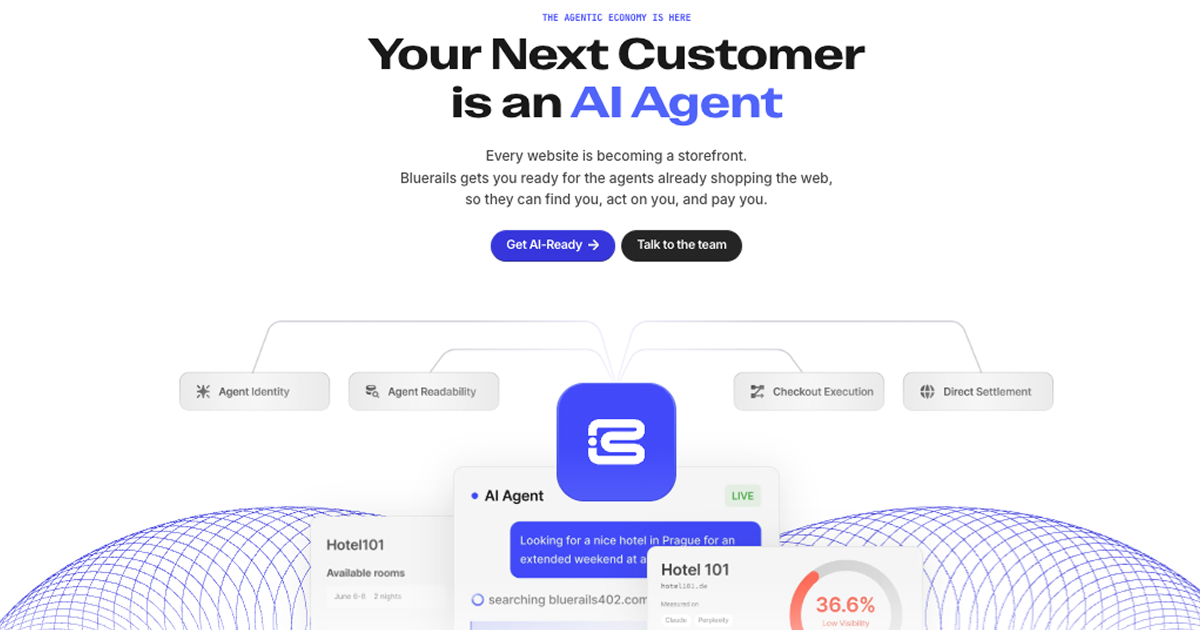
Bluerails: AI Agent Payment Infrastructure & Commerce
Bluerails provides payment infrastructure for the agentic economy, enabling AI agents to discover, act on, and pay businesses directly via agent-ready checkout and global settlement.
Coding
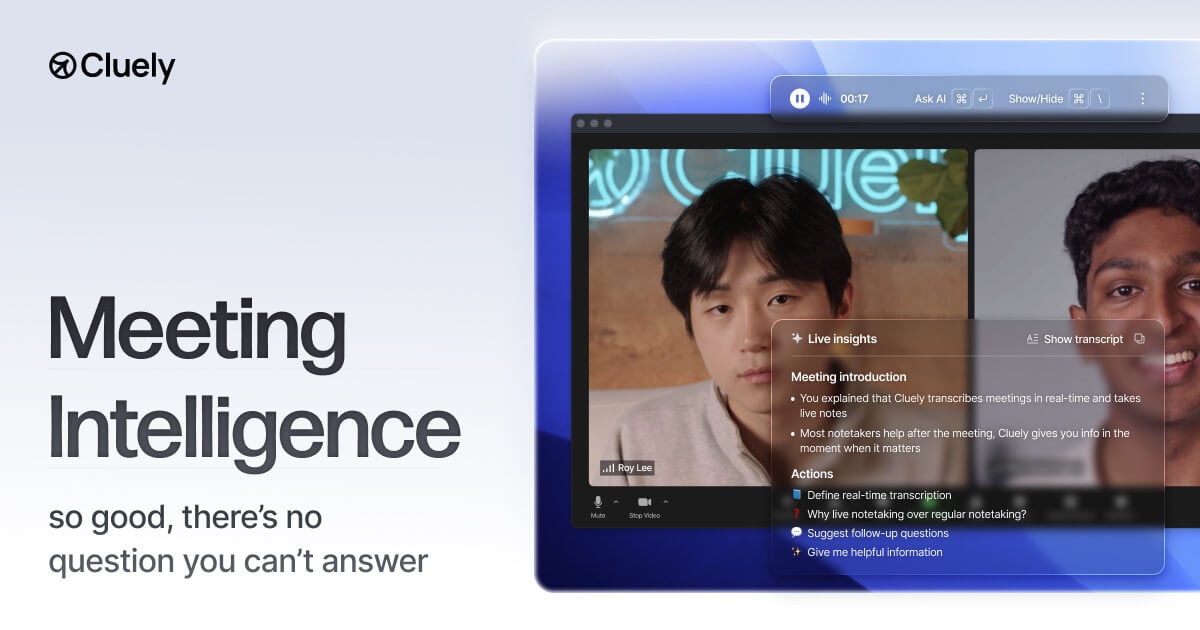
Cluely - Live AI Meeting Assistant | Real-Time Meeting Notes and AI Insights
Cluely is a live AI meeting assistant that provides real-time notes, instant answers, and insights during calls. It operates undetectably on your screen, supporting major platforms like Zoom and Teams without joining meetings as a bot.
Site Discovery
Explore more on ToolSeekAI
Keep moving through tools, use cases, models, news, and rankings to turn one visit into a complete AI discovery path.