
Decision ranking / ranking
Best AI Agent Builders 2026
Compare 8 relevant tools by use case, pricing signal, and discovery fit.
#1
GitHub - thedotmack/claude-mem: Persistent Context Across Sessions for Every Agent – Captures everything your agent does during sessions, compresses it with AI, and injects relevant context back into future sessions. Works with Claude Code, OpenClaw, Codex, Gemini, Hermes, Copilot, OpenCode + More
Claude-Mem is an open-source memory engine providing persistent context across AI agent sessions. It captures, compresses, and retrieves relevant history for tools like Claude Code, Copilot, and Gemini.
#2
15 updates from Google I/O 2026: Powering the agentic web with new capabilities, tools, and features in Chrome | Blog | Chrome for Developers
Chrome for Developers announces 15 updates from Google I/O 2026, focusing on the 'agentic web.' Key features include Gemini in Chrome, automated navigation, and enhanced AI capabilities for developers and users.
#3
BrowserAct | Give AI agent the power to use the web
BrowserAct provides AI agents with a managed browser layer to extract live web data, handle CAPTCHAs, and execute end-to-end web tasks securely.
Best AI Agent Builders 2026: Top Platforms for Building Autonomous AI Agents
The year 2026 marks a pivotal inflection point in the evolution of artificial intelligence. We have moved past the era of simple chatbots and generative text completions into the age of autonomous action. Today, businesses and developers are no longer just asking AI to write code or draft emails; they are empowering it to execute complex workflows, make decisions, and interact with external tools independently. This shift has given rise to AI Agents—software entities capable of perceiving their environment, reasoning through problems, and taking actions to achieve specific goals.
For developers, enterprise architects, and business leaders, the question is no longer if they should adopt AI agents, but how. With a fragmented landscape of tools ranging from low-code visual builders to robust coding frameworks, selecting the right platform is critical. This comprehensive guide explores the top AI agent builders in 2026, detailing what these agents are, how they function, and which platforms dominate the market for visual workflows, multi-agent orchestration, and foundational frameworks.
What Are AI Agents?
To understand the platforms that build them, we must first define the subject. In the context of 2026, an AI Agent is distinct from a Large Language Model (LLM). While an LLM is a probabilistic engine that predicts the next token based on training data, an AI Agent is an application layer that sits on top of the LLM. It possesses three core capabilities:
- Perception: The ability to ingest data from various sources, including APIs, databases, user inputs, and real-time web searches.
- Reasoning: The capacity to plan, break down complex tasks into sub-tasks, and decide on the best course of action using the LLM’s cognitive abilities.
- Action: The power to execute those plans by calling tools, updating databases, sending messages, or triggering workflows in other software systems.
Unlike traditional automation, which follows rigid "if-then" logic scripts, AI Agents are adaptive. They can handle ambiguity, recover from errors, and iterate on their strategies until the goal is achieved. This autonomy makes them invaluable for customer support resolution, software engineering pipelines, data analysis, and supply chain management.
Visual Workflow Builders: n8n and Flowise
For many organizations, the barrier to entry for building AI agents was historically high, requiring significant Python expertise. However, 2026 has seen the maturation of visual workflow builders that democratize agent creation. These platforms allow users to drag and drop components, connect nodes, and deploy agents without writing extensive code. Two leaders dominate this space: n8n and Flowise.
n8n: The Automation Powerhouse
Originally known for its node-based automation capabilities similar to Zapier but with a self-hosted, code-friendly architecture, n8n has evolved into a premier platform for AI agent orchestration. In 2026, n8n’s strength lies in its hybrid approach. It allows developers to use pre-built nodes for standard integrations (Slack, Salesforce, GitHub) while injecting custom AI logic via JavaScript or Python snippets when necessary.
n8n excels in scenarios where the agent needs to interact with a vast ecosystem of existing enterprise software. Its "Agentic Workflows" feature enables users to define loops, conditional branching, and memory states visually. For instance, a customer service agent built on n8n can automatically fetch a user’s ticket history, analyze sentiment using an LLM, and then route the conversation to a human specialist if the confidence score is low, all within a single visual canvas. Its open-source roots and strong community support make it a favorite for enterprises concerned with data privacy and customization.
Flowise: Bridging LangChain and No-Code
Flowise takes a different approach by focusing heavily on the integration of vector databases and retrieval-augmented generation (RAG) architectures. Built on top of the LangChain framework, Flowise provides a user-friendly interface for constructing complex conversational flows. It is particularly strong in scenarios where the AI agent needs to reason over private documents.
In 2026, Flowise has become the go-to solution for businesses looking to build internal knowledge assistants. Its visual builder allows users to chain together embeddings, vector stores, and LLMs seamlessly. Unlike pure automation tools, Flowise emphasizes the conversation aspect of agents. Users can design multi-turn dialogues where the agent asks clarifying questions before executing a task. This makes it ideal for HR onboarding bots, legal document reviewers, and technical support assistants that require deep contextual understanding rather than just transactional execution.
Multi-Agent Frameworks: CrewAI and AutoGPT
While visual builders are excellent for linear or moderately complex tasks, true enterprise-scale automation often requires multi-agent systems. This is where frameworks like CrewAI and AutoGPT shine. These platforms allow developers to create teams of specialized AI agents that collaborate, debate, and delegate tasks to one another.
CrewAI: Role-Based Collaboration
CrewAI has emerged as the leading framework for structured multi-agent collaboration. Its core philosophy is inspired by human organizational structures. In CrewAI, you define Agents with specific roles (e.g., "Researcher," "Writer," "Editor"), each equipped with a distinct personality, backstory, and set of tools. These agents are then organized into a Crew, which manages the flow of tasks.
What sets CrewAI apart in 2026 is its emphasis on process management. It supports both hierarchical and sequential processes. In a hierarchical setup, a "Manager Agent" can delegate tasks to subordinate agents and review their outputs before proceeding. This mimics real-world corporate structures, allowing for quality control and error correction at every stage. For example, a marketing campaign crew might include a researcher agent that gathers market trends, a copywriter agent that drafts ad copies, and a reviewer agent that checks for brand compliance. CrewAI handles the handoffs and context sharing between these agents, ensuring that each step builds upon the previous one.
AutoGPT: The Autonomous Pioneer
AutoGPT remains a symbol of fully autonomous AI. Unlike CrewAI’s structured approach, AutoGPT focuses on giving agents the freedom to plan and execute tasks independently. Users can set a high-level goal (e.g., "Build a website for my bakery"), and AutoGPT will break it down into sub-goals, search the web for resources, write code, test it, and iterate until the task is complete.
In 2026, AutoGPT has matured significantly, addressing earlier issues with infinite loops and resource consumption. It now features better memory management and cost-control mechanisms. However, its primary use case has shifted from general-purpose automation to specific, high-autonomy tasks where human oversight is minimal. It is often used in research contexts, competitive programming, and rapid prototyping. While less predictable than CrewAI, AutoGPT demonstrates the ultimate potential of AI agents: the ability to operate with minimal human intervention.
Foundational Frameworks: LangChain and LlamaIndex
Underpin
f fableware and basic chatbots to an era defined by agency, autonomy, and complex task execution. In 2026, the question is no longer "What can the AI write?" but "What can the AI do?" This shift has necessitated a new generation of platforms designed specifically to orchestrate multi-step workflows, integrate with legacy enterprise systems, and operate with minimal human intervention. Below, we analyze the top contenders that are defining this landscape, offering a comprehensive look at their capabilities, costs, and strategic value.
1. LangGraph Studio: The Architect’s Choice
For developers who require granular control over state management and execution loops, LangGraph remains the gold standard. Unlike simpler wrapper tools, LangGraph allows engineers to build cyclic graphs where agents can self-correct, retry failed steps, and maintain long-term memory across sessions.
- Real-World Use Case: A global logistics company uses LangGraph to manage supply chain disruptions. When a shipment is delayed, the agent autonomously checks alternative routes, contacts suppliers for inventory, negotiates partial shipments via email, and updates the customer portal—all within a single, verifiable graph execution.
- Enterprise Readiness: High. It integrates seamlessly with existing Python stacks and supports custom security protocols. Its open-source nature allows for deep customization, which is critical for regulated industries like finance and healthcare.
- Pricing: The core library is free and open-source. Enterprise support and hosted infrastructure start at $500/month for small teams, scaling significantly based on compute usage.
- Community: Massive. As the backbone for many other tools, its GitHub repository boasts over 30k stars, with extensive documentation and third-party tutorials.
2. Microsoft Copilot Studio: The Enterprise Integrator
Microsoft has leveraged its dominance in the corporate world to make Copilot Studio the go-to solution for organizations already embedded in the Azure ecosystem. It excels at connecting AI agents to Dataverse, Dynamics 365, and Power Automate flows without requiring heavy coding.
- Real-World Use Case: An HR department deploys an agent that handles employee onboarding. The agent verifies identity through Azure AD, provisions software licenses via Microsoft 365 APIs, schedules IT equipment delivery, and guides the new hire through compliance training modules.
- Enterprise Readiness: Exceptional. It offers built-in compliance certifications (SOC 2, ISO 27001) and ensures data residency, making it safe for large corporations. The low-code interface democratizes agent creation for business analysts.
- Pricing: Starts at $30 per user/month for the Pro plan, with enterprise tiers offering volume discounts and advanced security features.
- Community: Growing rapidly, supported by Microsoft’s vast partner network and official forums. While less technical than LangChain/LangGraph communities, it has strong corporate backing.
3. SmythOS: The Unified Operations Platform
SmythOS has emerged as a powerful contender by focusing on the operational side of AI agents. It provides a unified dashboard for monitoring, debugging, and scaling agents across multiple environments, addressing the "black box" problem that plagues many autonomous systems.
- Real-World Use Case: A fintech startup uses SmythOS to deploy fraud detection agents. These agents monitor transaction patterns in real-time, flag suspicious activities, and automatically freeze accounts while notifying human investigators via Slack or Teams. The platform’s observability layer allows teams to audit every decision made by the agents.
- Enterprise Readiness: Strong focus on MLOps and LLMOps. It supports CI/CD pipelines for AI agents, ensuring that updates are tested and rolled out smoothly.
- Pricing: Tiered subscription model starting at $99/month for startups, with enterprise plans offering dedicated support and SLAs.
- Community: Niche but highly engaged. It appeals to engineering leaders who prioritize reliability and monitoring over pure flexibility.
4. Vellum AI: The Prompt Engineering Hub
Vellum distinguishes itself by simplifying the complex process of prompt versioning and evaluation. For teams that struggle with non-deterministic AI outputs, Vellum provides a collaborative environment to test prompts against ground-truth datasets before deployment.
- Real-World Use Case: A legal tech firm uses Vellum to ensure consistency in contract review agents. By testing thousands of contract clauses against historical outcomes, they refine their prompts to reduce hallucinations and improve accuracy in identifying liability risks.
- Enterprise Readiness: Ideal for companies where output consistency is paramount. It offers robust evaluation frameworks and team collaboration tools.
- Pricing: Free tier for small projects; paid plans start at $49/month, scaling with API calls and storage.
- Community: Smaller but focused on quality. Users appreciate its intuitive UI and emphasis on reproducibility.
The Evolution of AI Agents in 2026
Looking ahead, the distinction between these platforms will blur as they converge on common goals: autonomy, safety, and interoperability. We are moving toward Agentic Workflows, where multiple specialized agents collaborate to solve complex problems. For instance, a research agent might gather data, a reasoning agent might synthesize insights, and an action agent might execute tasks, all orchestrated by a central manager.
Furthermore, multimodal agents will become the norm, capable of processing text, images, audio, and video simultaneously. This will enable richer interactions, such as a customer service agent analyzing a screenshot of a error message and verbally guiding the user through a fix.
Security and governance will also take center stage. As agents gain the ability to modify code, send emails, and access databases, platforms must provide robust permission scopes and audit trails. The most successful builders in 2026 will be those that balance power with control, ensuring that AI agents act as reliable extensions of human intent rather than unpredictable wildcards.
In conclusion, choosing the right builder depends on your specific needs. Developers seeking full control should look to LangGraph. Enterprises prioritizing integration and compliance will find value in Copilot Studio. Operations-focused teams may prefer SmythOS, while those needing rigorous prompt evaluation should consider Vellum. As the technology matures, the ability to build, deploy, and manage autonomous agents will become a core competency for any forward-thinking organization.
Ranked tools
Claude-Mem is an open-source memory engine providing persistent context across AI agent sessions. It captures, compresses, and retrieves relevant history for tools like Claude Code, Copilot, and Gemini.
Chrome for Developers announces 15 updates from Google I/O 2026, focusing on the 'agentic web.' Key features include Gemini in Chrome, automated navigation, and enhanced AI capabilities for developers and users.
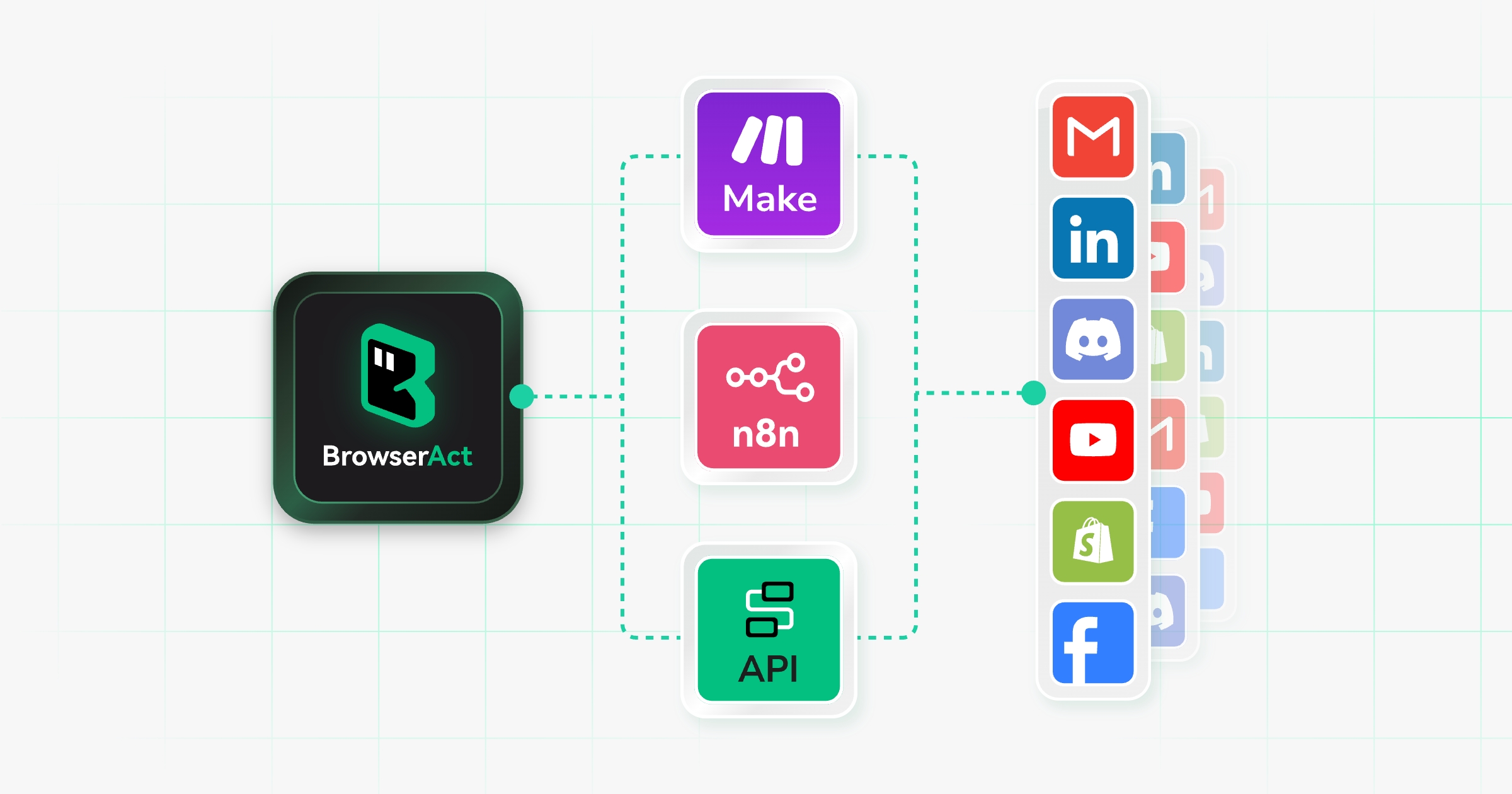
BrowserAct provides AI agents with a managed browser layer to extract live web data, handle CAPTCHAs, and execute end-to-end web tasks securely.
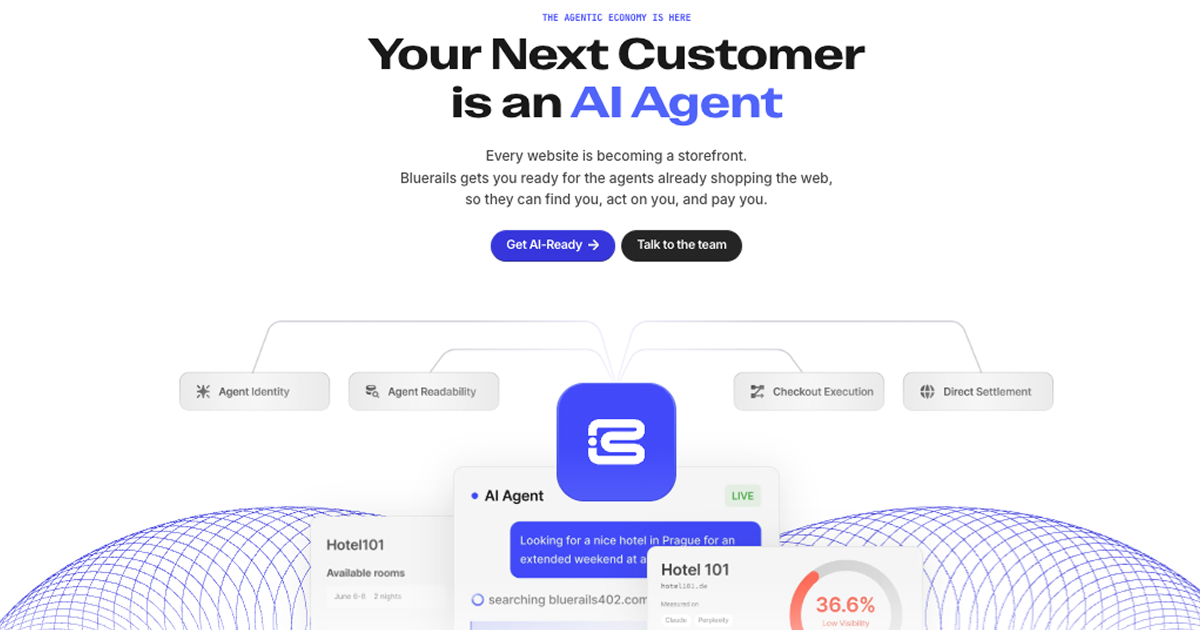
Bluerails provides payment infrastructure for the agentic economy, enabling AI agents to discover, act on, and pay businesses directly via agent-ready checkout and global settlement.
Latitude is an open-source AI agent observability platform providing full visibility into production failures. It offers semantic search, automatic issue discovery, and OTEL compatibility to help teams monitor and improve AI agent performance.
Agent Mode by Arena.ai enables autonomous AI agents to browse, research, code, and execute complex real-world tasks. Compare workflows and models via the Arena interface.
Kimi AI with K2.6 is an agentic workspace by Moonshot AI featuring coding agents, website builders, and swarm intelligence for automated research and document processing.
Flowise is an open-source, low-code platform for visually building AI agents and chatbots using LangChain and RAG. Self-host it for free or explore cloud options.