
Ex-GitHub chief’s Entire opens distributed Git network for the AI agent era
Entire Inc., founded by ex-GitHub CEO Thomas Dohmke, has launched a preview of a distributed Git network designed for the AI agent era, removing centralized rate limits for code operations.

Signal Snapshot
Briefing Notes
What happened and why it matters
Summary
Entire Inc., a company founded by former GitHub CEO Thomas Dohmke, has officially announced the launch of a preview for its distributed Git network. This new infrastructure is specifically engineered for the emerging "AI agent era," aiming to resolve bottlenecks associated with traditional centralized version control systems. The core innovation lies in the elimination of centralized rate limits for critical operations such as code cloning and pushing. By decentralizing these processes, Entire Inc. seeks to provide a more robust and scalable foundation for automated software development workflows driven by artificial intelligence.
Why it matters
The rise of AI coding assistants and autonomous software agents has fundamentally changed how code is accessed, modified, and deployed. Traditional Git hosting platforms, which rely on centralized servers, often impose strict rate limits to manage load and prevent abuse. These limits can become significant choke points for AI agents that need to rapidly clone repositories, analyze codebases, and push updates in high-frequency cycles. By removing these centralized constraints, Entire Inc. is addressing a critical infrastructure gap. This shift allows for higher throughput and reliability in automated development pipelines, enabling AI agents to operate more efficiently without being throttled by human-centric usage policies. It signals a move toward infrastructure that prioritizes machine-to-machine interactions over individual developer quotas.
Related tools
- Browse AI tools for products in this space
- Model library for weights and APIs
- Rankings for curated shortlists
Impact on AI tools/models
This development directly impacts the ecosystem of AI-driven development tools. Models and agents that rely heavily on repository access for context retrieval and code generation will benefit from increased availability and speed. The removal of rate limits suggests a future where AI agents can perform continuous integration and deployment tasks with greater autonomy. This could lead to faster iteration cycles for software projects managed by AI, potentially reducing the time from code suggestion to production deployment. Furthermore, it may encourage the development of more complex multi-agent systems that require frequent, large-scale data exchanges across distributed networks.
What to watch
As the preview phase continues, several key areas warrant attention. First, the technical stability and security implications of a fully distributed Git network need to be monitored. Second, adoption rates among major AI coding platforms will indicate whether this infrastructure becomes the standard for agent-based development. Third, the competitive response from established players like GitHub and GitLab will be crucial to observe. For those interested in tracking these developments, exploring the latest updates on AI news provides context on industry shifts. Additionally, reviewing current rankings of version control and AI tooling can help assess where Entire Inc. stands relative to competitors. Developers should also check the ToolSeekAI tools directory for any integrations or compatible solutions emerging from this new network.
FAQ
What is Entire Inc.? Entire Inc. is a company founded by Thomas Dohmke, the former CEO of GitHub, focused on creating next-generation infrastructure for software development.
What is the main feature of the new distributed Git network? The primary feature is the elimination of centralized rate limits for code cloning and pushing, designed to support high-frequency AI agent operations.
Who is the target audience for this technology? The technology is tailored for the "AI agent era," targeting autonomous software development systems and AI coding assistants that require unrestricted access to code repositories.
Search FAQ
Frequently asked questions
FAQ
Who founded Entire Inc.?
What is the main benefit of the new distributed Git network?
Is the distributed Git network fully released?
Keep Tracking
Related AI news

On theCUBE Pod: IBM’s AI test, Nvidia’s lead and the race for enterprise intelligence
IBM tests enterprise AI while Nvidia dominates accelerated computing. AMD and Broadcom vie for market share as the race for enterprise intelligence intensifies across hardware and software layers.

Hugging Face uses open-weights Z.ai GLM 5.2 to battle attacker after commercial frontier model refusal
Hugging Face detected a breach involving an attacker using agentic AI. Commercial frontier models blocked defensive requests due to strict safety guardrails. Hugging Face responded by deploying the open-weights Z.ai GLM 5.2 to counter the threat.

Anthropic settles with authors and publishers for $1.5B in landmark copyright case
Anthropic agrees to a $1.5 billion settlement with authors and publishers regarding the unauthorized use of creative works to train its Claude AI model, marking the largest copyright settlement in history.
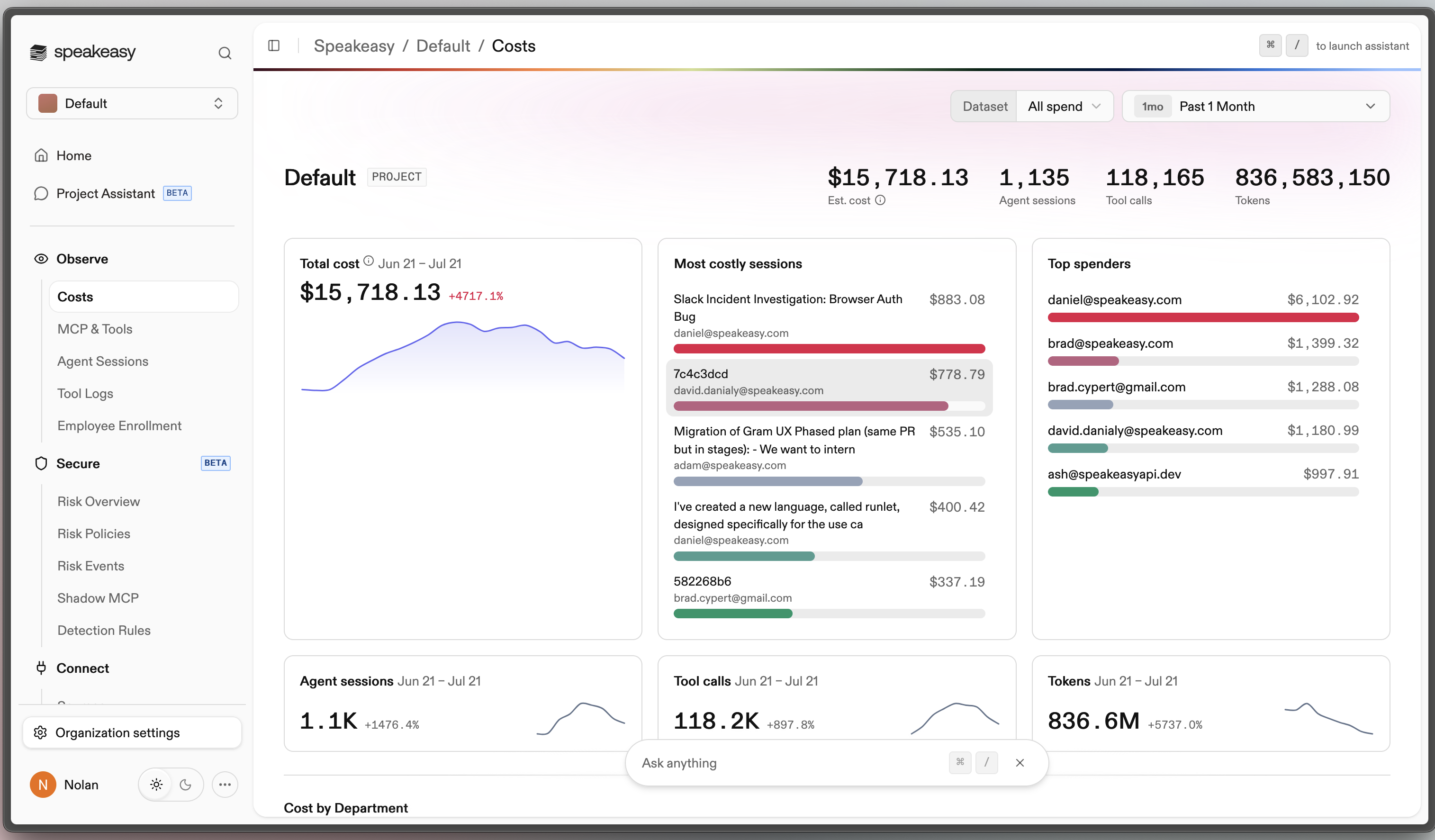
Exclusive: Speakeasy service tracks enterprise-wide AI agent spending
Speakeasy Development Inc. launched an AI cost-management service to track enterprise spending on coding agents like Claude Code, Cursor, and Codex by consolidating token usage data for financial oversight.

AI materials science startup CuspAI raises $450M in funding
UK-based AI materials science startup CuspAI secures $450M Series B funding at a $2.6B valuation, backed by Kleiner Perkins and NEA to support a chemical research consortium with Nvidia and Samsung.

Block launches Buzz, an open-source workspace for humans and AI agents
Block Inc. launched Buzz, a free open-source workspace for human-AI collaborative teams. It unifies chat, code hosting, and workflows while granting AI dedicated accounts.
Site Discovery
Keep exploring the AI ecosystem
After this brief, continue into related tools, models, and rankings to understand whether the story affects your choices.