
VAST Data targets KV cache storage and neoclouds as AI infrastructure enters the exabyte era
VAST Data targets KV cache storage for AI infrastructure, leveraging its $30B valuation to support neoclouds and exabyte-scale inference workloads.

Signal Snapshot
Briefing Notes
What happened and why it matters
Summary
VAST Data Inc. is aggressively positioning itself as a critical infrastructure provider for the evolving landscape of artificial intelligence. As global investment in AI infrastructure scales and inference workloads multiply, the company has identified cache storage as the essential data layer required to Make "AI factories" functional, persistent, and economically viable. This strategic focus comes as the industry enters the "exabyte era," characterized by disaggregated computing models. Central to this push is VAST Data's recent completion of its Series F financing round, which valued the company at $30 billion, providing substantial capital to expand its capabilities in supporting next-generation cloud architectures known as "neoclouds."
Why it matters
The significance of VAST Data's move lies in the specific bottleneck it addresses: KV (Key-Value) cache storage. In large language model (LLM) inference, the KV cache holds intermediate results to accelerate response times. As models grow larger and usage scales, the demand for high-performance, persistent storage for these caches becomes a primary constraint. Traditional storage solutions often struggle with the latency and throughput requirements of modern AI inference. By targeting this specific niche, VAST Data aims to solve a fundamental efficiency problem in AI deployment. Furthermore, the $30 billion valuation signals strong investor confidence in the long-term viability of specialized storage solutions within the AI supply chain, distinguishing VAST from general-purpose cloud providers.
Related tools
Impact on AI tools/models
VAST Data’s focus on KV cache storage directly impacts how AI tools and models are deployed in production environments. For model developers, efficient cache management can lead to reduced latency and lower computational costs during inference. This is particularly crucial for real-time applications where speed is paramount. The emphasis on "neoclouds" suggests a shift away from monolithic cloud structures toward more flexible, disaggregated architectures. This allows AI models to be trained and inferred across distributed environments without being locked into a single provider's rigid storage ecosystem. Consequently, tools that integrate with VAST Data’s high-performance storage may offer superior scalability and cost-efficiency for enterprises managing exabyte-scale datasets.
What to watch
As the AI infrastructure market matures, several key trends will define the competitive landscape. First, monitor how VAST Data leverages its $30 billion valuation to expand partnerships with major cloud providers and enterprise clients. Second, track the adoption of "neocloud" architectures, as they represent a potential paradigm shift in how AI workloads are managed. Finally, observe the evolution of KV cache technologies, as optimization in this area could become a standard differentiator among AI tool providers.
For ongoing updates on these developments, explore our coverage of:
- Latest AI News for breaking stories on infrastructure investments.
- Top AI Tools to discover platforms integrating advanced storage solutions.
- Industry Rankings to see how VAST Data compares to competitors in the storage sector.
FAQ
What is VAST Data's current valuation? VAST Data recently closed its Series F financing at a valuation of $30 billion.
What specific type of storage is VAST Data targeting? The company is focusing on KV cache storage, which is critical for efficient AI inference.
What are "neoclouds" in this context? Neoclouds refer to disaggregated computing architectures that allow for more flexible and persistent AI infrastructure compared to traditional monolithic clouds.
Keep Tracking
Related AI news

On theCUBE Pod: IBM’s AI test, Nvidia’s lead and the race for enterprise intelligence
IBM tests enterprise AI while Nvidia dominates accelerated computing. AMD and Broadcom vie for market share as the race for enterprise intelligence intensifies across hardware and software layers.

Hugging Face uses open-weights Z.ai GLM 5.2 to battle attacker after commercial frontier model refusal
Hugging Face detected a breach involving an attacker using agentic AI. Commercial frontier models blocked defensive requests due to strict safety guardrails. Hugging Face responded by deploying the open-weights Z.ai GLM 5.2 to counter the threat.

Anthropic settles with authors and publishers for $1.5B in landmark copyright case
Anthropic agrees to a $1.5 billion settlement with authors and publishers regarding the unauthorized use of creative works to train its Claude AI model, marking the largest copyright settlement in history.
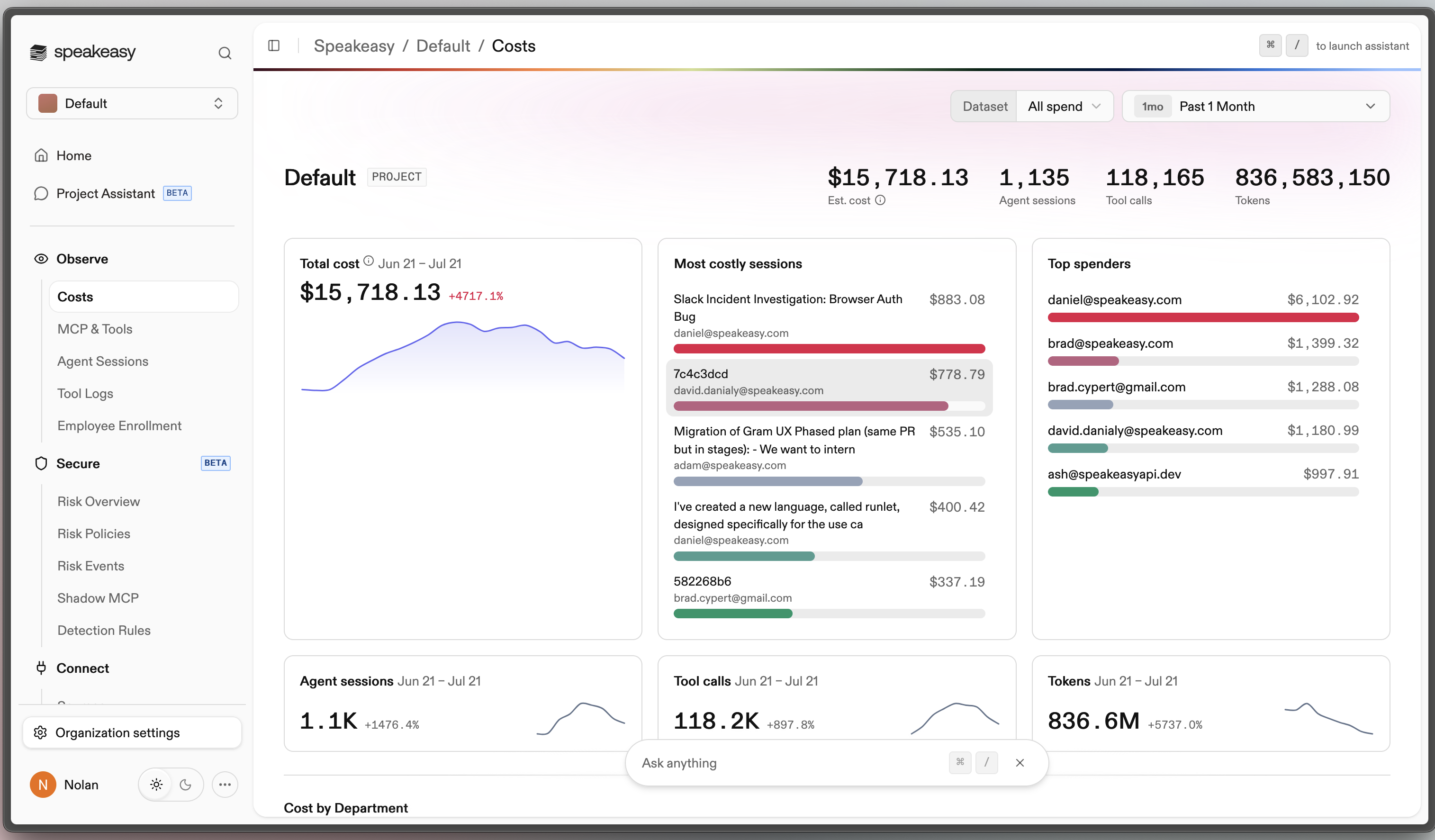
Exclusive: Speakeasy service tracks enterprise-wide AI agent spending
Speakeasy Development Inc. launched an AI cost-management service to track enterprise spending on coding agents like Claude Code, Cursor, and Codex by consolidating token usage data for financial oversight.

AI materials science startup CuspAI raises $450M in funding
UK-based AI materials science startup CuspAI secures $450M Series B funding at a $2.6B valuation, backed by Kleiner Perkins and NEA to support a chemical research consortium with Nvidia and Samsung.

Block launches Buzz, an open-source workspace for humans and AI agents
Block Inc. launched Buzz, a free open-source workspace for human-AI collaborative teams. It unifies chat, code hosting, and workflows while granting AI dedicated accounts.
Site Discovery
Keep exploring the AI ecosystem
After this brief, continue into related tools, models, and rankings to understand whether the story affects your choices.