
Three insights you may have missed from theCUBE’s coverage of the ‘Scaling the Agentic Era’ event
AI agents transition to production with focus on token cost efficiency and infrastructure throughput.

Signal Snapshot
Briefing Notes
What happened and why it matters
Summary
The landscape of artificial intelligence is undergoing a significant structural shift as AI agents transition from experimental proof-of-concepts to robust production environments. Recent coverage from theCUBE’s "Scaling the Agentic Era" event highlights that the primary driver of this evolution is no longer just capability, but economic viability. Infrastructure providers are now heavily prioritizing throughput and economic scalability to support the continuous, high-volume workloads inherent in agentic systems. The consensus among industry leaders is that for AI agents to succeed at scale, they must operate with extreme token cost efficiency.
Why it matters
This shift marks a critical maturity point for the AI industry. For years, development focused on demonstrating what models could do in isolated scenarios. Now, the focus has moved to how these systems can operate continuously without prohibitive costs. Token efficiency is not merely a budgetary concern; it is a technical prerequisite for real-world deployment. If an agent cannot perform tasks within strict economic constraints, it cannot be sustained in production. This changes the competitive dynamic, favoring models and frameworks that optimize inference costs alongside performance. It also places immense pressure on infrastructure providers to deliver scalable solutions that can handle the computational demands of autonomous agents running 24/7.
Related tools
As the industry adapts to these new requirements, developers are increasingly turning to specialized platforms to manage complexity and cost. For those looking to explore the current state of autonomous software, browsing the latest AI tools reveals a growing category of agents designed for specific enterprise workflows. Additionally, understanding the underlying models is crucial; reviewing the model library allows engineers to compare weights and APIs based on their efficiency metrics rather than just raw accuracy. Finally, staying updated on which solutions are gaining traction is essential, making the rankings a valuable resource for identifying top-performing agents in terms of reliability and cost-effectiveness.
Impact on AI tools/models
The demand for token efficiency is reshaping model development. Large Language Models (LLMs) are being evaluated not just on their reasoning capabilities, but on their ability to minimize output tokens per task. This encourages the development of smaller, more specialized models that can handle specific agent tasks more cheaply than general-purpose giants. Furthermore, it drives innovation in orchestration layers—the software that manages multiple agents—where optimizing the flow of information between tools becomes as important as the tools themselves. Models that offer better compression or more efficient attention mechanisms will likely see increased adoption in production agentic workflows.
What to watch
The next phase of AI development will be defined by how well infrastructure can support these economic realities. Developers should monitor advancements in AI news for updates on new optimization techniques and breakthroughs in inference speed. As agents become more autonomous, the need for reliable monitoring and evaluation frameworks will grow, making it essential to track emerging standards in the field. Keeping an eye on ToolSeekAI tools will help identify which platforms are successfully implementing these efficiency-focused architectures. Ultimately, the winners in the agentic era will be those who can balance sophisticated autonomy with lean, cost-effective operations.
FAQ
What is the main challenge for AI agents moving to production? The primary challenge is achieving token cost efficiency while maintaining high throughput and reliability for continuous workloads.
Who is prioritizing infrastructure improvements for AI agents? Infrastructure providers are focusing on building systems that support economic scalability and high-volume agentic tasks.
Why is token efficiency critical for AI agents? Token efficiency determines the economic viability of running agents continuously; without it, production costs become unsustainable.
Search FAQ
Frequently asked questions
FAQ
What is the current status of AI agents?
What is the primary priority for AI agents in production?
How are infrastructure providers adapting to AI agents?
Keep Tracking
Related AI news

On theCUBE Pod: IBM’s AI test, Nvidia’s lead and the race for enterprise intelligence
IBM tests enterprise AI while Nvidia dominates accelerated computing. AMD and Broadcom vie for market share as the race for enterprise intelligence intensifies across hardware and software layers.

Hugging Face uses open-weights Z.ai GLM 5.2 to battle attacker after commercial frontier model refusal
Hugging Face detected a breach involving an attacker using agentic AI. Commercial frontier models blocked defensive requests due to strict safety guardrails. Hugging Face responded by deploying the open-weights Z.ai GLM 5.2 to counter the threat.

Anthropic settles with authors and publishers for $1.5B in landmark copyright case
Anthropic agrees to a $1.5 billion settlement with authors and publishers regarding the unauthorized use of creative works to train its Claude AI model, marking the largest copyright settlement in history.
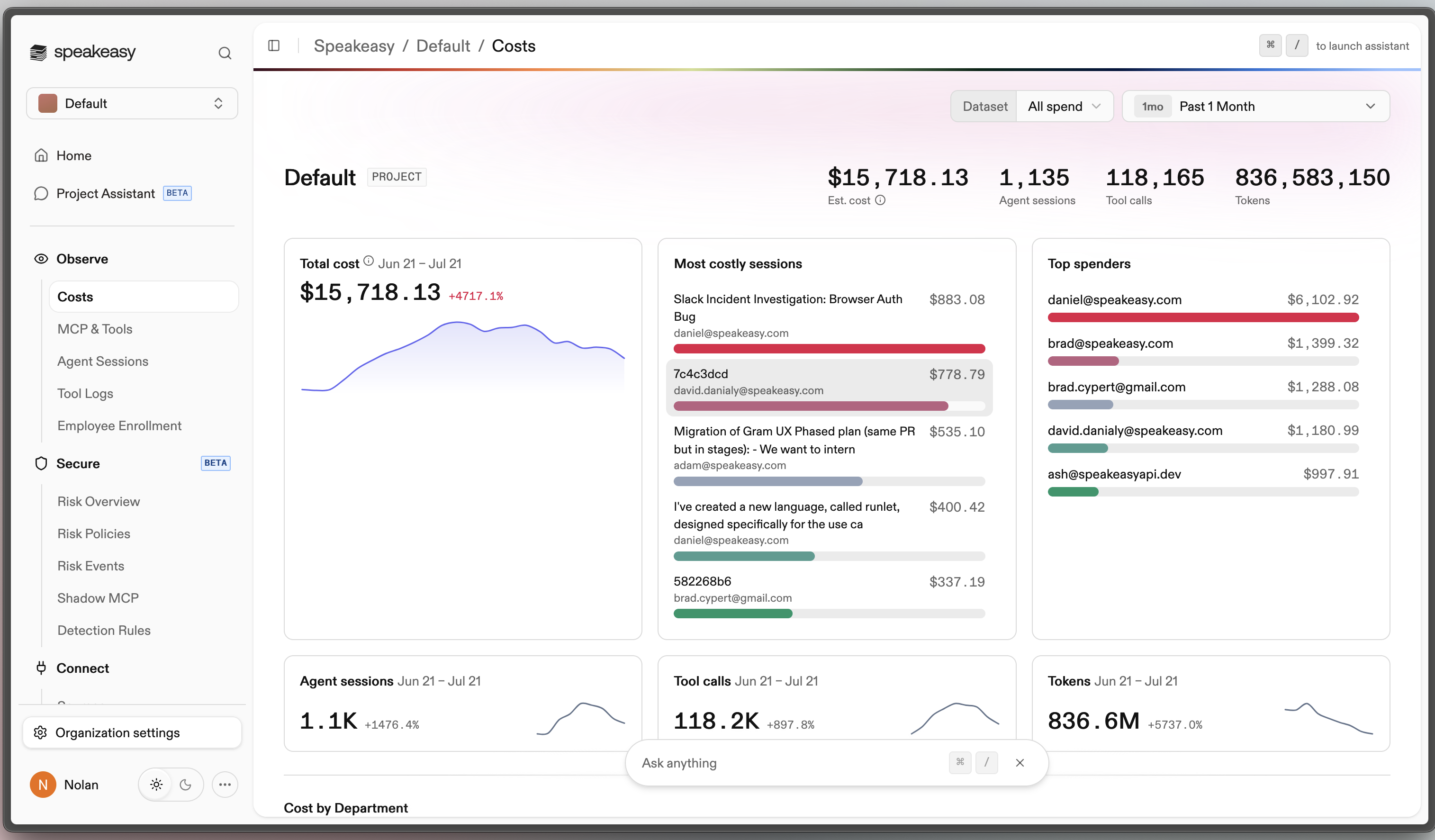
Exclusive: Speakeasy service tracks enterprise-wide AI agent spending
Speakeasy Development Inc. launched an AI cost-management service to track enterprise spending on coding agents like Claude Code, Cursor, and Codex by consolidating token usage data for financial oversight.

AI materials science startup CuspAI raises $450M in funding
UK-based AI materials science startup CuspAI secures $450M Series B funding at a $2.6B valuation, backed by Kleiner Perkins and NEA to support a chemical research consortium with Nvidia and Samsung.

Block launches Buzz, an open-source workspace for humans and AI agents
Block Inc. launched Buzz, a free open-source workspace for human-AI collaborative teams. It unifies chat, code hosting, and workflows while granting AI dedicated accounts.
Site Discovery
Keep exploring the AI ecosystem
After this brief, continue into related tools, models, and rankings to understand whether the story affects your choices.