
Pinecone releases Nexus into public preview to bring business knowledge to AI agents
Pinecone launches Nexus in public preview to curate and distribute enterprise knowledge for AI agents, addressing reliability issues in agentic data pipelines.

Signal Snapshot
Briefing Notes
What happened and why it matters
Summary
Pinecone has officially announced the launch of Nexus in public preview. This new service is specifically engineered to curate and distribute enterprise-grade knowledge directly to AI agents. The primary objective behind Nexus is to resolve persistent reliability challenges that often plague agentic data pipelines. By providing a dedicated mechanism for knowledge distribution, Pinecone aims to ensure that AI agents can access accurate, up-to-date, and structured information without the friction typically associated with integrating external data sources.
Why it matters
The integration of AI agents into enterprise workflows is rapidly expanding, but these agents frequently struggle with data consistency and retrieval accuracy. Traditional methods of feeding knowledge to LLMs often result in hallucinations or outdated responses due to fragmented data sources. Nexus addresses this by acting as a specialized layer between enterprise repositories and AI agents. This shift signifies a move towards more robust, production-ready agentic architectures where data reliability is prioritized alongside model intelligence. For businesses relying on autonomous agents for decision-making or customer interaction, having a guaranteed source of truth is critical for operational integrity and trust.
Related tools
For developers looking to explore similar capabilities in vector database management and agent orchestration, consider reviewing the broader landscape of AI infrastructure. You can browse other innovative solutions in the Browse AI tools section to find complementary technologies that enhance agent capabilities. Additionally, understanding the underlying models that power these agents is essential; the Model library offers insights into various weights and APIs that can be integrated with knowledge retrieval systems. To stay informed about the latest developments in this fast-evolving sector, check out the AI news feed for continuous updates on industry shifts and new product launches.
Impact on AI tools/models
Nexus represents a significant evolution in how AI tools interact with backend data. By decoupling knowledge curation from the inference process, it allows models to remain lightweight while accessing vast, dynamic enterprise datasets. This separation enhances scalability and reduces latency, as agents do not need to retrain or fine-tune models to incorporate new information. Instead, they query Nexus for the most relevant context. This approach encourages a modular ecosystem where specialized tools handle specific functions—such as data retrieval and validation—while general-purpose models focus on reasoning and generation. Consequently, this leads to more maintainable and adaptable AI systems that can evolve with changing business requirements without extensive technical overhaul.
What to watch
As Nexus enters public preview, several key areas warrant attention. First, monitor how enterprises adopt this service to replace legacy data integration methods. Second, observe the performance metrics regarding retrieval accuracy and latency improvements compared to standard vector search implementations. Third, track community feedback on ease of integration and compatibility with existing agent frameworks. For those interested in comparing different approaches to AI infrastructure, the rankings provide curated shortlists of top-performing tools and services in the market. Staying updated through these resources will help stakeholders understand the competitive landscape and identify best practices for implementing reliable agentic systems.
FAQ
What is Pinecone Nexus? Pinecone Nexus is a service designed to curate and distribute enterprise knowledge specifically for AI agents, focusing on improving the reliability of data pipelines.
Why was Nexus created? It was created to solve reliability issues in agentic data pipelines, ensuring that AI agents have access to consistent and accurate enterprise information.
Is Nexus available for general use? Yes, Pinecone has released Nexus into public preview, allowing users to test and integrate the service into their AI agent workflows.
Search FAQ
Frequently asked questions
FAQ
What is Pinecone Nexus?
What problem does Nexus address?
Keep Tracking
Related AI news

On theCUBE Pod: IBM’s AI test, Nvidia’s lead and the race for enterprise intelligence
IBM tests enterprise AI while Nvidia dominates accelerated computing. AMD and Broadcom vie for market share as the race for enterprise intelligence intensifies across hardware and software layers.

Hugging Face uses open-weights Z.ai GLM 5.2 to battle attacker after commercial frontier model refusal
Hugging Face detected a breach involving an attacker using agentic AI. Commercial frontier models blocked defensive requests due to strict safety guardrails. Hugging Face responded by deploying the open-weights Z.ai GLM 5.2 to counter the threat.

Anthropic settles with authors and publishers for $1.5B in landmark copyright case
Anthropic agrees to a $1.5 billion settlement with authors and publishers regarding the unauthorized use of creative works to train its Claude AI model, marking the largest copyright settlement in history.
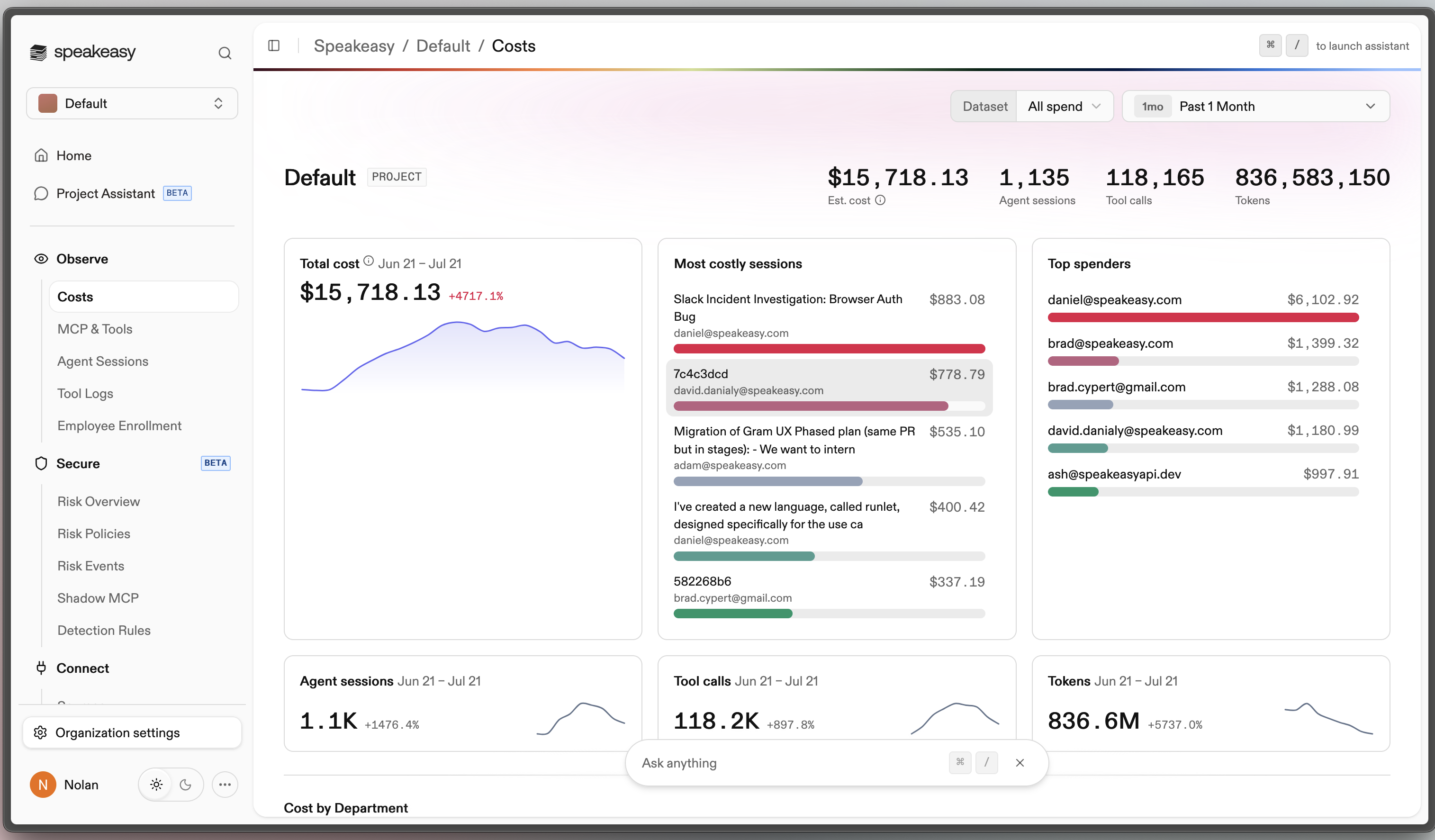
Exclusive: Speakeasy service tracks enterprise-wide AI agent spending
Speakeasy Development Inc. launched an AI cost-management service to track enterprise spending on coding agents like Claude Code, Cursor, and Codex by consolidating token usage data for financial oversight.

AI materials science startup CuspAI raises $450M in funding
UK-based AI materials science startup CuspAI secures $450M Series B funding at a $2.6B valuation, backed by Kleiner Perkins and NEA to support a chemical research consortium with Nvidia and Samsung.

Block launches Buzz, an open-source workspace for humans and AI agents
Block Inc. launched Buzz, a free open-source workspace for human-AI collaborative teams. It unifies chat, code hosting, and workflows while granting AI dedicated accounts.
Site Discovery
Keep exploring the AI ecosystem
After this brief, continue into related tools, models, and rankings to understand whether the story affects your choices.