
OpenAI details GPT-Red, an AI that attacks its own models to find flaws
OpenAI introduces GPT-Red, an autonomous AI system designed to internally red-team its own models. It automates the detection of prompt injection vulnerabilities, replacing traditional human-led security testing prior to public releases.

Signal Snapshot
Briefing Notes
What happened and why it matters
Summary
OpenAI has officially detailed the launch of GPT-Red, a specialized autonomous AI system engineered to conduct internal red-teaming on its own large language models. The primary objective of GPT-Red is to automate the identification of security flaws, specifically focusing on prompt injection vulnerabilities. By deploying this internal tool, OpenAI aims to replace or significantly augment traditional human-led security testing protocols that were previously required before models are made available to the public. This shift represents a move toward self-correcting and self-auditing AI infrastructure, leveraging the capabilities of advanced language models to secure other models within the same ecosystem.
Why it matters
The introduction of GPT-Red signals a critical evolution in how major AI developers approach safety and security. As language models become more capable and integrated into sensitive applications, the risk of adversarial attacks, such as prompt injections, grows exponentially. Traditional red-teaming relies heavily on human expertise, which can be slow, expensive, and limited in scale compared to the rapid iteration cycles of modern AI development. By automating this process with an AI agent designed specifically to find flaws, OpenAI is attempting to close the gap between model capability and model safety. This approach allows for continuous, high-volume stress-testing that human teams alone could not sustain. It also sets a precedent for the industry, suggesting that future AI safety standards may increasingly rely on automated, AI-driven validation rather than purely manual oversight. For users and enterprises relying on these models, this could mean faster deployment cycles without compromising on security rigor, provided the red-teaming mechanism itself is robust and transparent.
Related tools
For those interested in exploring similar security-focused AI solutions or broader model evaluation frameworks, the following resources on ToolSeekAI are relevant:
- Browse AI tools for products in this space
- Model library for weights and APIs
- Rankings for curated shortlists
Impact on AI tools/models
GPT-Red’s deployment impacts the broader AI landscape by raising the bar for internal security practices. It suggests a future where "security by design" includes automated adversarial testing as a standard pipeline step. This could lead to more resilient models being released to the public, potentially reducing the incidence of successful jailbreaks or injection attacks in deployed applications. However, it also introduces a new layer of complexity: the need to trust the red-teaming AI itself. If GPT-Red can be fooled or bypassed, the security guarantees it provides are compromised. This creates a recursive security challenge where the tools used to test AI must themselves be rigorously secured. Developers and researchers will likely focus on benchmarking the efficacy of such autonomous agents against known attack vectors to establish trust in these automated systems.
What to watch
As OpenAI integrates GPT-Red into its development lifecycle, several key areas warrant attention. First, the transparency of the findings generated by GPT-Red will be crucial for community trust. Second, the industry response to this automated approach will indicate whether other major labs adopt similar strategies. Finally, the effectiveness of GPT-Red in catching novel attack vectors that human testers might miss will define its long-term value. For ongoing updates on AI security developments and tool evaluations, readers are encouraged to explore:
- AI news for the latest industry developments
- rankings to compare model safety and performance
- Browse AI tools to discover emerging security solutions
FAQ
What is GPT-Red? GPT-Red is an autonomous AI system launched by OpenAI designed to internally red-team its own models.
What specific vulnerability does GPT-Red target? It primarily focuses on detecting prompt injection vulnerabilities.
How does GPT-Red differ from traditional security testing? It automates the detection process, replacing or augmenting traditional human-led security testing before public releases.
Search FAQ
Frequently asked questions
FAQ
What is GPT-Red?
What specific vulnerabilities does GPT-Red detect?
How does GPT-Red change security testing?
Keep Tracking
Related AI news

On theCUBE Pod: IBM’s AI test, Nvidia’s lead and the race for enterprise intelligence
IBM tests enterprise AI while Nvidia dominates accelerated computing. AMD and Broadcom vie for market share as the race for enterprise intelligence intensifies across hardware and software layers.

Hugging Face uses open-weights Z.ai GLM 5.2 to battle attacker after commercial frontier model refusal
Hugging Face detected a breach involving an attacker using agentic AI. Commercial frontier models blocked defensive requests due to strict safety guardrails. Hugging Face responded by deploying the open-weights Z.ai GLM 5.2 to counter the threat.

Anthropic settles with authors and publishers for $1.5B in landmark copyright case
Anthropic agrees to a $1.5 billion settlement with authors and publishers regarding the unauthorized use of creative works to train its Claude AI model, marking the largest copyright settlement in history.
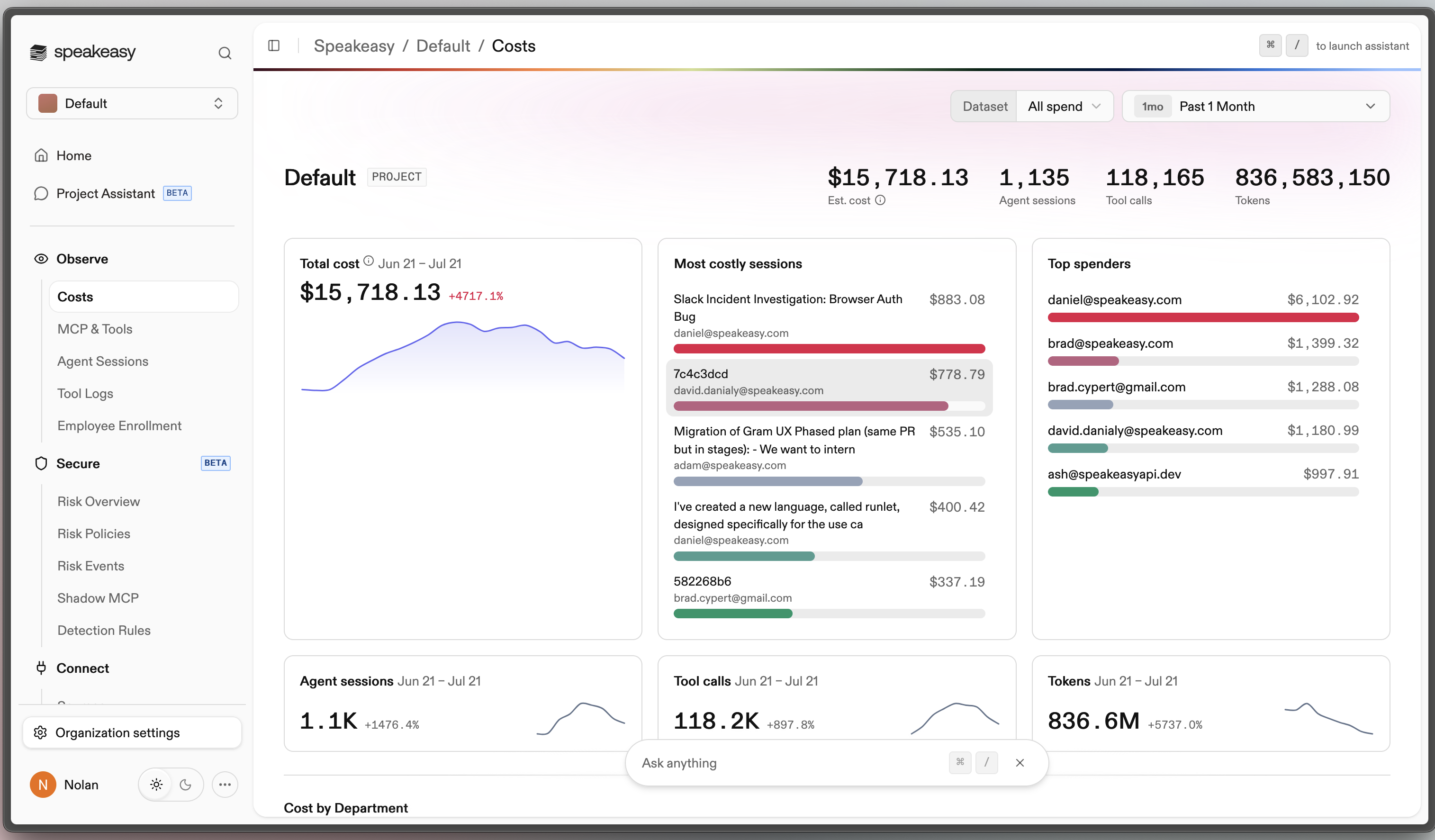
Exclusive: Speakeasy service tracks enterprise-wide AI agent spending
Speakeasy Development Inc. launched an AI cost-management service to track enterprise spending on coding agents like Claude Code, Cursor, and Codex by consolidating token usage data for financial oversight.

AI materials science startup CuspAI raises $450M in funding
UK-based AI materials science startup CuspAI secures $450M Series B funding at a $2.6B valuation, backed by Kleiner Perkins and NEA to support a chemical research consortium with Nvidia and Samsung.
Block launches Buzz, an open-source workspace for humans and AI agents
Block Inc. launched Buzz, a free open-source workspace for human-AI collaborative teams. It unifies chat, code hosting, and workflows while granting AI dedicated accounts.
Site Discovery
Keep exploring the AI ecosystem
After this brief, continue into related tools, models, and rankings to understand whether the story affects your choices.