
Nvidia launches Cosmos 3 Edge model and expands its physical AI push in Japan
Nvidia launches Cosmos 3 Edge, a 4B parameter world model for on-device vision and robot control, while expanding its physical AI partnerships in Japan.
Signal Snapshot
Briefing Notes
What happened and why it matters
Summary
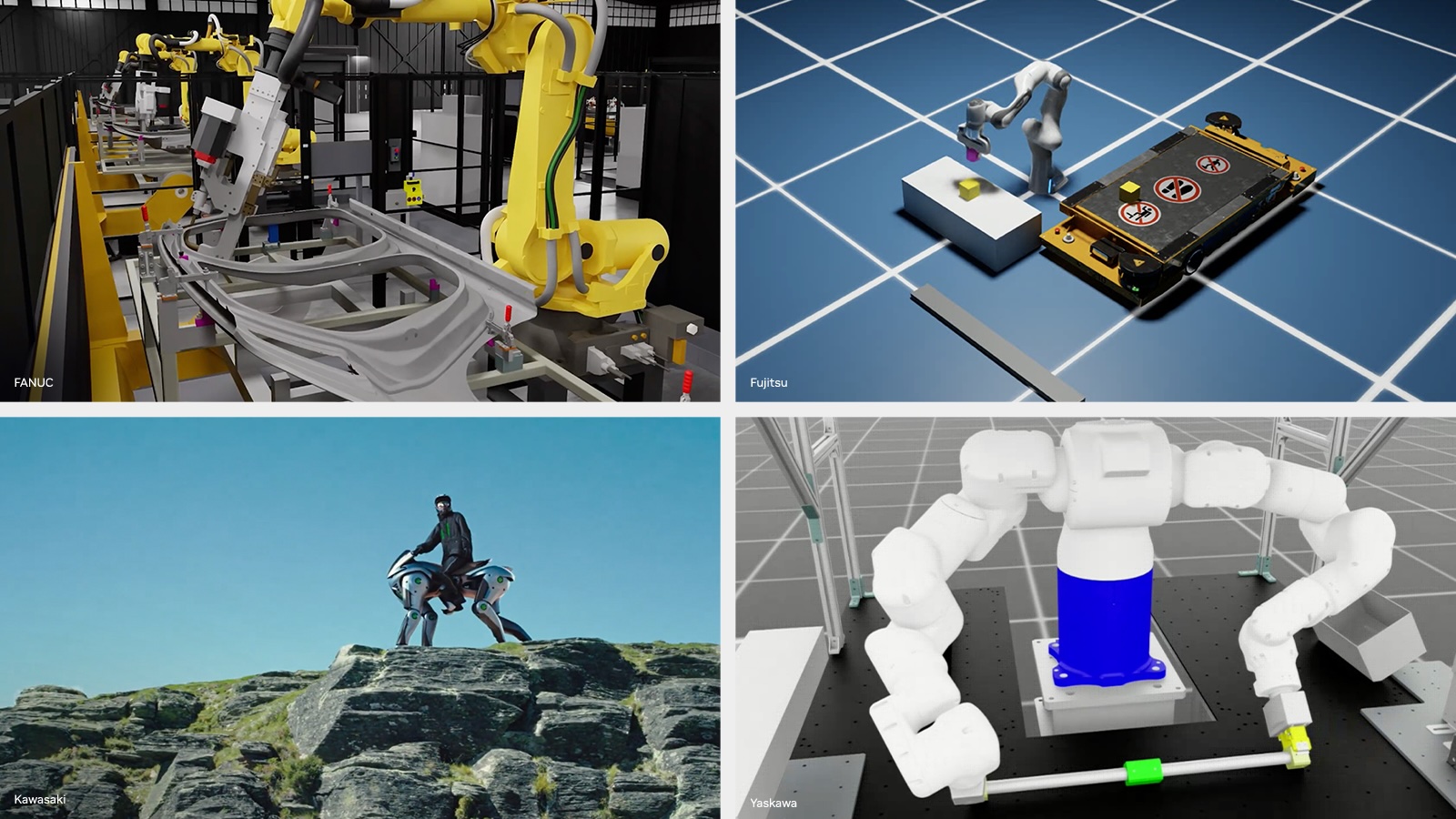
Nvidia has officially introduced Cosmos 3 Edge, a specialized 4-billion-parameter world model designed specifically for on-device vision reasoning and robot control. This launch represents a strategic pivot toward "physical AI," moving beyond purely digital generative tasks into the realm of tangible, real-world interaction. Concurrently, Nvidia is intensifying its operational footprint in Japan, establishing new partnerships within the robotics and manufacturing sectors to support this hardware-software integration.
Why it matters
The introduction of Cosmos 3 Edge signals a critical evolution in how artificial intelligence is deployed. By focusing on a 4B parameter model, Nvidia is addressing the growing demand for efficient, low-latency AI that can operate directly on edge devices rather than relying solely on massive cloud infrastructure. This shift is essential for robotics and autonomous systems where immediate visual processing and decision-making are required for safety and precision.
Furthermore, the expansion in Japan highlights the country's role as a global hub for advanced manufacturing and robotics. By partnering with local entities in these sectors, Nvidia is embedding its physical AI capabilities into some of the world’s most sophisticated industrial workflows. This move not only strengthens Nvidia’s position in the hardware ecosystem but also accelerates the adoption of AI-driven automation in traditional industries.
Related tools
For developers interested in exploring similar capabilities, the following resources on ToolSeekAI may be useful:
- Browse AI tools for products in this space
- Model library for weights and APIs
- Rankings for curated shortlists
Impact on AI tools/models
Cosmos 3 Edge impacts the broader AI landscape by setting a new standard for edge-based world models. Its 4B parameter size suggests a balance between computational efficiency and reasoning capability, making it accessible for integration into smaller robots and IoT devices. This could democratize access to high-level vision reasoning, previously the domain of larger, cloud-dependent models. For the robotics industry, this means faster iteration cycles and more responsive autonomous agents. The focus on on-device processing also raises important considerations regarding data privacy and security, as sensitive operational data does not need to leave the local device.
What to watch
As Nvidia continues to deepen its ties with Japanese manufacturers, stakeholders should monitor the specific applications of Cosmos 3 Edge in production lines and autonomous mobile robots. The success of these partnerships will likely influence global standards for edge AI in industrial settings. Additionally, the competitive response from other major tech firms specializing in robotics and edge computing will be crucial to watch. For ongoing updates on such developments, readers are encouraged to explore:
- AI news for the latest industry announcements
- ToolSeekAI tools to discover emerging solutions
- rankings to see how new models compare in performance metrics
FAQ
What is Nvidia Cosmos 3 Edge? It is a 4-billion-parameter world model designed for on-device vision reasoning and robot control.
Where is Nvidia expanding its physical AI presence? Nvidia is expanding its physical AI presence in Japan through new robotics and manufacturing partnerships.
What is the primary function of Cosmos 3 Edge? The primary function is to enable efficient vision reasoning and control for robots and edge devices.
Search FAQ
Frequently asked questions
FAQ
What is Nvidia Cosmos 3 Edge?
How large is the Cosmos 3 Edge model?
Where is Nvidia expanding its physical AI efforts?
Keep Tracking
Related AI news

On theCUBE Pod: IBM’s AI test, Nvidia’s lead and the race for enterprise intelligence
IBM tests enterprise AI while Nvidia dominates accelerated computing. AMD and Broadcom vie for market share as the race for enterprise intelligence intensifies across hardware and software layers.

Hugging Face uses open-weights Z.ai GLM 5.2 to battle attacker after commercial frontier model refusal
Hugging Face detected a breach involving an attacker using agentic AI. Commercial frontier models blocked defensive requests due to strict safety guardrails. Hugging Face responded by deploying the open-weights Z.ai GLM 5.2 to counter the threat.

Anthropic settles with authors and publishers for $1.5B in landmark copyright case
Anthropic agrees to a $1.5 billion settlement with authors and publishers regarding the unauthorized use of creative works to train its Claude AI model, marking the largest copyright settlement in history.

Exclusive: Speakeasy service tracks enterprise-wide AI agent spending
Speakeasy Development Inc. launched an AI cost-management service to track enterprise spending on coding agents like Claude Code, Cursor, and Codex by consolidating token usage data for financial oversight.

AI materials science startup CuspAI raises $450M in funding
UK-based AI materials science startup CuspAI secures $450M Series B funding at a $2.6B valuation, backed by Kleiner Perkins and NEA to support a chemical research consortium with Nvidia and Samsung.
Block launches Buzz, an open-source workspace for humans and AI agents
Block Inc. launched Buzz, a free open-source workspace for human-AI collaborative teams. It unifies chat, code hosting, and workflows while granting AI dedicated accounts.
Site Discovery
Keep exploring the AI ecosystem
After this brief, continue into related tools, models, and rankings to understand whether the story affects your choices.