
Mark Zuckerberg says Meta’s agentic AI efforts aren’t progressing as fast as he had hoped
Meta CEO Mark Zuckerberg admits agentic AI progress lags behind expectations, citing challenges in converting heavy investment into functional autonomous systems.

Signal Snapshot
Briefing Notes
What happened and why it matters
Summary
Meta CEO Mark Zuckerberg has openly admitted that the company’s development of agentic AI is proceeding at a slower pace than originally anticipated. Despite substantial financial commitments to the technology, Meta is encountering significant technical hurdles in transforming these investments into robust, fully autonomous AI systems. This admission highlights the growing complexity of moving beyond generative models toward agents capable of independent action.
Why it matters
The acknowledgment from Meta’s leadership underscores a critical inflection point in the current AI landscape. While many tech giants have raced to deploy large language models, the transition to "agentic" AI—systems that can plan, execute, and iterate on complex tasks without constant human intervention—proves far more difficult than expected. For investors and industry observers, this signals that the commercialization of autonomous AI may face longer timelines and higher engineering barriers than previously projected. It also suggests that the competitive advantage in AI will increasingly depend on solving reliability and autonomy issues rather than just raw model scale.
Related tools
For those interested in exploring current autonomous capabilities, browsing the latest Browse AI tools can provide insight into what is currently feasible in the market. Additionally, reviewing the Model library offers a look at the underlying weights and APIs that power these emerging systems.
Impact on AI tools/models
Meta’s struggle with agentic AI impacts the broader ecosystem by setting realistic expectations for enterprise adoption. As one of the largest players in the field, Meta’s challenges suggest that even well-funded entities must overcome significant engineering bottlenecks. This may lead to a consolidation of focus on hybrid models where AI assists humans rather than fully replacing them in the immediate term. Developers and users should anticipate a period of refinement where reliability and safety take precedence over speed of deployment.
What to watch
As Meta recalibrates its strategy, the industry will closely monitor how these delays affect their product roadmap. Key areas to observe include:
- Autonomy Benchmarks: Watch for new metrics that define success in agentic tasks, moving beyond simple generation accuracy.
- Competitor Responses: See how other major labs adjust their timelines in light of Meta’s public admission.
- Investment Shifts: Monitor whether capital flows away from pure agentic research toward more stable generative applications.
For ongoing updates on these developments, readers are encouraged to check the AI news section regularly. Furthermore, analyzing the rankings of AI tools can help identify which platforms are successfully navigating these early-stage challenges.
FAQ
What is the main challenge Meta faces with agentic AI? The primary difficulty lies in converting large financial investments into fully functional, autonomous systems that can operate independently.
Has Meta changed its AI strategy? While no complete pivot is announced, the admission suggests a need for more rigorous engineering focus on autonomy and reliability.
Where can I find more information on AI tool rankings? You can explore curated lists and performance metrics via the rankings page on ToolSeekAI.
Search FAQ
Frequently asked questions
FAQ
Why is Meta's agentic AI progress slowing down?
Who acknowledged the delay in Meta's AI efforts?
Keep Tracking
Related AI news

On theCUBE Pod: IBM’s AI test, Nvidia’s lead and the race for enterprise intelligence
IBM tests enterprise AI while Nvidia dominates accelerated computing. AMD and Broadcom vie for market share as the race for enterprise intelligence intensifies across hardware and software layers.

Hugging Face uses open-weights Z.ai GLM 5.2 to battle attacker after commercial frontier model refusal
Hugging Face detected a breach involving an attacker using agentic AI. Commercial frontier models blocked defensive requests due to strict safety guardrails. Hugging Face responded by deploying the open-weights Z.ai GLM 5.2 to counter the threat.

Anthropic settles with authors and publishers for $1.5B in landmark copyright case
Anthropic agrees to a $1.5 billion settlement with authors and publishers regarding the unauthorized use of creative works to train its Claude AI model, marking the largest copyright settlement in history.
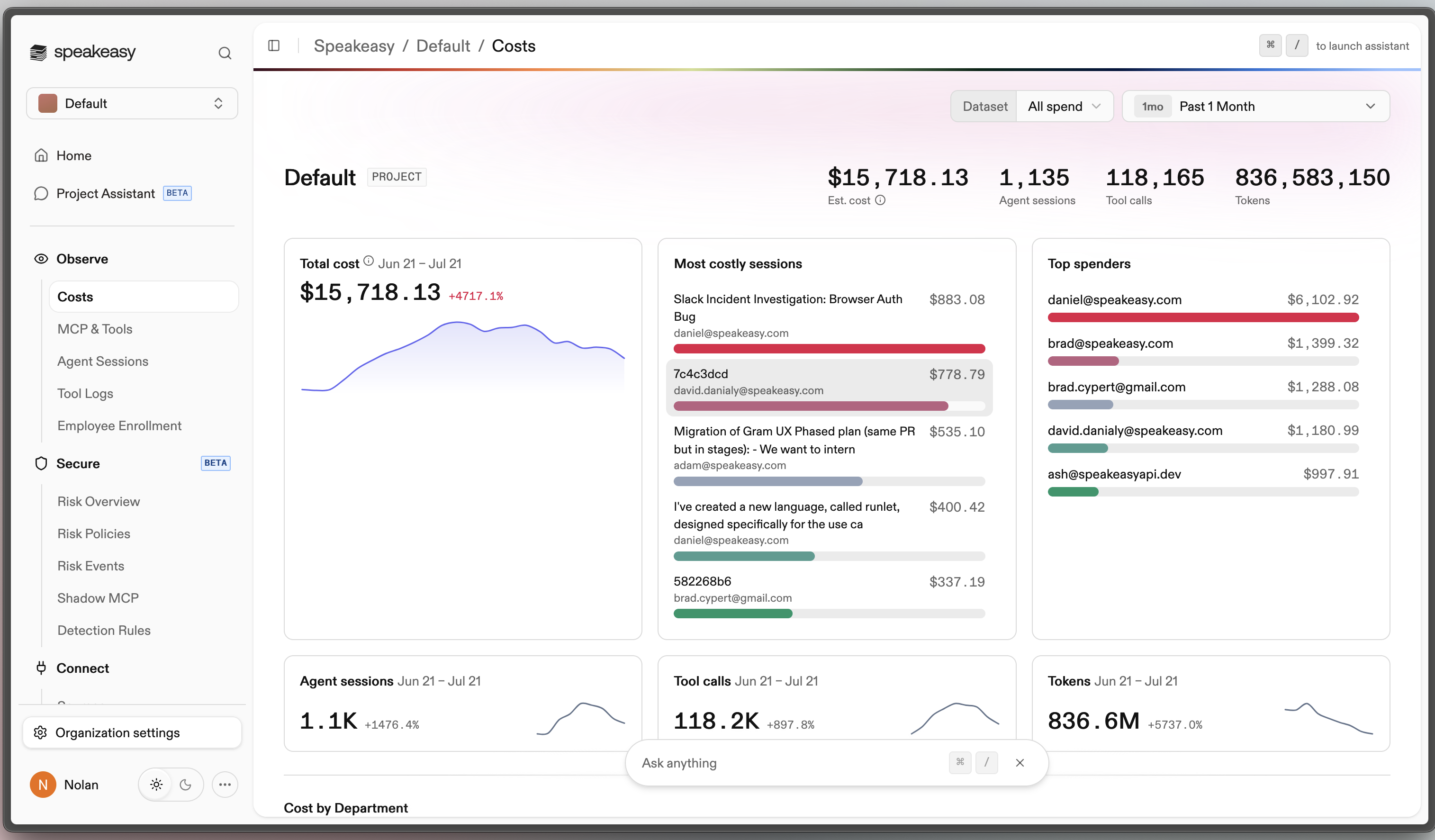
Exclusive: Speakeasy service tracks enterprise-wide AI agent spending
Speakeasy Development Inc. launched an AI cost-management service to track enterprise spending on coding agents like Claude Code, Cursor, and Codex by consolidating token usage data for financial oversight.

AI materials science startup CuspAI raises $450M in funding
UK-based AI materials science startup CuspAI secures $450M Series B funding at a $2.6B valuation, backed by Kleiner Perkins and NEA to support a chemical research consortium with Nvidia and Samsung.

Block launches Buzz, an open-source workspace for humans and AI agents
Block Inc. launched Buzz, a free open-source workspace for human-AI collaborative teams. It unifies chat, code hosting, and workflows while granting AI dedicated accounts.
Site Discovery
Keep exploring the AI ecosystem
After this brief, continue into related tools, models, and rankings to understand whether the story affects your choices.