
Infinity raises $15M to run AI inference on any chipset
Infinity Inc. secures $15M seed funding to build software that automatically optimizes new AI chips for inference workloads, valuing the early-stage infrastructure firm at $100M post-money.

Signal Snapshot
Briefing Notes
What happened and why it matters
Summary
Infinity Inc., an early-stage AI infrastructure research firm, has secured $15 million in seed funding to develop software designed to automatically prepare new artificial intelligence chips for inference workloads. The investment values the company at $100 million on a post-money basis. Proceeds will primarily fund engineering expansion and the scaling of its automated research initiatives.
Why it matters
The rapid proliferation of specialized hardware in the AI sector has created a significant bottleneck: deploying models efficiently across diverse chip architectures requires extensive manual optimization and benchmarking. Infinity’s focus on automating this preparation phase addresses a critical gap in the AI infrastructure stack. By reducing the friction between new silicon releases and practical deployment, the company aims to accelerate the adoption of next-generation hardware. This shift could lower operational costs for developers and enable faster iteration cycles for inference-heavy applications, which are increasingly central to production AI systems.
Related tools
While specific product names are not yet detailed, the initiative aligns with emerging hardware abstraction and model optimization platforms. Developers tracking similar infrastructure solutions can explore resources like AI Infrastructure Tools or review current Model Optimization Platforms to understand how automated chip preparation fits into broader deployment workflows.
Impact on AI tools/models
Automated chip preparation directly influences how AI models transition from research environments to production. When inference workloads can be rapidly adapted to new silicon, model developers gain access to improved latency, throughput, and energy efficiency without maintaining dedicated hardware teams. This capability supports more agile model serving, particularly for large language models and vision systems that demand consistent performance across varying compute backends. As hardware diversity grows, software layers that handle low-level optimization will become essential middleware for scalable AI deployments.
What to watch
The success of Infinity’s approach will depend on how quickly it can integrate with major semiconductor manufacturers and adapt to evolving AI framework requirements. Industry observers should monitor updates on their automated research pipeline, partnerships with chip vendors, and benchmarks demonstrating inference speedups across different architectures. For ongoing coverage of infrastructure developments, visit Latest AI News to track funding trends and technical breakthroughs. Additionally, reviewing Platform Rankings can help assess how new automation solutions compare to existing optimization frameworks. Developers interested in hardware-aware model deployment should also check the directory for emerging alternatives.
FAQ
- How much funding did Infinity Inc. secure? The company raised $15 million in seed funding.
- What is Infinity’s current valuation? The post-money valuation stands at $100 million.
- What will the capital be used for? Funds will support engineering team expansion and the scaling of automated research efforts.
Search FAQ
Frequently asked questions
FAQ
How much funding did Infinity Inc. secure?
What is Infinity’s current valuation?
What will the capital be used for?
Keep Tracking
Related AI news

On theCUBE Pod: IBM’s AI test, Nvidia’s lead and the race for enterprise intelligence
IBM tests enterprise AI while Nvidia dominates accelerated computing. AMD and Broadcom vie for market share as the race for enterprise intelligence intensifies across hardware and software layers.

Hugging Face uses open-weights Z.ai GLM 5.2 to battle attacker after commercial frontier model refusal
Hugging Face detected a breach involving an attacker using agentic AI. Commercial frontier models blocked defensive requests due to strict safety guardrails. Hugging Face responded by deploying the open-weights Z.ai GLM 5.2 to counter the threat.

Anthropic settles with authors and publishers for $1.5B in landmark copyright case
Anthropic agrees to a $1.5 billion settlement with authors and publishers regarding the unauthorized use of creative works to train its Claude AI model, marking the largest copyright settlement in history.
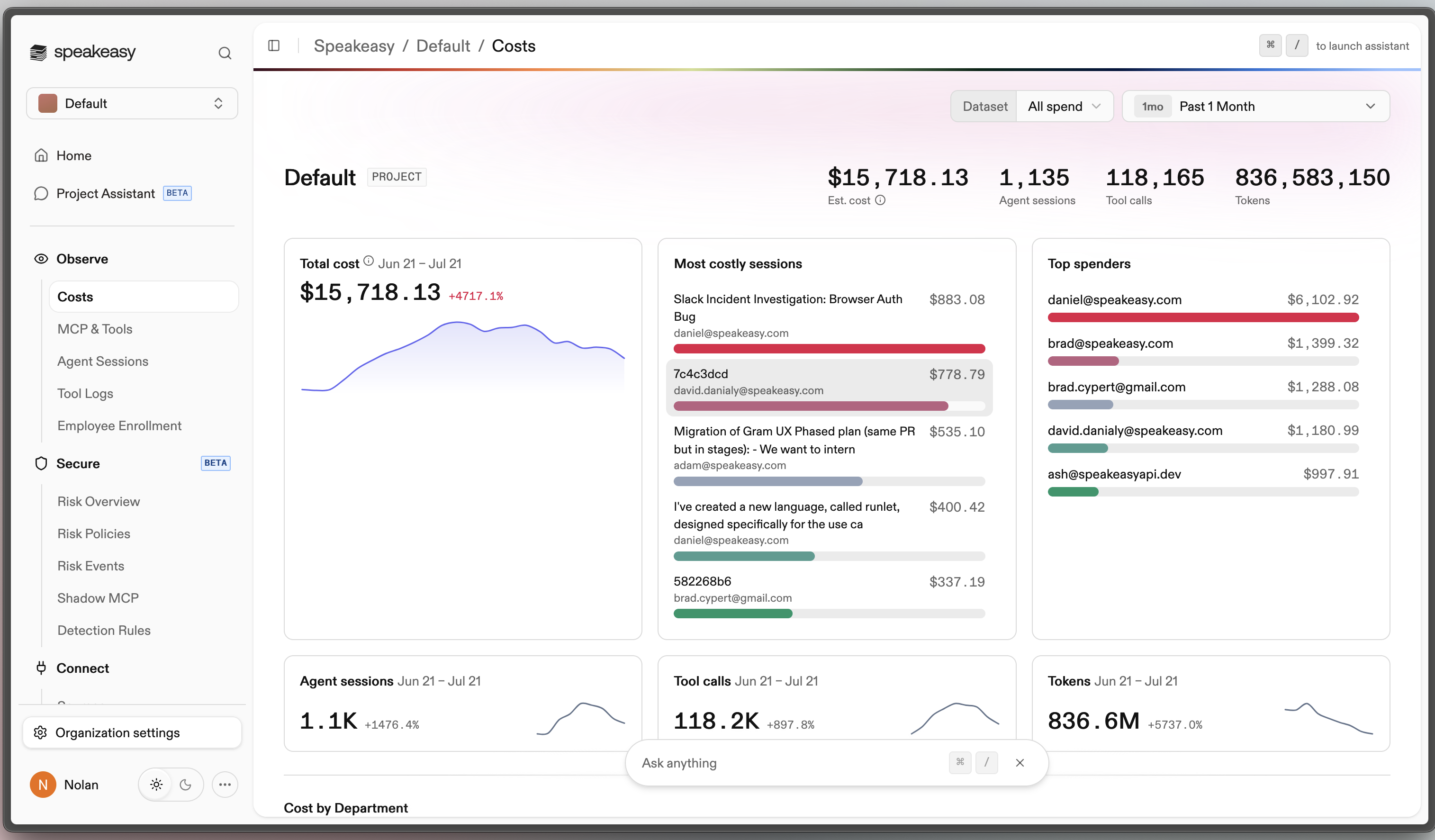
Exclusive: Speakeasy service tracks enterprise-wide AI agent spending
Speakeasy Development Inc. launched an AI cost-management service to track enterprise spending on coding agents like Claude Code, Cursor, and Codex by consolidating token usage data for financial oversight.

AI materials science startup CuspAI raises $450M in funding
UK-based AI materials science startup CuspAI secures $450M Series B funding at a $2.6B valuation, backed by Kleiner Perkins and NEA to support a chemical research consortium with Nvidia and Samsung.

Block launches Buzz, an open-source workspace for humans and AI agents
Block Inc. launched Buzz, a free open-source workspace for human-AI collaborative teams. It unifies chat, code hosting, and workflows while granting AI dedicated accounts.
Site Discovery
Keep exploring the AI ecosystem
After this brief, continue into related tools, models, and rankings to understand whether the story affects your choices.