
Couchbase’s AI Data Plane aims to turn fragmented data into real enterprise agent memory
Couchbase launches an AI Data Plane to provide persistent, real-time memory for enterprise agents, shifting focus from fragile chat pilots to robust systems reasoning on live operational data.
Signal Snapshot
Briefing Notes
What happened and why it matters
Summary
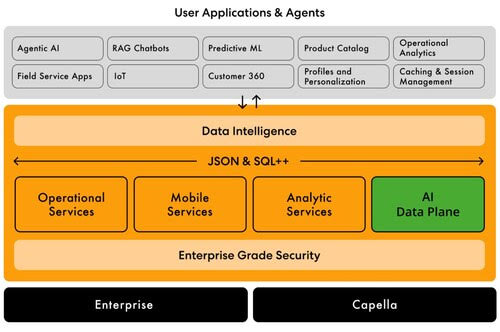
Couchbase has officially introduced its AI Data Plane, a strategic infrastructure layer designed specifically to address the memory limitations of current enterprise AI applications. The core objective is to provide persistent, real-time memory for enterprise agents. This development marks a significant shift away from what the company describes as "fragile chat pilots" toward more robust systems that can perform complex reasoning on live operational data. By integrating directly with Couchbase’s database capabilities, the AI Data Plane aims to ensure that AI agents have access to consistent, up-to-date information without the latency or inconsistency issues often associated with traditional retrieval methods.
Why it matters
The introduction of specialized memory layers for AI agents addresses one of the most critical bottlenecks in enterprise AI adoption: context retention and data freshness. Most current Large Language Model (LLM) applications struggle with maintaining long-term context or accessing real-time data without significant engineering overhead. By positioning the database itself as the memory layer, Couchbase is simplifying the architecture for developers. This allows enterprises to build agents that are not just conversational interfaces but functional tools capable of executing tasks based on live business logic. It reduces the need for complex, custom-built vector stores or separate memory management systems, potentially lowering the barrier to entry for deploying reliable AI agents in production environments.
Related tools
For developers looking to integrate similar capabilities or explore alternative data solutions, the following resources may be useful:
- Browse AI tools for products in this space
- Model library for weights and APIs
- Rankings for curated shortlists
Impact on AI tools/models
This move impacts the broader ecosystem by redefining the role of databases in the AI stack. Traditionally, databases served as static storage, while AI models handled processing. With the AI Data Plane, the database becomes an active participant in the reasoning process, providing the necessary statefulness for agents. This suggests a future where "memory" is not an afterthought added via vector embeddings but a native feature of the data platform. For model providers, this means their outputs will increasingly depend on the quality and accessibility of this persistent memory layer. It encourages a tighter coupling between data infrastructure and AI application logic, potentially leading to more standardized ways of handling agent state across different platforms.
What to watch
As Couchbase rolls out this feature, several key areas require monitoring. First, observe how quickly other major database providers respond with similar "AI-native" memory features. Second, track developer adoption rates; the success of this approach depends on whether it genuinely simplifies the agent development workflow compared to existing vector database solutions. Finally, keep an eye on performance benchmarks related to real-time data consistency, as this is the primary value proposition. For those interested in the broader landscape of AI infrastructure, exploring ToolSeekAI tools can provide context on competing solutions. Additionally, reviewing recent updates in AI news will help gauge industry sentiment toward database-centric AI architectures. Understanding these trends is crucial for evaluating the long-term viability of such specialized data planes.
FAQ
What is Couchbase’s AI Data Plane? It is a new infrastructure layer designed to provide persistent, real-time memory for enterprise AI agents, enabling them to reason over live operational data.
How does it differ from traditional chat pilots? Unlike fragile chat pilots that may lack context or real-time data accuracy, the AI Data Plane supports robust systems reasoning by ensuring agents have access to consistent, up-to-date information.
Who is the target audience for this technology? The primary target is enterprises looking to deploy reliable, production-grade AI agents that require persistent memory and real-time data integration.
Search FAQ
Frequently asked questions
FAQ
What problem does Couchbase's AI Data Plane solve?
How does the AI Data Plane differ from traditional chat pilots?
Keep Tracking
Related AI news

On theCUBE Pod: IBM’s AI test, Nvidia’s lead and the race for enterprise intelligence
IBM tests enterprise AI while Nvidia dominates accelerated computing. AMD and Broadcom vie for market share as the race for enterprise intelligence intensifies across hardware and software layers.

Hugging Face uses open-weights Z.ai GLM 5.2 to battle attacker after commercial frontier model refusal
Hugging Face detected a breach involving an attacker using agentic AI. Commercial frontier models blocked defensive requests due to strict safety guardrails. Hugging Face responded by deploying the open-weights Z.ai GLM 5.2 to counter the threat.

Anthropic settles with authors and publishers for $1.5B in landmark copyright case
Anthropic agrees to a $1.5 billion settlement with authors and publishers regarding the unauthorized use of creative works to train its Claude AI model, marking the largest copyright settlement in history.
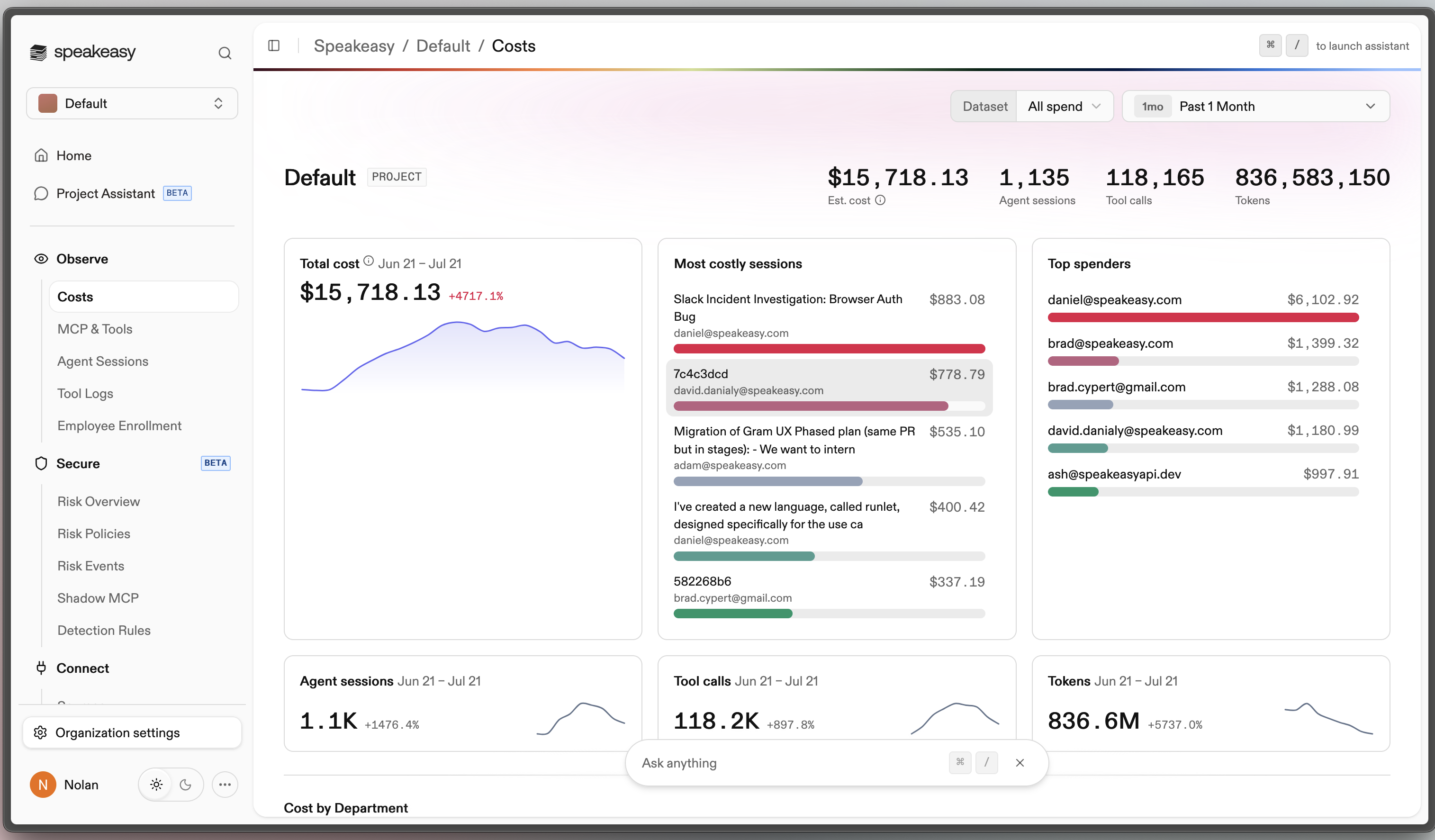
Exclusive: Speakeasy service tracks enterprise-wide AI agent spending
Speakeasy Development Inc. launched an AI cost-management service to track enterprise spending on coding agents like Claude Code, Cursor, and Codex by consolidating token usage data for financial oversight.

AI materials science startup CuspAI raises $450M in funding
UK-based AI materials science startup CuspAI secures $450M Series B funding at a $2.6B valuation, backed by Kleiner Perkins and NEA to support a chemical research consortium with Nvidia and Samsung.

Block launches Buzz, an open-source workspace for humans and AI agents
Block Inc. launched Buzz, a free open-source workspace for human-AI collaborative teams. It unifies chat, code hosting, and workflows while granting AI dedicated accounts.
Site Discovery
Keep exploring the AI ecosystem
After this brief, continue into related tools, models, and rankings to understand whether the story affects your choices.