
Chai Discovery nabs $400M Series C as AI-designed antibodies reach Big Pharma
Chai Discovery secures $400M Series C, tripling valuation to $3.8B. The AI biotech firm partners with Big Pharma using AI-designed antibodies, marking significant validation for generative biology.

Signal Snapshot
Briefing Notes
What happened and why it matters
Summary
Chai Discovery has successfully closed a massive $400 million Series C funding round, effectively tripling its corporate valuation to $3.8 billion. This financial milestone underscores the growing confidence investors have in the intersection of artificial intelligence and biological sciences. The company, which specializes in predicting complex biochemical interactions, is currently leveraging these capabilities to design novel antibodies. These AI-generated therapeutic candidates are no longer just theoretical; they have entered active partnership discussions with major pharmaceutical companies, signaling a transition from research labs to real-world drug development pipelines.
Why it matters
The significance of this event extends beyond mere capital injection. It represents a critical validation of "generative biology" as a viable and high-value sector within the broader AI industry. For years, the application of machine learning to drug discovery was viewed as promising but unproven at scale. Chai Discovery’s ability to attract top-tier venture capital and secure partnerships with established Big Pharma entities demonstrates that AI-designed molecules can meet the rigorous standards required for pharmaceutical collaboration.
This shift suggests that the traditional timeline for drug discovery may begin to compress. By using AI to predict biochemical interactions with high accuracy, companies like Chai can identify potential antibody structures faster than conventional methods allow. This efficiency is crucial for addressing urgent medical needs and reducing the astronomical costs associated with bringing new drugs to market. Furthermore, the tripling of valuation to $3.8B highlights the intense competition among investors to back platforms that can successfully bridge the gap between computational models and tangible biological outcomes.
Related tools
While Chai Discovery operates primarily as a biotech firm rather than a public software tool, the underlying technology relies heavily on advanced computational frameworks. Users interested in the technical backbone of such AI-driven biology can explore:
- Browse AI tools to find platforms specializing in molecular modeling and bioinformatics.
- Model library to discover open-source weights used in protein structure prediction.
- Rankings to see how Chai Discovery compares to other AI biotech startups in terms of funding and partnership activity.
Impact on AI tools/models
The success of Chai Discovery is likely to accelerate investment in specialized AI models designed for scientific discovery. We can expect to see increased demand for models that handle high-dimensional biochemical data, particularly those focused on protein folding and antibody-antigen binding predictions. This trend will likely drive innovation in both proprietary and open-source model architectures, pushing the boundaries of what AI can achieve in material science and healthcare. As these models become more sophisticated, they will enable more precise simulations, potentially reducing the reliance on physical wet-lab experiments during early-stage discovery.
What to watch
As the AI-biotech sector matures, several key areas warrant close attention. First, monitor the specific outcomes of the partnerships between Chai Discovery and Big Pharma; successful clinical trials would serve as a definitive proof-of-concept for the entire industry. Second, keep an eye on emerging competitors in the AI tools space that are attempting to replicate or surpass Chai’s predictive capabilities. Finally, track regulatory developments discussed in our AI news section, as government bodies will need to adapt frameworks to evaluate AI-designed therapeutics. For a broader perspective on market trends, consult our rankings to see how funding rounds across the sector are evolving.
FAQ
What is Chai Discovery's current valuation? Chai Discovery’s valuation has tripled to $3.8 billion following its latest funding round.
How much capital did Chai Discovery raise? The company secured $400 million in Series C funding.
What is Chai Discovery known for? They are known for using AI to predict biochemical interactions and design novel antibodies for pharmaceutical partnerships.
Search FAQ
Frequently asked questions
FAQ
How much funding did Chai Discovery raise?
What is Chai Discovery's current valuation?
Who led the Series C investment?
Keep Tracking
Related AI news

On theCUBE Pod: IBM’s AI test, Nvidia’s lead and the race for enterprise intelligence
IBM tests enterprise AI while Nvidia dominates accelerated computing. AMD and Broadcom vie for market share as the race for enterprise intelligence intensifies across hardware and software layers.

Hugging Face uses open-weights Z.ai GLM 5.2 to battle attacker after commercial frontier model refusal
Hugging Face detected a breach involving an attacker using agentic AI. Commercial frontier models blocked defensive requests due to strict safety guardrails. Hugging Face responded by deploying the open-weights Z.ai GLM 5.2 to counter the threat.

Anthropic settles with authors and publishers for $1.5B in landmark copyright case
Anthropic agrees to a $1.5 billion settlement with authors and publishers regarding the unauthorized use of creative works to train its Claude AI model, marking the largest copyright settlement in history.
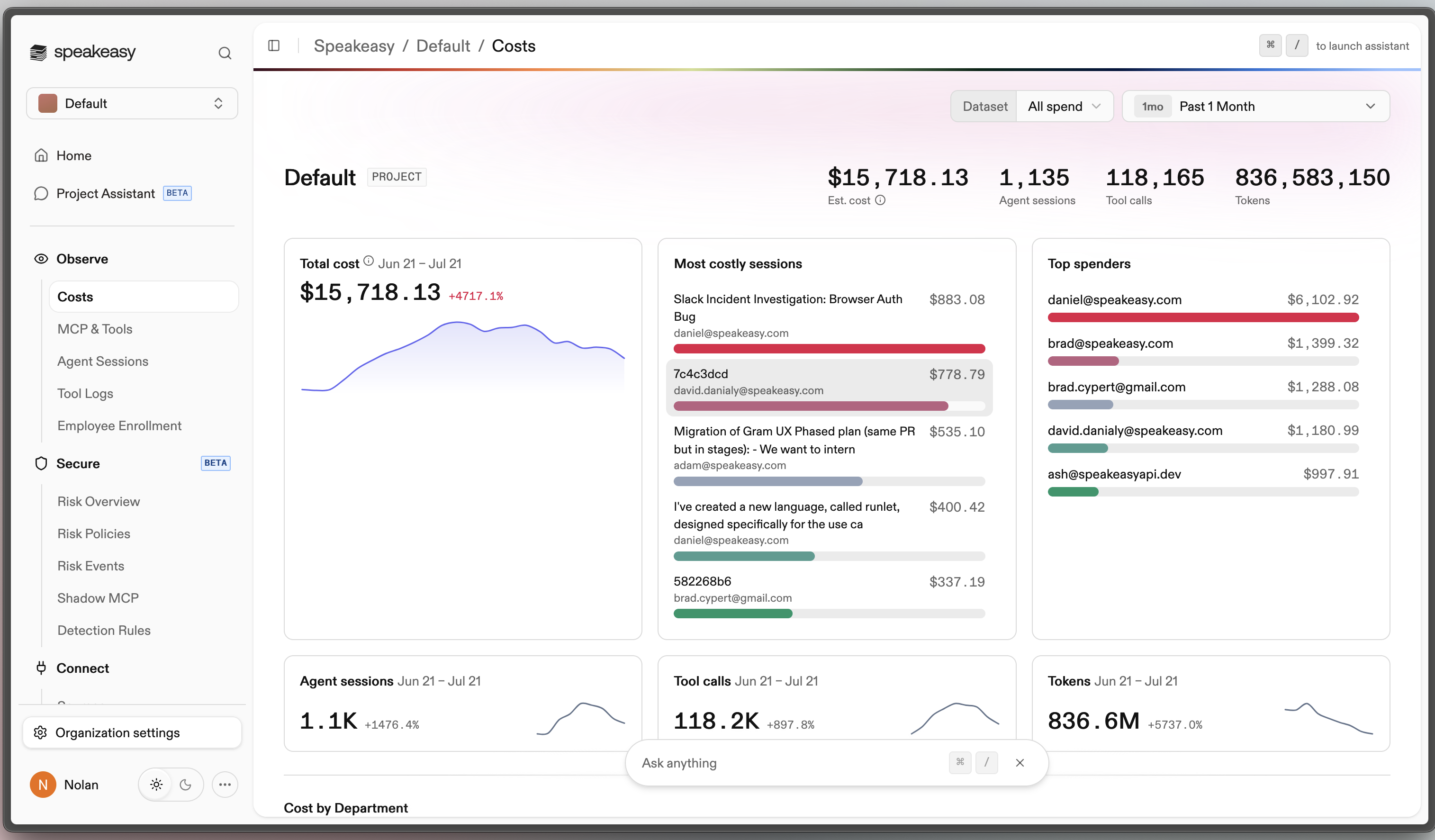
Exclusive: Speakeasy service tracks enterprise-wide AI agent spending
Speakeasy Development Inc. launched an AI cost-management service to track enterprise spending on coding agents like Claude Code, Cursor, and Codex by consolidating token usage data for financial oversight.

AI materials science startup CuspAI raises $450M in funding
UK-based AI materials science startup CuspAI secures $450M Series B funding at a $2.6B valuation, backed by Kleiner Perkins and NEA to support a chemical research consortium with Nvidia and Samsung.

Block launches Buzz, an open-source workspace for humans and AI agents
Block Inc. launched Buzz, a free open-source workspace for human-AI collaborative teams. It unifies chat, code hosting, and workflows while granting AI dedicated accounts.
Site Discovery
Keep exploring the AI ecosystem
After this brief, continue into related tools, models, and rankings to understand whether the story affects your choices.