
Argentum targets the capital stack as the missing layer in AI infrastructure buildout
Argentum identifies capital constraints as the primary bottleneck in global AI data center deployment, arguing that funding gaps are the critical missing layer in infrastructure buildout rather than silicon or power shortages.

Signal Snapshot
Briefing Notes
What happened and why it matters
Summary
Argentum has released an analysis identifying capital constraints as the primary bottleneck in the global deployment of AI data centers. Contrary to common narratives focusing on hardware limitations, the firm argues that funding gaps represent the critical missing layer in current infrastructure buildouts. This perspective shifts the focus away from physical resource scarcity toward financial accessibility and investment structures.
Why it matters
The traditional discourse surrounding AI infrastructure often highlights shortages in specialized silicon (GPUs) or electrical power capacity. By positioning capital as the central constraint, Argentum suggests that even if hardware and energy were abundant, the lack of sufficient financing would still halt progress. This implies that solutions must target financial engineering, investment vehicles, and capital allocation strategies rather than solely technological innovation. For investors and developers, this means the barrier to entry is increasingly economic rather than purely technical.
Related tools
- Browse AI tools for products in this space
- Model library for weights and APIs
- Rankings for curated shortlists
Impact on AI tools/models
If capital is indeed the primary bottleneck, the development and scaling of new AI models may slow down regardless of algorithmic efficiency. Smaller firms and startups might find it harder to access the necessary funds to train large-scale models or deploy inference infrastructure. This could consolidate power among well-funded entities, potentially limiting diversity in the AI ecosystem. The availability of affordable compute resources will likely remain tied to financial liquidity rather than just technological availability.
What to watch
As the industry grapples with these financial realities, stakeholders should monitor shifts in investment trends and funding mechanisms for data center projects. The ability to secure capital will become a key differentiator for companies aiming to expand their AI capabilities. Additionally, watching how existing platforms adapt to these constraints can provide insight into future market dynamics.
FAQ
What does Argentum identify as the main bottleneck? Capital constraints and funding gaps.
Is silicon shortage still a concern? Argentum argues it is secondary to capital issues.
How does this affect AI development? It may limit scalability for underfunded entities.
Search FAQ
Frequently asked questions
FAQ
What does Argentum identify as the main bottleneck in AI data center deployment?
Is silicon shortage the biggest issue for AI infrastructure according to Argentum?
Keep Tracking
Related AI news

On theCUBE Pod: IBM’s AI test, Nvidia’s lead and the race for enterprise intelligence
IBM tests enterprise AI while Nvidia dominates accelerated computing. AMD and Broadcom vie for market share as the race for enterprise intelligence intensifies across hardware and software layers.

Hugging Face uses open-weights Z.ai GLM 5.2 to battle attacker after commercial frontier model refusal
Hugging Face detected a breach involving an attacker using agentic AI. Commercial frontier models blocked defensive requests due to strict safety guardrails. Hugging Face responded by deploying the open-weights Z.ai GLM 5.2 to counter the threat.

Anthropic settles with authors and publishers for $1.5B in landmark copyright case
Anthropic agrees to a $1.5 billion settlement with authors and publishers regarding the unauthorized use of creative works to train its Claude AI model, marking the largest copyright settlement in history.
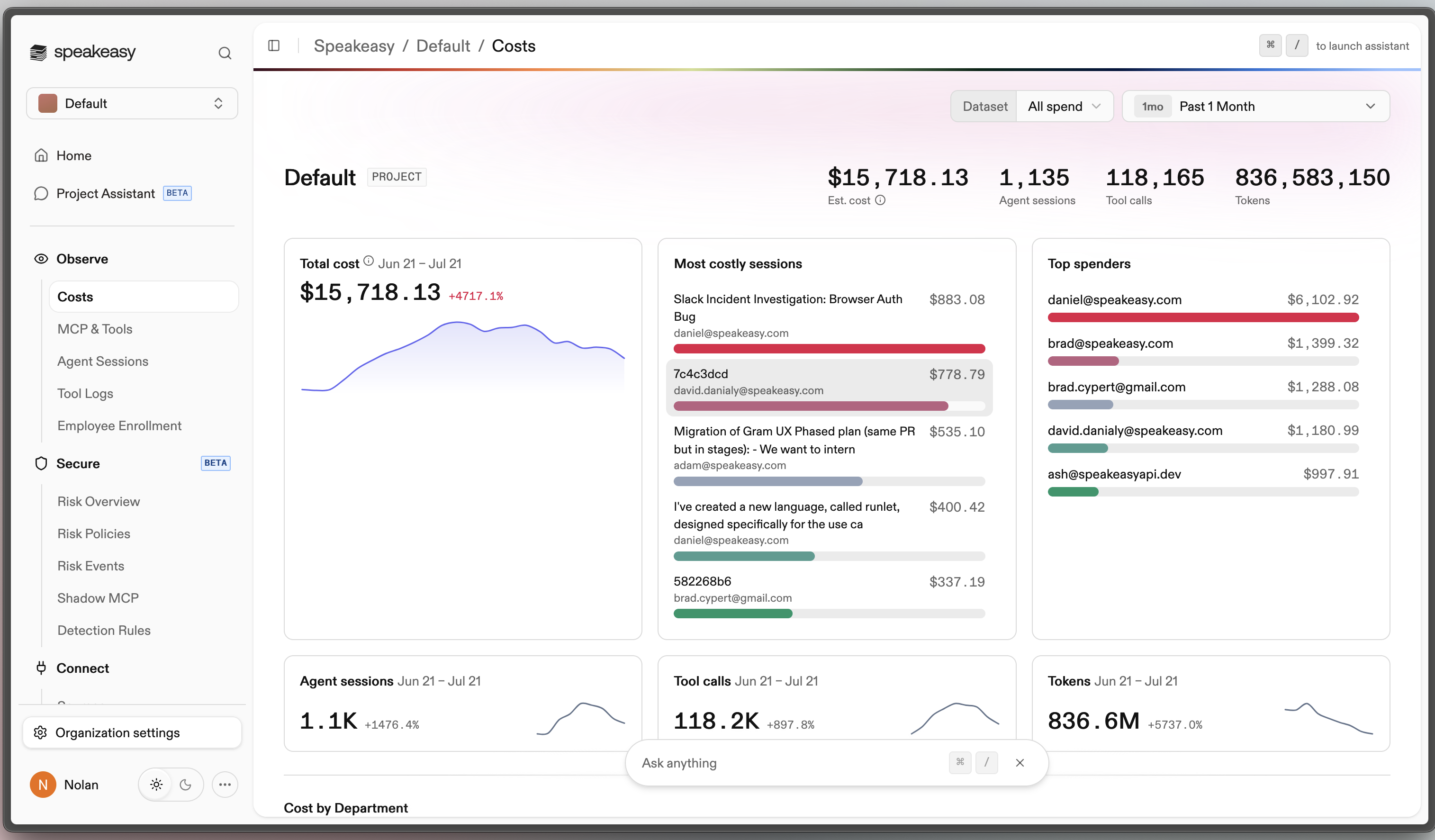
Exclusive: Speakeasy service tracks enterprise-wide AI agent spending
Speakeasy Development Inc. launched an AI cost-management service to track enterprise spending on coding agents like Claude Code, Cursor, and Codex by consolidating token usage data for financial oversight.

AI materials science startup CuspAI raises $450M in funding
UK-based AI materials science startup CuspAI secures $450M Series B funding at a $2.6B valuation, backed by Kleiner Perkins and NEA to support a chemical research consortium with Nvidia and Samsung.

Block launches Buzz, an open-source workspace for humans and AI agents
Block Inc. launched Buzz, a free open-source workspace for human-AI collaborative teams. It unifies chat, code hosting, and workflows while granting AI dedicated accounts.
Site Discovery
Keep exploring the AI ecosystem
After this brief, continue into related tools, models, and rankings to understand whether the story affects your choices.