
Vorlon debuts Guardian to block risky AI agent actions before they complete
Vorlon Inc. launches Guardian, a real-time enforcement gateway designed to block risky AI agent actions before transactions complete, addressing a critical gap in current agentic security tools.

Signal Snapshot
Briefing Notes
What happened and why it matters
Vorlon Launches Guardian to Secure AI Agents in Real-Time
Summary
Vorlon Inc., a startup focused on agentic ecosystem security, has officially debuted Guardian. This new product functions as a real-time enforcement gateway specifically engineered to intercept and block risky actions taken by artificial intelligence agents before those transactions are completed. Unlike traditional security measures that often rely on post-facto logging or alerting, Guardian operates at the point of execution, aiming to prevent potential damage or unauthorized activities inherent in autonomous AI workflows.
The launch addresses a significant vulnerability in the current landscape of AI agent security. As noted by Vorlon, many existing tools fail to adequately secure AI agents because these entities do not log in using traditional credentials. Instead, they authenticate through different mechanisms, leaving a gap that malicious actors or poorly configured agents could exploit. Guardian is designed to bridge this specific gap by enforcing security policies in real-time.
Why it Matters
The rise of autonomous AI agents introduces complex security challenges that legacy systems are ill-equipped to handle. Traditional cybersecurity frameworks often assume human-like interaction patterns, such as login sessions and explicit user approvals. However, AI agents operate continuously and autonomously, making them susceptible to unique attack vectors like prompt injection, unauthorized API calls, or data exfiltration during high-speed transactions.
By shifting the security paradigm from "detect and react" to "prevent and enforce," Vorlon’s Guardian represents a necessary evolution in agentic security. This approach ensures that even if an agent is compromised or misbehaves, the damage is contained before it impacts downstream systems or completes a financial transaction. This is particularly crucial for enterprise environments where AI agents are increasingly integrated into critical business processes, including finance, healthcare, and supply chain management.
Related Tools
While Vorlon focuses on the enforcement layer, the broader ecosystem includes various tools for monitoring and securing AI applications. For developers looking to integrate similar security practices, exploring resources on AI security tools can provide additional context on complementary solutions. Additionally, understanding how different platforms handle authentication is vital, which can be further explored in our agent development guides.
Impact on AI Tools/Models
The introduction of Guardian signals a growing maturity in the AI infrastructure stack. It suggests that future AI models and agent frameworks will need to be designed with "security-by-design" principles, acknowledging that external enforcement layers are essential for safe deployment. This could lead to tighter integration between model providers and security gateways, ensuring that agents are born with built-in constraints rather than relying solely on external policing.
For model developers, this means that robust authentication and authorization protocols must be prioritized. The inability of agents to "log in" in the traditional sense requires new standards for identity verification and permission scopes. Guardian’s success may set a benchmark for other security startups, pushing the industry toward standardized real-time enforcement APIs.
What to Watch
As the agentic economy expands, the demand for real-time security solutions will likely outpace the development of new tools. Stakeholders should monitor how widely Guardian is adopted by major enterprise clients and whether it becomes an industry standard for agent authentication. Furthermore, the evolution of AI agent frameworks will be critical; we expect to see more native support for security gateways like Guardian in upcoming releases of popular agent orchestration platforms.
To stay updated on these developments, readers are encouraged to follow the latest AI news for breaking updates on security innovations. Additionally, checking the rankings of emerging security tools can help identify which solutions are gaining traction in the market. Finally, exploring the tools directory offers a comprehensive view of the competitive landscape in AI security.
FAQ
What is Vorlon Guardian? Guardian is a real-time enforcement gateway launched by Vorlon Inc. to block risky AI agent actions before they complete, targeting gaps in current agentic security tools.
How does Guardian differ from traditional security tools? Unlike tools that flag issues after the fact, Guardian enforces security in real-time, preventing transactions from completing if they violate safety policies.
Why is Guardian needed for AI agents? AI agents do not log in traditionally but authenticate differently, creating a security gap that Guardian aims to close by enforcing policies at the point of action.
Keep Tracking
Related AI news

On theCUBE Pod: IBM’s AI test, Nvidia’s lead and the race for enterprise intelligence
IBM tests enterprise AI while Nvidia dominates accelerated computing. AMD and Broadcom vie for market share as the race for enterprise intelligence intensifies across hardware and software layers.

Hugging Face uses open-weights Z.ai GLM 5.2 to battle attacker after commercial frontier model refusal
Hugging Face detected a breach involving an attacker using agentic AI. Commercial frontier models blocked defensive requests due to strict safety guardrails. Hugging Face responded by deploying the open-weights Z.ai GLM 5.2 to counter the threat.

Anthropic settles with authors and publishers for $1.5B in landmark copyright case
Anthropic agrees to a $1.5 billion settlement with authors and publishers regarding the unauthorized use of creative works to train its Claude AI model, marking the largest copyright settlement in history.
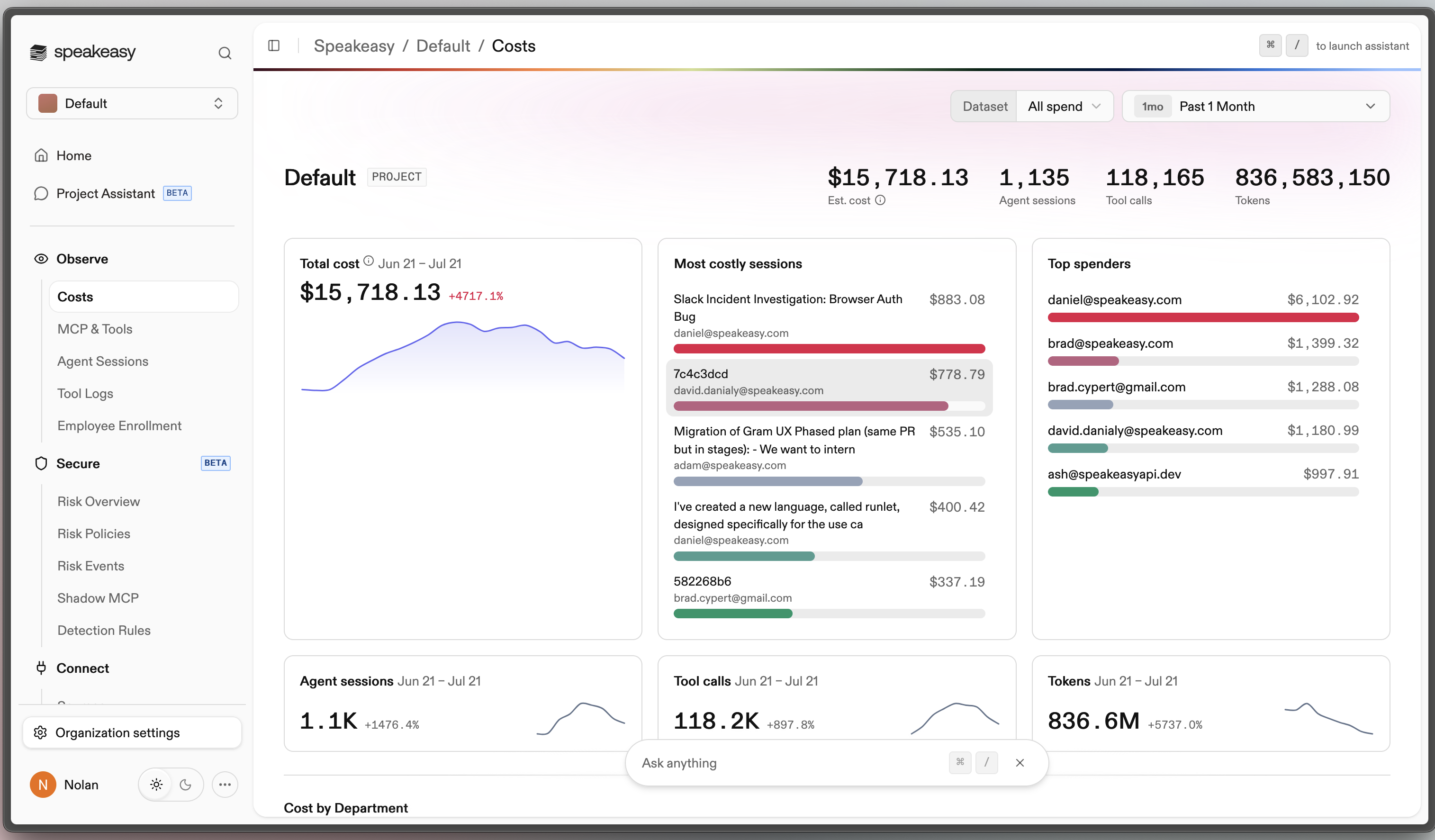
Exclusive: Speakeasy service tracks enterprise-wide AI agent spending
Speakeasy Development Inc. launched an AI cost-management service to track enterprise spending on coding agents like Claude Code, Cursor, and Codex by consolidating token usage data for financial oversight.

AI materials science startup CuspAI raises $450M in funding
UK-based AI materials science startup CuspAI secures $450M Series B funding at a $2.6B valuation, backed by Kleiner Perkins and NEA to support a chemical research consortium with Nvidia and Samsung.

Block launches Buzz, an open-source workspace for humans and AI agents
Block Inc. launched Buzz, a free open-source workspace for human-AI collaborative teams. It unifies chat, code hosting, and workflows while granting AI dedicated accounts.
Site Discovery
Keep exploring the AI ecosystem
After this brief, continue into related tools, models, and rankings to understand whether the story affects your choices.