
About Lumo, the privacy-first AI assistant | Lumo by Proton
Lumo by Proton is a privacy-first AI assistant offering zero-access encryption, open-source code, and GDPR compliance. It ensures conversations are never used for training or ads, available via web, iOS, and Android.
Overview
What is Lumo
Lumo is a confidential AI chat assistant developed by Proton, the team behind Proton Mail, Proton VPN, and the Proton Foundation. Positioned as a "privacy-first" alternative to mainstream AI tools, Lumo is designed to empower users without exploiting their data. The core value proposition of Lumo is that it operates under a strict no-logs policy and utilizes zero-access encryption for all conversations. This means that unlike many popular AI chat tools where messages may be harvested, stored, or sold for advertising and profiling, Lumo ensures that every conversation remains private and accessible only to the user.
Lumo is built on the premise that AI should benefit society without compromising individual digital freedom. As a European service, it complies with stringent regulations such as GDPR, providing users with the right to delete their accounts and data at any time. The tool is available across multiple platforms, including a web app, iOS, and Android, ensuring accessibility for both personal and professional use. For those interested in comparing privacy-focused solutions, you can explore other options on ToolSeekAI tools.
Key features
Lumo distinguishes itself through several technical and operational features grounded in its source documentation:
- Zero-Access Encryption: All chats are stored with zero-access encryption. Proton states that neither they nor any third party, including governments or advertisers, can access the content of the conversations.
- No Data Training: The source explicitly confirms that Lumo never uses user data to train its AI models. This prevents personal information from influencing future model outputs or being shared with external entities.
- Open Source Code: Unlike many proprietary AI assistants, Lumo’s code is fully open source. This allows independent verification of its security claims and ensures transparency regarding how data is handled. Users can explore the code to verify that no hidden data harvesting occurs.
- Custom Lumos: The Plus plan introduces "Custom Lumos," allowing users to tailor the AI assistant's behavior or knowledge base for specific tasks, enhancing personalization without sacrificing privacy.
- Image Generation: Lumo supports image generation capabilities, available in limited quantities for free users and with higher limits for Plus subscribers.
- Projects Management: Users can organize their interactions into projects. Free users have access to one project, while Plus users enjoy unlimited projects.
- Cross-Platform Availability: The tool is accessible via a web browser and native mobile applications for iOS and Android, facilitating seamless use across devices.
For a broader view of AI tool capabilities, check our rankings of top privacy-centric assistants.
Use cases
Lumo is designed for individuals and organizations who prioritize data sovereignty and confidentiality. Key use cases include:
- Personal Productivity: Users can ask questions about work, health, or creative ideas without fear of these sensitive topics being used to build a personal profile for targeted advertising. The "Start a chat" feature allows for quick, private brainstorming.
- Professional and Business Intelligence: Lumo offers a dedicated "Business" tier, catering to professionals and teams who need confidential AI assistance. This is particularly relevant for industries handling sensitive client data or proprietary information where standard AI tools pose a compliance risk.
- Secure Research and Development: Developers and researchers can utilize Lumo’s open-source nature to verify security protocols before integrating AI assistance into sensitive workflows.
- Creative Writing and Design: With image generation and custom Lumos, users can engage in creative processes that require discretion, ensuring their intellectual property and ideas remain private.
Pricing overview
Lumo offers a tiered pricing structure designed to accommodate both casual users and those requiring advanced features. The source provides the following details:
-
Free Plan:
- Cost: $0.00/month.
- Features: Limited max model usage, limited messages and chat history, limited image generations, and access to 1 Project.
- Requirements: No credit card required to sign up.
- Ideal for: Users testing the waters of private AI or those with low-volume needs.
-
Lumo AI Plus:
- Cost: The specific monthly price is listed as "$0.00" in the provided text snippet, which appears to be a placeholder or error in the source extraction; however, it is described as an upgrade for advanced features. The source mentions a "30-day money-back guarantee."
- Features: Increased max model usage, more messages and chat history, more image generations, unlimited Projects, and access to Custom Lumos.
- Billing: Available on monthly or yearly billing cycles.
- Ideal for: Power users, professionals, and businesses needing higher volume and customization.
-
Business Plans:
- The source mentions "Discover Lumo AI for Business" and "Business plans," indicating enterprise-grade offerings for teams. Specific pricing for business tiers is not detailed in the provided excerpts but is noted as available.
For verification of current pricing, always refer to the official Lumo pricing page.
Who should use it
Lumo is ideal for:
- Privacy-Conscious Individuals: Users who are aware that many free AI tools harvest data for advertising or model training and seek an alternative that guarantees data non-retention for these purposes.
- Professionals Handling Sensitive Data: Lawyers, doctors, consultants, and corporate employees who need AI assistance but cannot risk leaking confidential client or company information to third-party AI providers.
- GDPR-Compliant Organizations: European entities or global companies subject to strict data protection laws that require vendors to adhere to high standards of data minimization and encryption.
- Transparency Advocates: Users who prefer open-source software because it allows for community auditability and reduces reliance on black-box algorithms.
If you are looking for tools that balance utility with ethical data practices, consider reviewing curated lists on ToolSeekAI tools. Lumo represents a significant step toward aligning AI convenience with fundamental digital rights.
Evaluation Context and Considerations
- Onboarding Flow: The source indicates a straightforward sign-up process with no credit card required for the free tier, lowering the barrier to entry.
- Integration Considerations: While Lumo offers web and mobile apps, specific API integrations for third-party software are not confirmed in the source. Users should check the developer documentation for potential headless usage.
- Data/Privacy Questions: A critical question for users is whether "zero-access encryption" applies to metadata. The source emphasizes that conversations are unreadable by Proton, but detailed technical specifications on metadata retention are labeled as "not confirmed in the source" beyond the general GDPR compliance statement.
- Comparison Criteria: When comparing Lumo to Gemini, Copilot, OpenAI, or Claude, the primary differentiator is the data policy. Mainstream competitors often use data to improve models, whereas Lumo explicitly forbids this. Performance benchmarks relative to closed-source models are "not confirmed in the source," though Lumo highlights its security model as the key advantage.
FAQ
Is Lumo free to use? Yes, Lumo offers a Free plan with limited usage quotas for messages, images, and projects. There is no credit card required to start.
Does Lumo use my data to train AI models? No. The source explicitly states that Lumo never uses user data to train AI models. Conversations are stored with zero-access encryption and are not accessible to Proton or third parties.
What is the difference between Lumo Free and Plus? The Free plan offers limited model usage, messages, and one project. The Plus plan increases these limits, adds unlimited projects, and introduces Custom Lumos for personalized experiences.
Is Lumo’s code open source? Yes, Lumo’s code is fully open source, allowing users and developers to verify its security and privacy claims independently.
Can I use Lumo for business purposes? Yes, Lumo offers specific Business plans and features tailored for professionals and teams, including enhanced security and compliance with standards like GDPR.
How does Lumo compare to other AI assistants like ChatGPT or Gemini? Lumo differentiates itself primarily through its privacy-first approach, zero-access encryption, and open-source transparency, whereas other assistants may use data for model training or advertising purposes.
Why it stands out
- Zero-access encryption ensures only the user can read conversations.
- Never uses user data to train AI models.
- Fully open-source code for independent security verification.
- GDPR compliant and based in Europe.
- Available on Web, iOS, and Android platforms.
Watch before using
- Free plan has limited messages, images, and projects.
- Specific pricing for Plus and Business plans is not fully detailed in the source.
- API integration details for third-party software are not confirmed.
- Metadata retention policies are not explicitly detailed beyond conversation content.
- Performance benchmarks against closed-source models are not provided in the source.
FAQ
Is Lumo free to use?
Does Lumo use my data to train AI models?
What is the difference between Lumo Free and Plus?
Is Lumo’s code open source?
Can I use Lumo for business purposes?
How does Lumo compare to other AI assistants like ChatGPT or Gemini?
Related tools and alternatives
View all alternativesChatbots
ChatGPT
ChatGPT by OpenAI is a flagship AI assistant for drafting, reasoning, file analysis, and coding. Offering free and paid tiers with robust features, it serves individuals and enterprises seeking versatile, general-purpose AI workflows.
Chatbots
Claude
Claude by Anthropic is an advanced AI assistant specializing in long-document analysis, structured reasoning, and high-quality editorial writing. Ideal for researchers, writers, and teams needing precise, calm, and nuanced text synthesis.
Chatbots
Perplexity
Perplexity is an AI-powered search engine that combines real-time web browsing with conversational AI. It delivers cited, synthesized answers, making it ideal for researchers and knowledge workers seeking verified, source-backed information quickly.
Chatbots
Gemini
Gemini is Google's flagship multimodal AI model, deeply integrated into Workspace and Search. It offers advanced reasoning, 1M token context, and seamless productivity tools for users within the Google ecosystem.
Coding
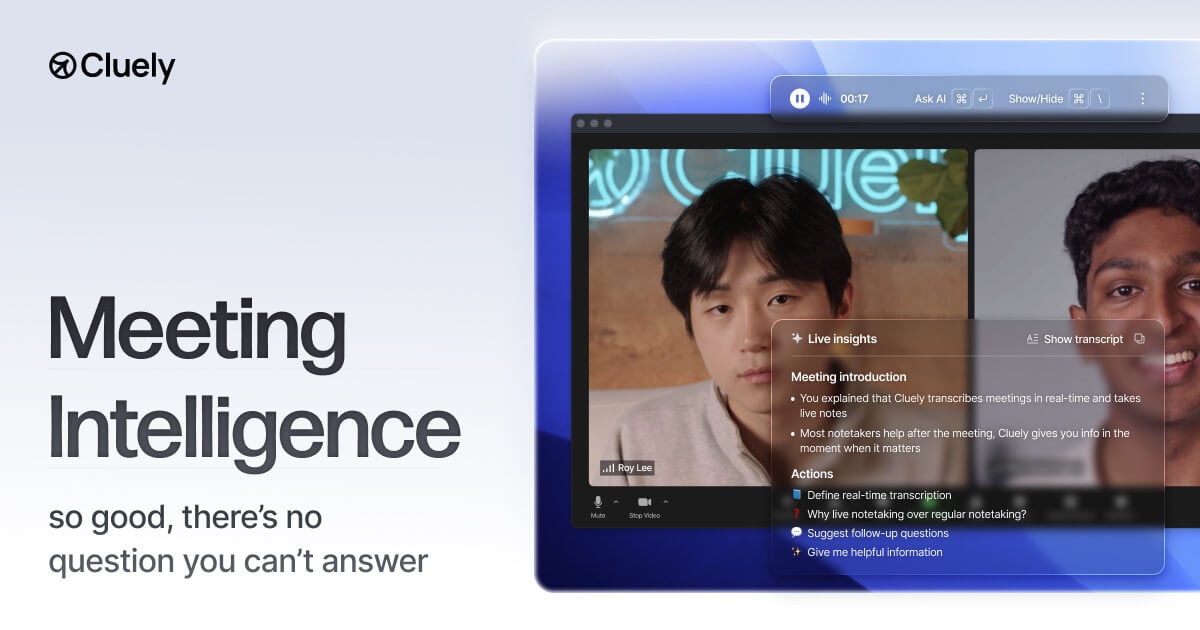
Cluely - Live AI Meeting Assistant | Real-Time Meeting Notes and AI Insights
Cluely is a live AI meeting assistant that provides real-time notes, instant answers, and insights during calls. It operates undetectably on your screen, supporting major platforms like Zoom and Teams without joining meetings as a bot.
Chatbots
GPT-Live
GPT-Live is OpenAI's real-time voice interaction feature for ChatGPT, enabling low-latency, natural conversations with AI agents.
Site Discovery
Explore more on ToolSeekAI
Keep moving through tools, use cases, models, news, and rankings to turn one visit into a complete AI discovery path.