
GPT-Live
GPT-Live is OpenAI's real-time voice interaction feature for ChatGPT, enabling low-latency, natural conversations with AI agents.
Overview
What is GPT-Live
GPT-Live is a real-time voice interaction capability introduced by OpenAI, designed to bring conversational AI into the physical world through devices like the Optimus robot and other hardware partners. Unlike traditional text-based or pre-recorded audio interactions, GPT-Live enables low-latency, bidirectional voice communication that mimics natural human speech patterns, including interruptions, pauses, and emotional nuance. This technology represents a significant step toward seamless human-AI interaction, particularly in robotics and embodied AI applications.
The feature leverages advanced speech-to-text and text-to-speech models optimized for real-time performance, allowing users to engage in fluid, dynamic conversations with AI agents. By reducing latency to near-instantaneous levels, GPT-Live supports more intuitive and responsive interactions, making it suitable for scenarios where timing and naturalness are critical.
For more information on real-time AI interaction tools, explore our ToolSeekAI tools directory.
Key Features
Real-Time Voice Interaction
GPT-Live enables live, two-way voice conversations between humans and AI agents. The system processes audio input and generates spoken responses with minimal delay, creating a natural flow of dialogue.
Low Latency
Optimized for speed, GPT-Live reduces the time between user speech and AI response, ensuring that conversations feel immediate and uninterrupted. This is crucial for applications requiring quick reactions, such as robotics control or customer service.
Natural Speech Patterns
The technology supports natural conversational dynamics, including the ability to handle interruptions, backchanneling (e.g., "uh-huh"), and varied speech rhythms. This makes interactions feel less robotic and more human-like.
Hardware Integration
GPT-Live is designed to work with physical devices, particularly robots like Tesla’s Optimus. It allows AI agents to perceive and respond to their environment through voice, enhancing their utility in real-world tasks.
Emotional Nuance
By processing tone, pace, and inflection, GPT-Live can convey and interpret emotional cues, adding depth to human-AI communication.
Use Cases
Robotics and Embodied AI
GPT-Live is ideal for robots and autonomous systems that need to interact with humans verbally. For example, service robots in healthcare, retail, or hospitality can use GPT-Live to assist customers, answer questions, or guide users through processes.
Customer Service
Businesses can deploy GPT-Live-powered voice agents for real-time customer support, providing instant, natural-sounding assistance without the delays associated with traditional chatbots or recorded IVR systems.
Personal Assistants
Home assistants or personal AI companions can use GPT-Live to offer more engaging and responsive interactions, improving user experience through conversational fluency.
Accessibility
For individuals with visual or motor impairments, GPT-Live provides a hands-free, voice-driven interface to interact with technology, enhancing accessibility and independence.
To see how GPT-Live compares to other AI voice tools, check our rankings.
Pricing Overview
Specific pricing details for GPT-Live are not confirmed in the source material. As a feature within OpenAI’s ecosystem, it may be included in existing subscription tiers or offered as part of enterprise API access. Users are advised to consult OpenAI’s official documentation or contact sales for precise pricing information.
Who Should Use It
Robotics Developers
Teams building physical AI agents or robots that require natural voice interaction capabilities will benefit from GPT-Live’s low-latency, human-like speech processing.
Customer Experience Teams
Organizations looking to enhance their voice-based customer service with real-time, intelligent AI agents can leverage GPT-Live to improve response times and conversation quality.
Accessibility Innovators
Developers creating assistive technologies for users with disabilities can integrate GPT-Live to provide more intuitive, voice-driven interfaces.
Enterprise AI Integrators
Companies deploying AI in physical environments, such as warehouses, hospitals, or retail spaces, can use GPT-Live to enable seamless verbal communication between AI agents and staff or customers.
Onboarding and Integration Considerations
Integrating GPT-Live requires access to OpenAI’s APIs and compatibility with hardware platforms capable of real-time audio processing. Developers should ensure their systems meet latency requirements and have robust audio input/output infrastructure. Testing in real-world environments is recommended to optimize performance and user experience.
Data Privacy and Security
As with any voice-enabled AI, data privacy is a key consideration. Users should verify how audio data is processed, stored, and transmitted. OpenAI’s privacy policy and terms of service should be reviewed to understand data handling practices, especially for enterprise deployments involving sensitive conversations.
Comparison Criteria
When evaluating GPT-Live against other real-time voice AI solutions, consider:
- Latency: How quickly does the system respond?
- Naturalness: Does the AI mimic human speech patterns effectively?
- Hardware Compatibility: Is it supported on your target devices?
- Scalability: Can it handle high volumes of concurrent interactions?
- Customization: Are there options to tailor voice tone, language, or behavior?
For further exploration of AI voice technologies, visit ToolSeekAI tools.
FAQ
What is GPT-Live? GPT-Live is OpenAI’s real-time voice interaction feature enabling low-latency, natural conversations between humans and AI agents, particularly in robotics and embodied AI.
How does GPT-Live differ from standard ChatGPT voice? GPT-Live is optimized for real-time, bidirectional voice interaction with minimal delay, supporting natural speech dynamics like interruptions and emotional nuance, unlike pre-recorded or higher-latency voice features.
Is GPT-Live available for general consumers? The source does not confirm public availability. It is primarily highlighted for integration with hardware partners like Tesla’s Optimus robot.
Can GPT-Live handle multiple languages? This is not confirmed in the source material. Check OpenAI’s official documentation for language support details.
What are the latency requirements for GPT-Live? While exact metrics are not provided, GPT-Live is designed for near-instantaneous response times suitable for real-world interactive applications.
Where can I find pricing for GPT-Live? Pricing is not confirmed in the source. Contact OpenAI or review their enterprise offerings for detailed cost information.
Why it stands out
- Enables natural, human-like voice conversations with AI
- Low latency supports real-time interaction in robotics
- Handles interruptions and emotional nuance effectively
- Integrates with physical devices like robots
- Enhances accessibility for voice-driven interfaces
Watch before using
- Pricing details are not confirmed in the source
- Limited public availability information
- Requires compatible hardware for full functionality
- Data privacy implications for voice interactions
- Language support specifics are unclear
FAQ
What is GPT-Live?
How does GPT-Live differ from standard ChatGPT voice?
Is GPT-Live available for general consumers?
Can GPT-Live handle multiple languages?
What are the latency requirements for GPT-Live?
Where can I find pricing for GPT-Live?
Related tools and alternatives
View all alternativesChatbots
ChatGPT
ChatGPT by OpenAI is a flagship AI assistant for drafting, reasoning, file analysis, and coding. Offering free and paid tiers with robust features, it serves individuals and enterprises seeking versatile, general-purpose AI workflows.
Chatbots
Claude
Claude by Anthropic is an advanced AI assistant specializing in long-document analysis, structured reasoning, and high-quality editorial writing. Ideal for researchers, writers, and teams needing precise, calm, and nuanced text synthesis.
Chatbots
Perplexity
Perplexity is an AI-powered search engine that combines real-time web browsing with conversational AI. It delivers cited, synthesized answers, making it ideal for researchers and knowledge workers seeking verified, source-backed information quickly.
Chatbots
Gemini
Gemini is Google's flagship multimodal AI model, deeply integrated into Workspace and Search. It offers advanced reasoning, 1M token context, and seamless productivity tools for users within the Google ecosystem.
Coding
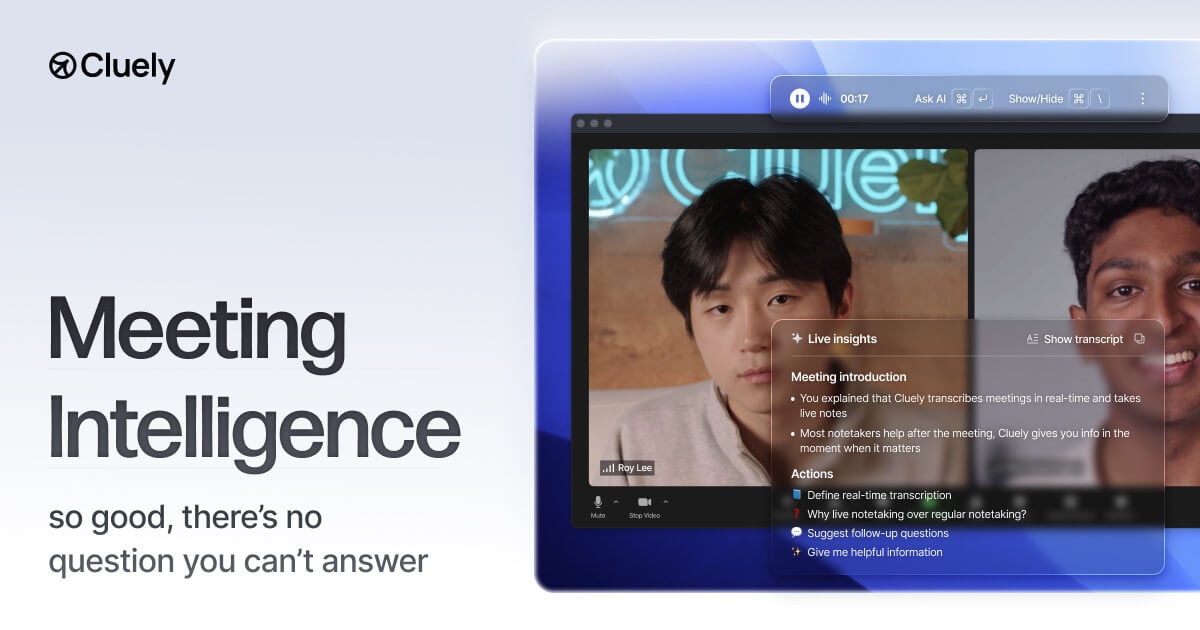
Cluely - Live AI Meeting Assistant | Real-Time Meeting Notes and AI Insights
Cluely is a live AI meeting assistant that provides real-time notes, instant answers, and insights during calls. It operates undetectably on your screen, supporting major platforms like Zoom and Teams without joining meetings as a bot.
Chatbots
About Lumo, the privacy-first AI assistant | Lumo by Proton
Lumo by Proton is a privacy-first AI assistant offering zero-access encryption, open-source code, and GDPR compliance. It ensures conversations are never used for training or ads, available via web, iOS, and Android.
Site Discovery
Explore more on ToolSeekAI
Keep moving through tools, use cases, models, news, and rankings to turn one visit into a complete AI discovery path.