
New York City educators and industry leaders gathered at Google’s offices to shape the future of AI in classrooms.
Google hosted an AI summit in NYC with 150 education and industry leaders to discuss integrating AI into classrooms, focusing on practical applications for educators.

Signal Snapshot
Briefing Notes
What happened and why it matters
Summary
A significant gathering took place at Google’s New York City offices, bringing together 150 prominent figures from both the education sector and the technology industry. The event was a collaborative effort hosted by Google, the New York Jobs CEO Council, and Urban Assembly. The primary objective of this summit was to explore and define the future trajectory of artificial intelligence within classroom environments. By uniting educators who understand pedagogical needs with industry leaders who drive technological innovation, the event aimed to bridge the gap between theoretical AI capabilities and practical educational applications.
Why it matters
The integration of AI into education is no longer a distant possibility but an immediate reality that requires careful navigation. This summit highlights a critical shift where major tech companies are actively engaging with local educational institutions to ensure that AI tools are developed and deployed responsibly. The presence of the New York Jobs CEO Council and Urban Assembly underscores the importance of aligning AI advancements with workforce development and student success. For educators, this means having a direct line to industry experts who can help tailor AI solutions to real-world classroom challenges. For the industry, it provides valuable feedback on how these tools are perceived and utilized by those on the front lines of teaching. This collaboration sets a precedent for how public-private partnerships can shape the ethical and effective use of AI in learning environments.
Related tools
While specific software was not detailed in the source, such summits typically involve discussions around AI-powered tutoring systems and educational content generators. These categories represent the core technologies likely debated during the session.
Impact on AI tools/models
The insights gained from this summit will likely influence the development of AI models specifically designed for educational contexts. Developers may prioritize features that support personalized learning, automated grading assistance, and adaptive curriculum design. Furthermore, the emphasis on educator involvement suggests a move toward more transparent and interpretable AI models that teachers can trust and effectively manage. This could lead to the creation of specialized AI frameworks that adhere to strict privacy and safety standards required in K-12 and higher education settings.
What to watch
As the outcomes of this summit begin to materialize, stakeholders should monitor several key areas. First, look for new initiatives or pilot programs launched by Urban Assembly and Google that incorporate AI into their curricula. Second, keep an eye on policy recommendations emerging from the New York Jobs CEO Council regarding AI literacy in schools. Finally, track updates on AI news for announcements related to new educational technologies or partnerships formed as a result of this dialogue. Additionally, reviewing rankings of educational AI tools may reveal which platforms are gaining traction among educators following this event. For broader context on industry trends, exploring ToolSeekAI tools can provide a comparative analysis of available solutions.
FAQ
Who hosted the AI summit? The event was jointly hosted by Google, the New York Jobs CEO Council, and Urban Assembly.
How many leaders attended? Approximately 150 education and industry leaders participated in the summit.
What was the main goal? The primary goal was to shape the future of AI in classrooms by discussing its integration and impact on education.
Keep Tracking
Related AI news

Create, edit and star in videos with two Google Vids updates
Google Vids integrates Gemini Omni for enhanced video generation and introduces personal avatars, allowing users to create, edit, and star in customized AI-generated video content.
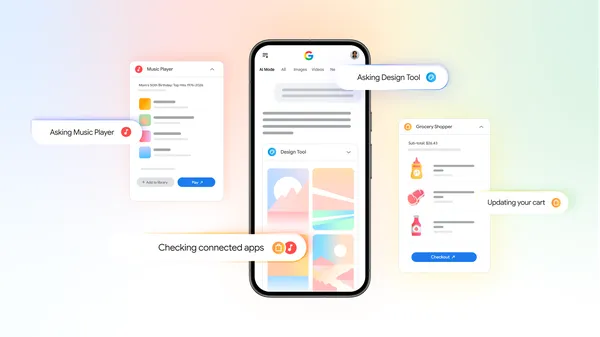
Connect more of your apps to Search
Google AI introduces a new feature in AI Mode that allows users to securely connect and interact with third-party applications directly within the interface, aiming to enhance productivity and deep integration.

Expanding Managed Agents in Gemini API: background tasks, remote MCP and more
Google AI expands Gemini API Managed Agents with background task execution and remote MCP support, enabling developers to deploy reliable, production-ready autonomous workflows.

Gemini 3.5: frontier intelligence with action
Google unveils Gemini 3.5 at Google I/O, shifting focus from passive reasoning to active execution. Designed to perform complex tasks directly, marking a significant evolution in actionable AI capabilities.

The latest AI news we announced in June 2026
Google AI released updates in June 2026, though specific details on new models or features were not included in the provided source text.

Unlocking Britain’s next era of productivity: Building a nation of AI trailblazers
Google UK's new Economic Impact Report outlines strategies to boost national productivity via AI adoption, aiming to position Britain as a global leader in the AI era.
Site Discovery
Keep exploring the AI ecosystem
After this brief, continue into related tools, models, and rankings to understand whether the story affects your choices.