
Decision Comparison
BrowserAct | Give AI agent the power to use the web vs About Lumo, the privacy-first AI assistant | Lumo by Proton
Compare BrowserAct, an AI agent infrastructure for automated web browsing and data extraction, with Lumo by Proton, a zero-knowledge encrypted AI assistant focused on privacy and open-source transparency.
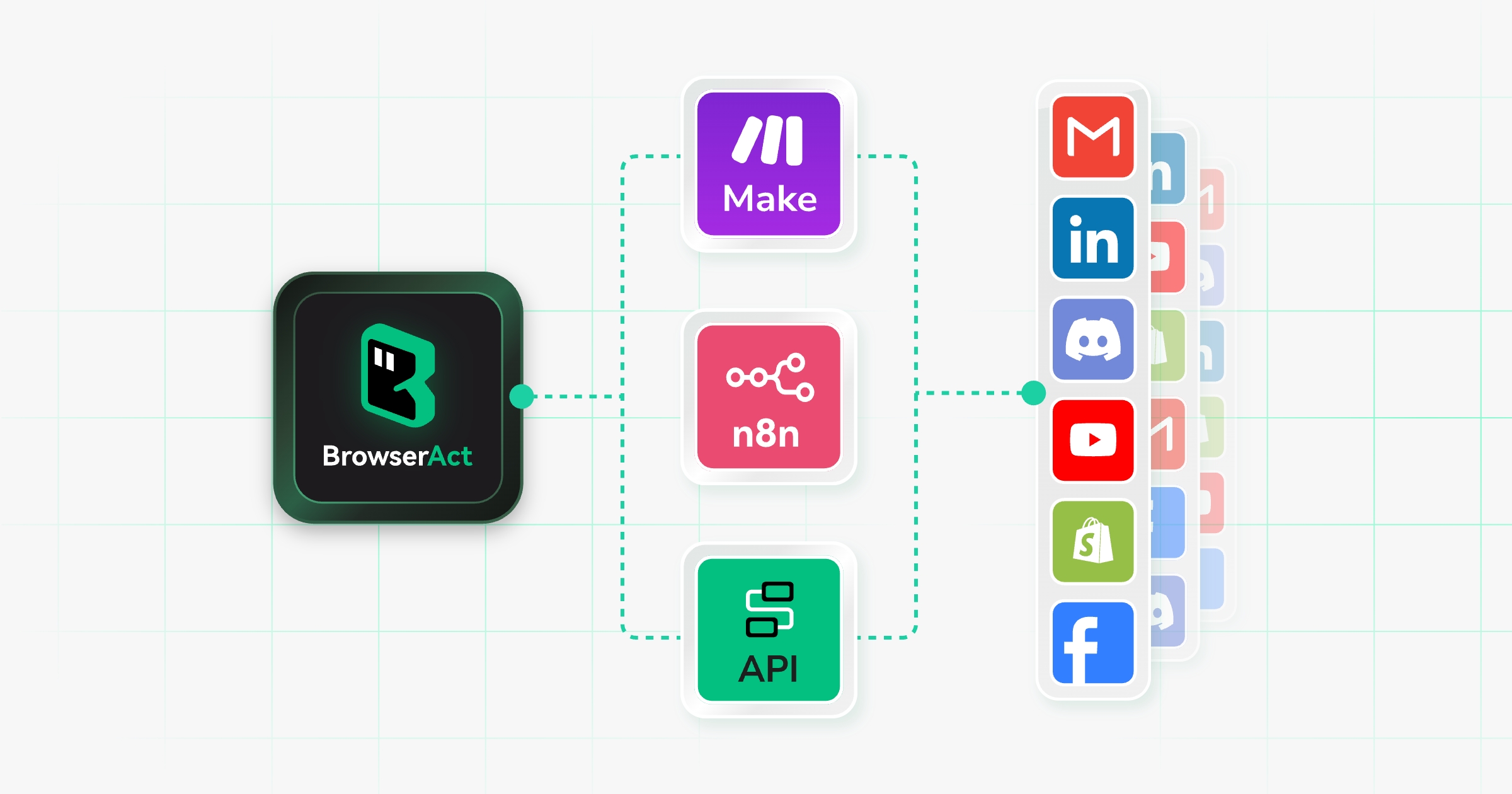
BrowserAct | Give AI agent the power to use the web
BrowserAct provides AI agents with a managed browser layer to extract live web data, handle CAPTCHAs, and execute end-to-end web tasks securely.
- Pricing
- Not listed
- Free tier
- Not listed
Pros
- Handles CAPTCHAs and anti-bot measures automatically.
- Offers a 7-day free trial with 100 credits.
- Supports multiple proxy types including residential and static.
- Integrates easily via skills for AI agents.
- Provides full session and cookie isolation.
Cons
- Cloud Browser feature is not yet released.
- Pricing is credit-based, which may vary in complexity.
- Requires technical integration for agent workflows.
- Static proxy pricing varies by location and tier.
- No specific enterprise SLA details provided in source.
About Lumo, the privacy-first AI assistant | Lumo by Proton
Lumo by Proton is a privacy-first AI assistant offering zero-access encryption, open-source code, and GDPR compliance. It ensures conversations are never used for training or ads, available via web, iOS, and Android.
- Pricing
- Not listed
- Free tier
- Not listed
Pros
- Zero-access encryption ensures only the user can read conversations.
- Never uses user data to train AI models.
- Fully open-source code for independent security verification.
- GDPR compliant and based in Europe.
- Available on Web, iOS, and Android platforms.
Cons
- Free plan has limited messages, images, and projects.
- Specific pricing for Plus and Business plans is not fully detailed in the source.
- API integration details for third-party software are not confirmed.
- Metadata retention policies are not explicitly detailed beyond conversation content.
- Performance benchmarks against closed-source models are not provided in the source.
Side-by-side signals
Core comparison table
| Signal | BrowserAct | Give AI agent the power to use the web | About Lumo, the privacy-first AI assistant | Lumo by Proton |
|---|---|---|
| Summary | BrowserAct provides AI agents with a managed browser layer to extract live web data, handle CAPTCHAs, and execute end-to-end web tasks securely. | Lumo by Proton is a privacy-first AI assistant offering zero-access encryption, open-source code, and GDPR compliance. It ensures conversations are never used for training or ads, available via web, iOS, and Android. |
| Pricing | Not listed | Not listed |
| Free tier | Not listed | Not listed |
| Pros count | 5 | 5 |
| Cons count | 5 | 5 |
Comparison analysis
## BrowserAct vs Lumo: A Comparative Analysis
When selecting an AI tool, the choice often depends on whether the primary goal is **automation** or **privacy**. BrowserAct and Lumo represent two distinct categories within the AI ecosystem. BrowserAct is an infrastructure layer designed to empower AI agents with the ability to interact with the live web, while Lumo is a consumer-facing chat assistant built on Proton’s privacy-first philosophy.
### Core Functionality
**BrowserAct** serves as a managed browser layer for AI agents. Its primary function is to bridge the gap between Large Language Models (LLMs) and real-time internet data. It allows agents to navigate websites, solve CAPTCHAs, and extract structured data without human intervention. It is ideal for developers building agentic workflows that require live web access, such as competitive intelligence scraping or automated form filling.
**Lumo**, developed by Proton, is a confidential AI chat assistant. It prioritizes data sovereignty, utilizing zero-access encryption and an open-source codebase to ensure that user conversations are never used for training or advertising. It is designed for individuals and professionals who need AI assistance for productivity, creative writing, or business analysis but require strict data confidentiality.
### Key Differences
| Feature | BrowserAct | Lumo by Proton |
| :--- | :--- | :--- |
| **Primary Use Case** | Web automation, scraping, agent execution | Private chatting, productivity, creative assistance |
| **Data Handling** | Extracts public web data; manages sessions | Zero-access encryption; no data retention for training |
| **Target Audience** | Developers, AI engineers, data analysts | General users, privacy-conscious professionals |
| **Integration** | API/Skills for AI agents (e.g., Claude) | Web, iOS, Android apps |
| **Privacy Focus** | Session isolation and stealth browsing | End-to-end encryption and open-source verification |
### Which Tool Should You Choose?
Choose **BrowserAct** if you are building AI applications that need to autonomously browse the web, handle dynamic content, or extract real-time data. It is a backend infrastructure tool for agentic AI.
Choose **Lumo** if you are looking for a secure, private AI assistant for daily tasks, brainstorming, or professional queries where data privacy is paramount. It is a frontend application for end-users.
### Verdict
These tools serve complementary but non-overlapping needs. BrowserAct is the engine for AI-driven web interaction, while Lumo is the shield for private human-AI communication. For comprehensive AI strategies, one might use Lumo for private ideation and BrowserAct for executing live web tasks.
Verdict
Which should you choose?
BrowserAct is for web automation agents; Lumo is for private user assistance.
FAQ
Which is better for individuals: BrowserAct | Give AI agent the power to use the web or About Lumo, the privacy-first AI assistant | Lumo by Proton?
Compare official pricing, free-tier limits, and your workflow before choosing.
Where does this comparison data come from?
The data comes from ToolSeekAI tool profiles, including summaries, pros, cons, keywords, and public official-site information.
Site Discovery
Keep comparing and discovering
If you are still undecided, continue into alternatives, profiles, and rankings to narrow the shortlist.