
SpaceXAI releases flagship Grok 4.6 model with advanced reasoning capabilities
SpaceXAI has released Grok 4.6, its flagship large language model featuring advanced reasoning capabilities, claiming it can outperform Anthropic's Claude Fable 5 in certain areas.
Signal Snapshot
Briefing Notes
What happened and why it matters
Summary
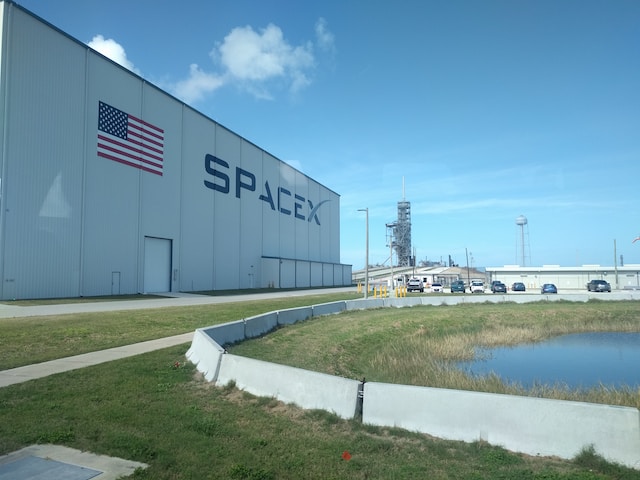
SpaceXAI has officially released Grok 4.6, its latest flagship large language model, which the company says brings advanced reasoning capabilities to the table. In a competitive move, SpaceXAI claims the new model can outperform Anthropic PBC’s Claude Fable 5 in select areas. The release comes amid significant corporate changes, as SpaceXAI was formerly known as xAI until rebranding last month following its acquisition by SpaceX Corp.
Why it matters
The launch of Grok 4.6 marks a pivotal moment for SpaceXAI as it establishes its identity post-rebrand. The company’s bold claim to rival Anthropic’s Claude Fable 5 places it squarely in the center of the ongoing large language model arms race. For developers and enterprises evaluating AI tools, this release adds another major player to consider alongside established options. The rebranding from xAI to SpaceXAI also signals a strategic alignment with SpaceX Corp, which listed its shares in June, potentially opening new avenues for integration between space technology and AI development.
Related tools
For those interested in comparing large language models, exploring AI tools can help identify alternatives and competitors in the space. Readers looking for the latest developments in the AI industry should check out our AI news section for ongoing coverage. Additionally, rankings provide valuable insights into how different models stack up against one another.
Impact on AI tools/models
Grok 4.6’s release intensifies competition in the LLM landscape. With claims of superior reasoning capabilities, it challenges existing benchmarks and may push other providers to accelerate their own model improvements. The integration of SpaceX’s resources could also lead to unique applications combining space-domain data with advanced language processing, potentially creating new use cases for AI in scientific and engineering workflows.
What to watch
- How Grok 4.6 performs in independent benchmarks against Claude Fable 5 and other leading models
- Whether the SpaceX acquisition brings tangible technical advantages to the AI platform
- Potential integrations between SpaceX’s space infrastructure and Grok’s reasoning capabilities
- Market reaction to the rebranding and its impact on enterprise adoption
Search FAQ
Frequently asked questions
FAQ
What is Grok 4.6?
How does Grok 4.6 compare to Claude Fable 5?
What is the relationship between SpaceXAI and xAI?
Keep Tracking
Related AI news

OpenAI leases 10-gigawatt AI data center campus from SoftBank’s SB Energy
OpenAI signed a 20-year lease for a 10-gigawatt AI data center campus in Ohio, built on a former uranium processing site. SB Energy, a SoftBank unit, is leading construction of the massive AI infrastructure project.

Criminal AI tool Kriminal is mostly just Grok with a jailbreak, ThreatDown finds
Research finds criminal AI tool Kriminal is essentially Grok with a jailbreak, rented from SpaceXAI, contradicting its claims of circumventing legitimate AI.

Google’s attempt to buy Spirit Airlines’ data might come unstuck
Google's $10 million bid to acquire Spirit Airlines' business data faces challenges from two parties after initial bankruptcy court approval.

Weak API controls are one of the biggest threats in the agentic AI era
Weak API controls are flagged as a critical security threat as AI agents integrate into enterprise workflows, with Gartner projecting 40% of enterprise apps will have task-specific agents by year-end.
The AI inference race moves beyond GPUs to reshape data center infrastructure
AI inference is evolving from a GPU-centric challenge into a system-level problem, with storage latency, network bandwidth, and power consumption becoming critical data center infrastructure concerns.
Astromech raises $20M to build a biological operating system that can forecast evolutionary change
Astromech raised $20M at a $3.8B valuation to develop AI models forecasting biological and evolutionary change, led by Bob Nelsen with participation from Peak 6, NeoGenesis Capital, Builders VC, and CAZ Investments.
Site Discovery
Keep exploring the AI ecosystem
After this brief, continue into related tools, models, and rankings to understand whether the story affects your choices.