
Decision Comparison
BrowserAct | Give AI agent the power to use the web vs Veo 3.1 — Google DeepMind
Compare BrowserAct, an AI agent browser automation tool for web data extraction, with Google Veo 3.1, a generative AI model for creating cinematic video with audio from text prompts.
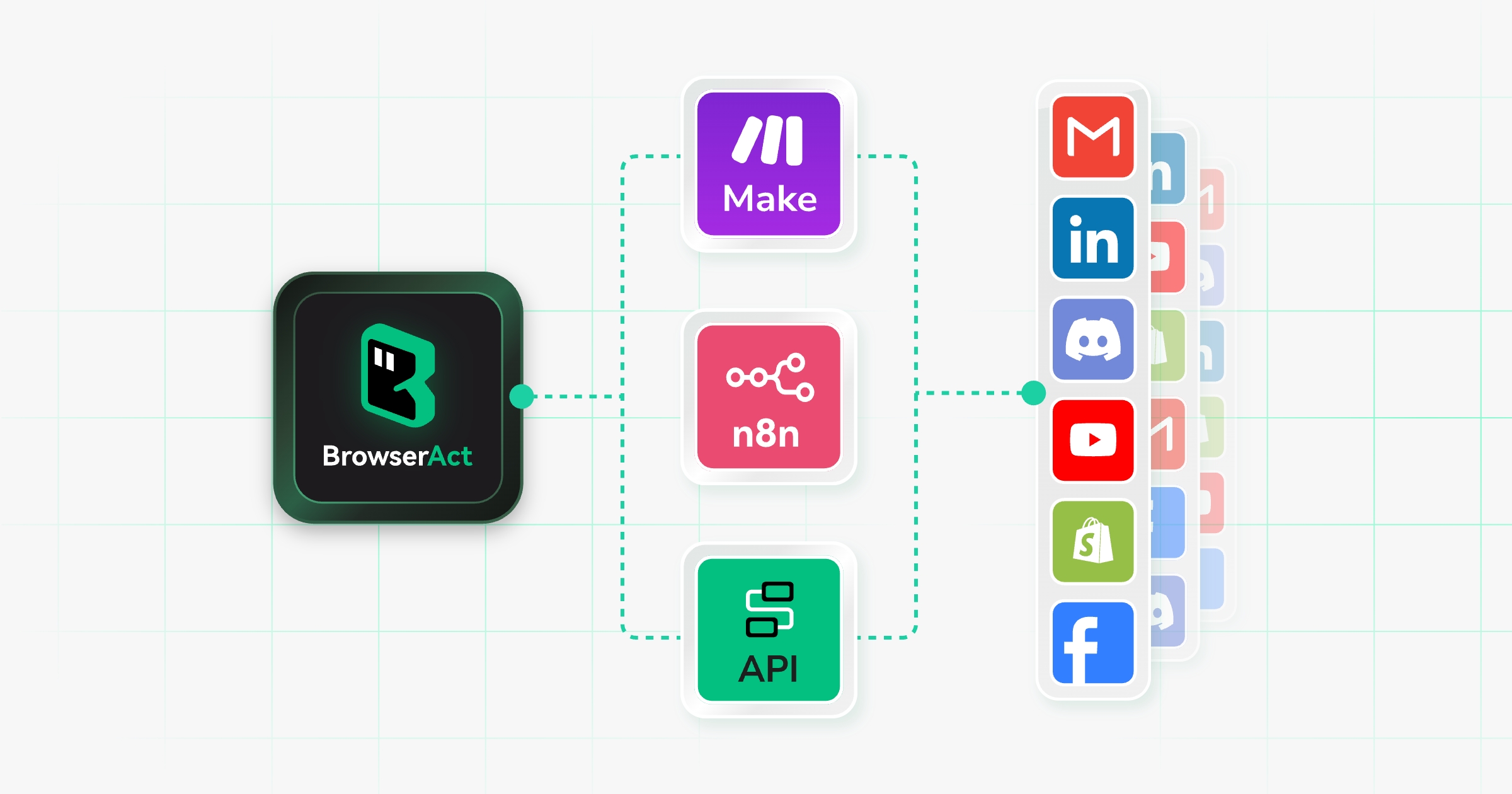
BrowserAct | Give AI agent the power to use the web
BrowserAct provides AI agents with a managed browser layer to extract live web data, handle CAPTCHAs, and execute end-to-end web tasks securely.
- Pricing
- Not listed
- Free tier
- Not listed
Pros
- Handles CAPTCHAs and anti-bot measures automatically.
- Offers a 7-day free trial with 100 credits.
- Supports multiple proxy types including residential and static.
- Integrates easily via skills for AI agents.
- Provides full session and cookie isolation.
Cons
- Cloud Browser feature is not yet released.
- Pricing is credit-based, which may vary in complexity.
- Requires technical integration for agent workflows.
- Static proxy pricing varies by location and tier.
- No specific enterprise SLA details provided in source.
Veo 3.1 — Google DeepMind
Veo 3.1 by Google DeepMind generates cinematic video with audio from text prompts. It offers high-fidelity visual creation for creative professionals and developers exploring next-gen AI video synthesis.
- Pricing
- Not listed
- Free tier
- Not listed
Side-by-side signals
Core comparison table
| Signal | BrowserAct | Give AI agent the power to use the web | Veo 3.1 — Google DeepMind |
|---|---|---|
| Summary | BrowserAct provides AI agents with a managed browser layer to extract live web data, handle CAPTCHAs, and execute end-to-end web tasks securely. | Veo 3.1 by Google DeepMind generates cinematic video with audio from text prompts. It offers high-fidelity visual creation for creative professionals and developers exploring next-gen AI video synthesis. |
| Pricing | Not listed | Not listed |
| Free tier | Not listed | Not listed |
| Pros count | 5 | 0 |
| Cons count | 5 | 0 |
Comparison analysis
## BrowserAct vs. Google Veo 3.1: A Comparative Analysis
This comparison contrasts two distinct AI tools serving different purposes in the modern digital landscape. **BrowserAct** is an infrastructure layer designed for AI agents to interact with the live web, while **Google Veo 3.1** is a generative model focused on creating high-fidelity video and audio content.
### Core Functionality
**BrowserAct** enables Large Language Models (LLMs) to navigate websites, solve CAPTCHAs, and extract structured data. It acts as a managed browser environment, allowing agents to perform complex, end-to-end web tasks such as market research, lead generation, and form submission. Its value lies in bridging the gap between static AI models and dynamic, real-time internet data.
**Google Veo 3.1**, developed by DeepMind, generates cinematic-quality video with synchronized audio from text prompts. It is designed for creative professionals and developers who need to produce realistic visual content quickly. Unlike BrowserAct, which interacts with existing web content, Veo 3.1 creates new media assets from scratch based on descriptive inputs.
### Key Differences
| Feature | BrowserAct | Google Veo 3.1 |
| :--- | :--- | :--- |
| **Primary Use Case** | Web automation, data scraping, agent execution | Video generation, cinematic creation, audio synthesis |
| **Input Type** | Text prompts + Web context | Text prompts |
| **Output Type** | Structured data, completed web actions | Video files with audio |
| **Target Audience** | Developers, AI engineers, data analysts | Creators, marketers, filmmakers |
| **Technical Focus** | Stealth browsing, CAPTCHA solving, session isolation | Visual fidelity, audio sync, narrative coherence |
### When to Choose Which?
Choose **BrowserAct** if you are building AI agents that need to access real-time information, automate repetitive web tasks, or gather competitive intelligence. It is essential for applications requiring live web interaction rather than static data processing.
Choose **Google Veo 3.1** if your goal is to generate high-quality video content for marketing, storytelling, or prototyping. It is ideal for creators who want to produce cinematic visuals with sound without traditional filming equipment or editing software.
### Verdict
These tools serve non-overlapping domains. BrowserAct is a critical utility for functional AI agents operating on the web, whereas Veo 3.1 is a powerful creative engine for media production. Selecting the right tool depends entirely on whether your objective is data acquisition and automation or content creation and visualization.
Verdict
Which should you choose?
BrowserAct is for web automation and data extraction; Veo 3.1 is for cinematic video and audio generation.
FAQ
Which is better for individuals: BrowserAct | Give AI agent the power to use the web or Veo 3.1 — Google DeepMind?
Compare official pricing, free-tier limits, and your workflow before choosing.
Where does this comparison data come from?
The data comes from ToolSeekAI tool profiles, including summaries, pros, cons, keywords, and public official-site information.
Site Discovery
Keep comparing and discovering
If you are still undecided, continue into alternatives, profiles, and rankings to narrow the shortlist.