
Decision Comparison
BrowserAct | Give AI agent the power to use the web vs Cursor
Compare BrowserAct | Give AI agent the power to use the web and Cursor across positioning, strengths, and trade-offs to decide which tool fits your workflow.
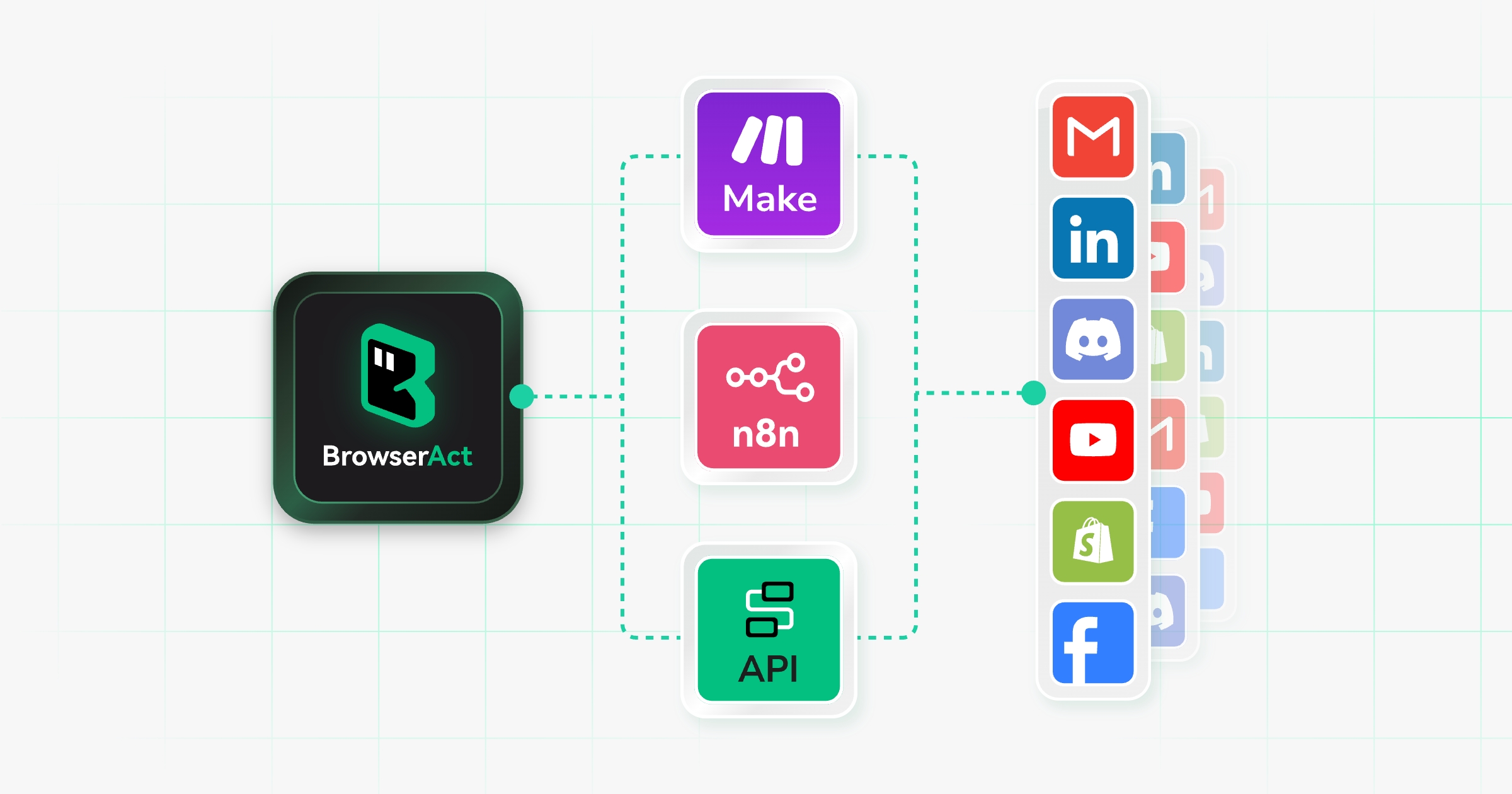
BrowserAct | Give AI agent the power to use the web
BrowserAct provides AI agents with a managed browser layer to extract live web data, handle CAPTCHAs, and execute end-to-end web tasks securely.
- Pricing
- Not listed
- Free tier
- Not listed
Pros
- Handles CAPTCHAs and anti-bot measures automatically.
- Offers a 7-day free trial with 100 credits.
- Supports multiple proxy types including residential and static.
- Integrates easily via skills for AI agents.
- Provides full session and cookie isolation.
Cons
- Cloud Browser feature is not yet released.
- Pricing is credit-based, which may vary in complexity.
- Requires technical integration for agent workflows.
- Static proxy pricing varies by location and tier.
- No specific enterprise SLA details provided in source.
Cursor
Cursor is an AI-native code editor that embeds deep repository awareness into the development workflow, enabling multi-file refactoring, code generation, and debugging without context switching.
- Pricing
- FREEMIUM
- Free tier
- Yes
Pros
- Deep repo-aware editing for consistent codebase changes
- Standalone editor with superior workflow proximity
- Handles complex multi-file refactoring and implementation loops
- Integrates AI directly into the coding flow without context switching
- Accessible free tier for basic AI features
Cons
- Requires switching from familiar IDEs like VS Code
- Specific pricing tiers and limits are not detailed in source
- Still requires human review for critical code and security
- Dependence on cloud models may raise privacy concerns for some teams
- Not a replacement for disciplined code review and testing
Side-by-side signals
Core comparison table
| Signal | BrowserAct | Give AI agent the power to use the web | Cursor |
|---|---|---|
| Summary | BrowserAct provides AI agents with a managed browser layer to extract live web data, handle CAPTCHAs, and execute end-to-end web tasks securely. | Cursor is an AI-native code editor that embeds deep repository awareness into the development workflow, enabling multi-file refactoring, code generation, and debugging without context switching. |
| Pricing | Not listed | FREEMIUM |
| Free tier | Not listed | Yes |
| Pros count | 5 | 5 |
| Cons count | 5 | 5 |
Comparison analysis
BrowserAct | Give AI agent the power to use the web and Cursor are both relevant options in this category, but they target slightly different usage patterns.
BrowserAct | Give AI agent the power to use the web: BrowserAct provides AI agents with a managed browser layer to extract live web data, handle CAPTCHAs, and execute end-to-end web tasks securely.
Cursor: Cursor is an AI-native code editor that embeds deep repository awareness into the development workflow, enabling multi-file refactoring, code generation, and debugging without context switching.
Use this page to quickly compare product focus, content depth, pros/cons, and potential fit for your team.
Verdict
Which should you choose?
If you prioritize BrowserAct | Give AI agent the power to use the web's strengths, choose BrowserAct | Give AI agent the power to use the web; if Cursor's strengths match your scenario better, choose Cursor.
FAQ
Which is better for individuals: BrowserAct | Give AI agent the power to use the web or Cursor?
Cursor lists a free tier, making it easier for low-cost trials.
Where does this comparison data come from?
The data comes from ToolSeekAI tool profiles, including summaries, pros, cons, keywords, and public official-site information.
Site Discovery
Keep comparing and discovering
If you are still undecided, continue into alternatives, profiles, and rankings to narrow the shortlist.